Birth in Brittany
Jean Le Jollec was born in Lothey-Landremel, in Finistère.
Eudist missionary · North Shore · 1883–1913
At thirty years old, Jean Le Jollec had already crossed the Atlantic, joined the Bersimis mission and shared his daily life in lively letters.
Born in Brittany in 1883, he joined the Eudists in 1908 and became a priest in 1910. Sent to Canada the same year, he discovered an immense region, the Nordic winter and the links forged throughout the missions. His letters make his voice heard even in the most ordinary details.
Browse its history ↓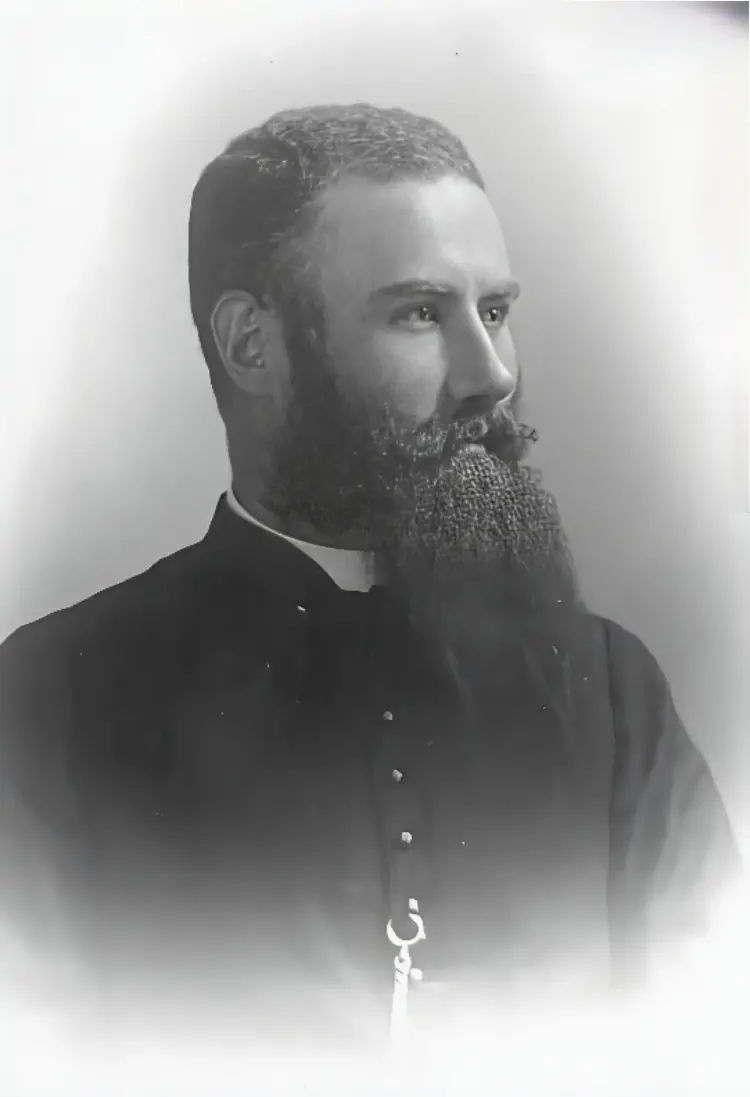
Biographical landmarks
A few dates shed light on the journey of Jean Le Jollec and situate the letters collected here.
Jean Le Jollec was born in Lothey-Landremel, in Finistère.
He began his training in the Congregation of Jesus and Mary.
Ordained a priest, he was soon sent to Canada.
He joins the mission on the North Shore and discovers a territory where travel and the seasons give rhythm to life.
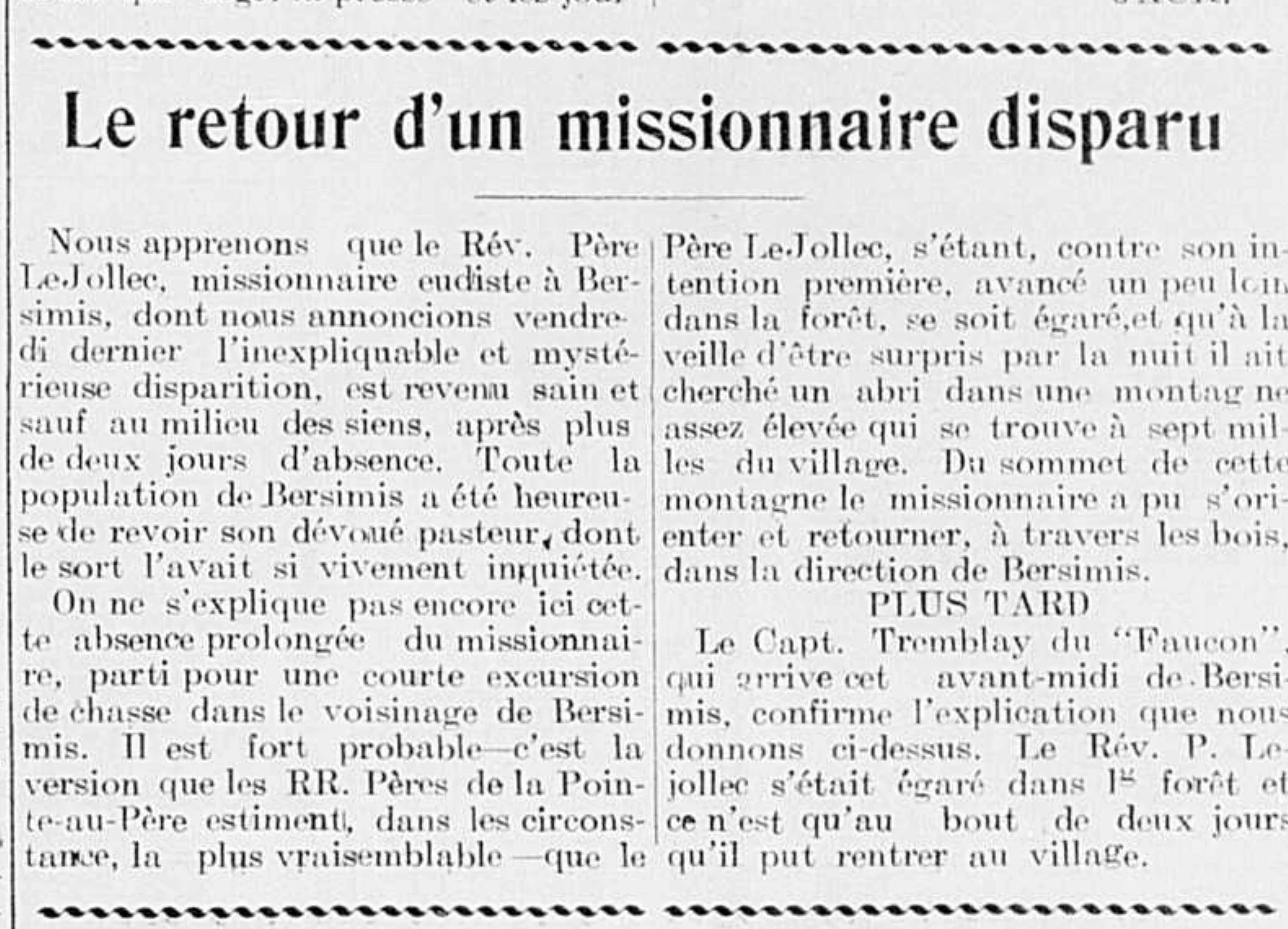
After staying in the woods, he does not return at the expected time. The news spread in the region before we learned that he had been found safe.
My dear dad, my dear mom,
I'll tell you what I've become since the 17th. After one night, I'm getting ready to go out.
Farewell to the country's seminarians and teachers. At 11 a.m., the “Bretonne” weighs anchor and we are separated from the land of France. The sea is rough, the boat is rolling.
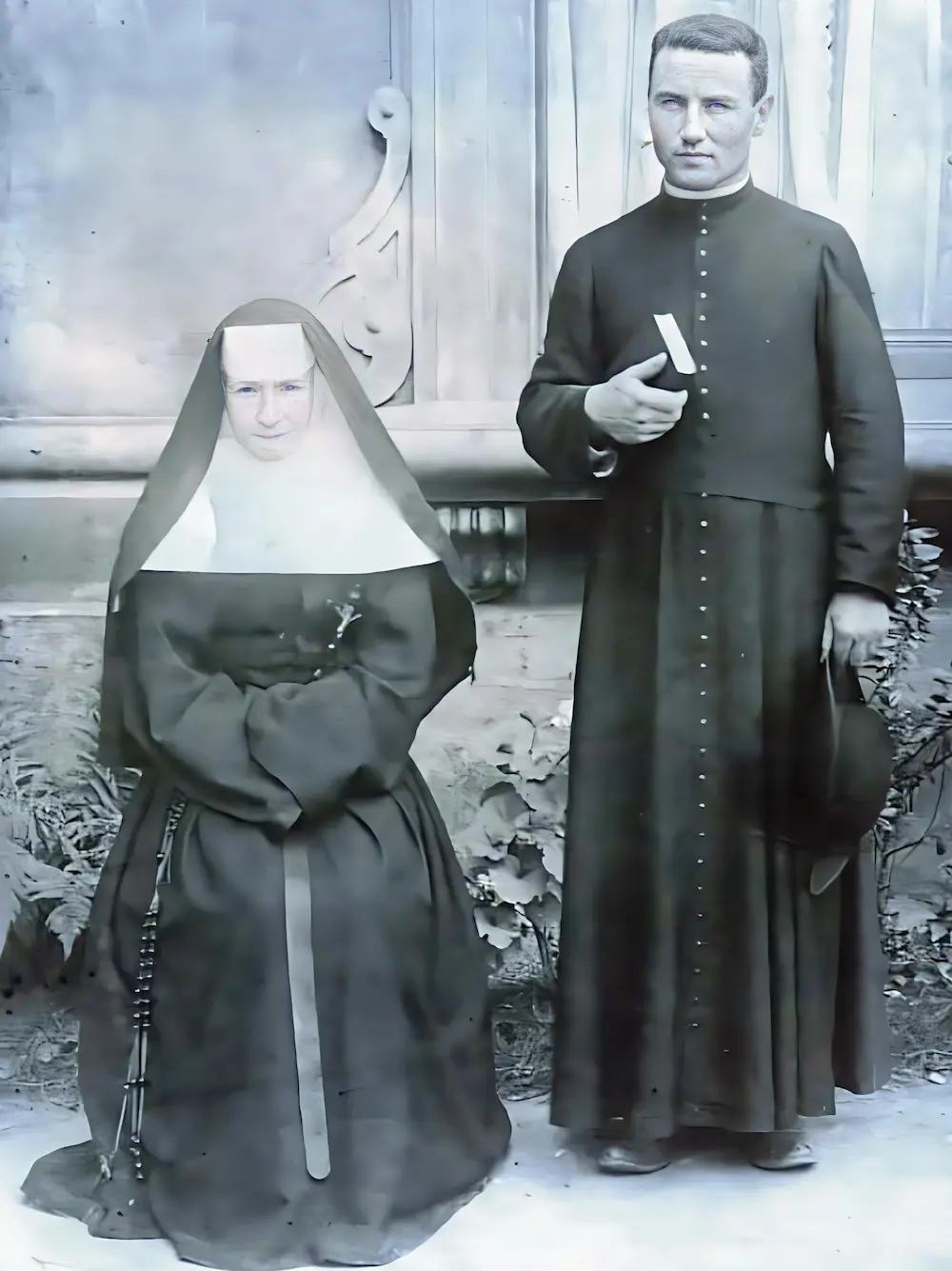
I met a priest from St-Brieux who was going to Plymouth to study English. The closer evening approaches, the more the sea rises. There's the Eddystone lighthouse, the lights of Plymouth, we're approaching. Mother Claude (Marie-Anne Le Jollec) is at the dock with Mother Ste Ursule. Drive to Beconfield.
Jeans
Photo: Eudist Archives, Marie-Anne and Jean Le Jollec
October 20–31, 1910 · The trip
Jean recounts his departure by train, the crossing of the Atlantic and his arrival on the North Shore. The eight markers below follow exactly the chronology of his story.
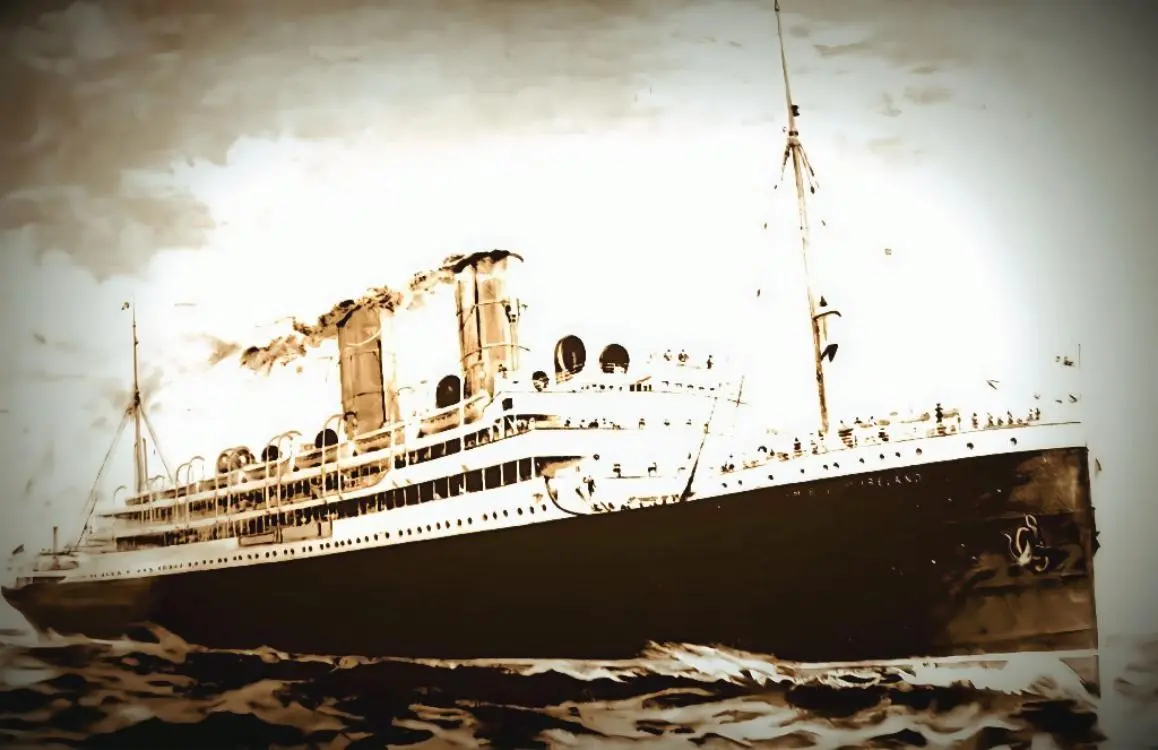
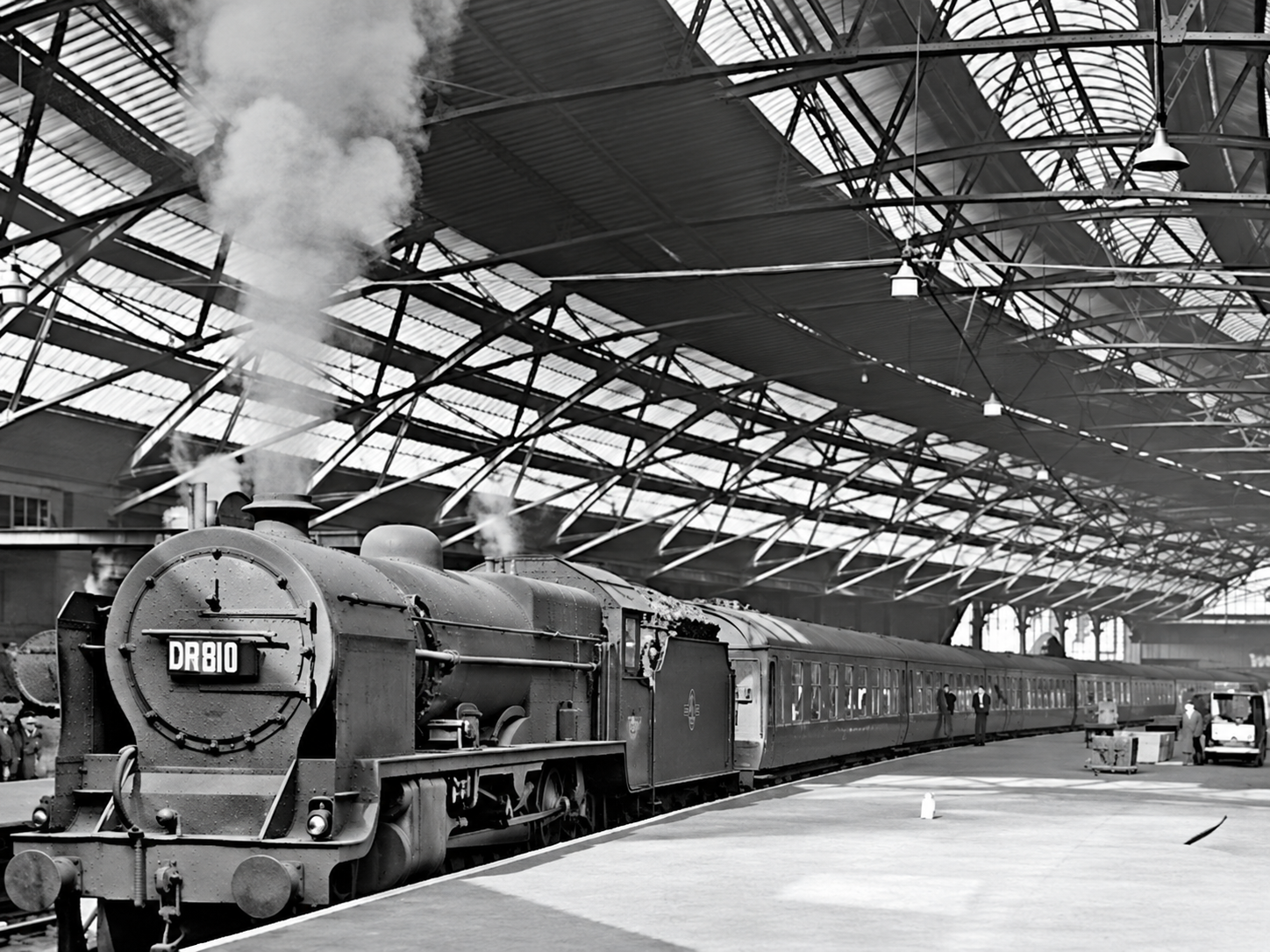
After supper, Jean is taken to the station. The train leaves at 8 a.m.; the next day, after a change and a wait in the cold, he arrived in Liverpool and found Father Brézel.
Photo: Wikipedia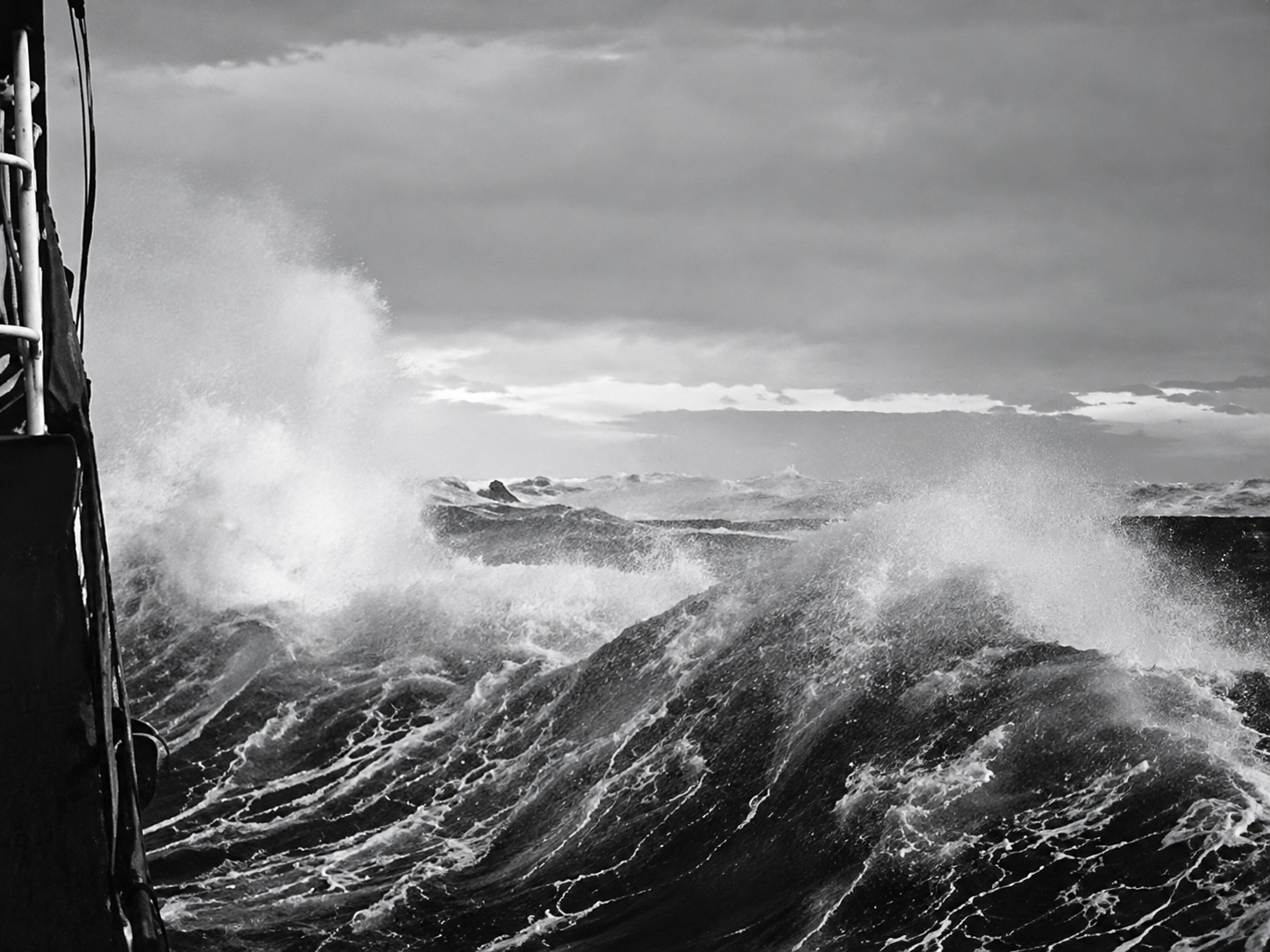
The coast is still visible. The sea is beautiful and calm; on board, Jean walks with Father Brézel. The night then becomes restless.
Photo: Pixhilt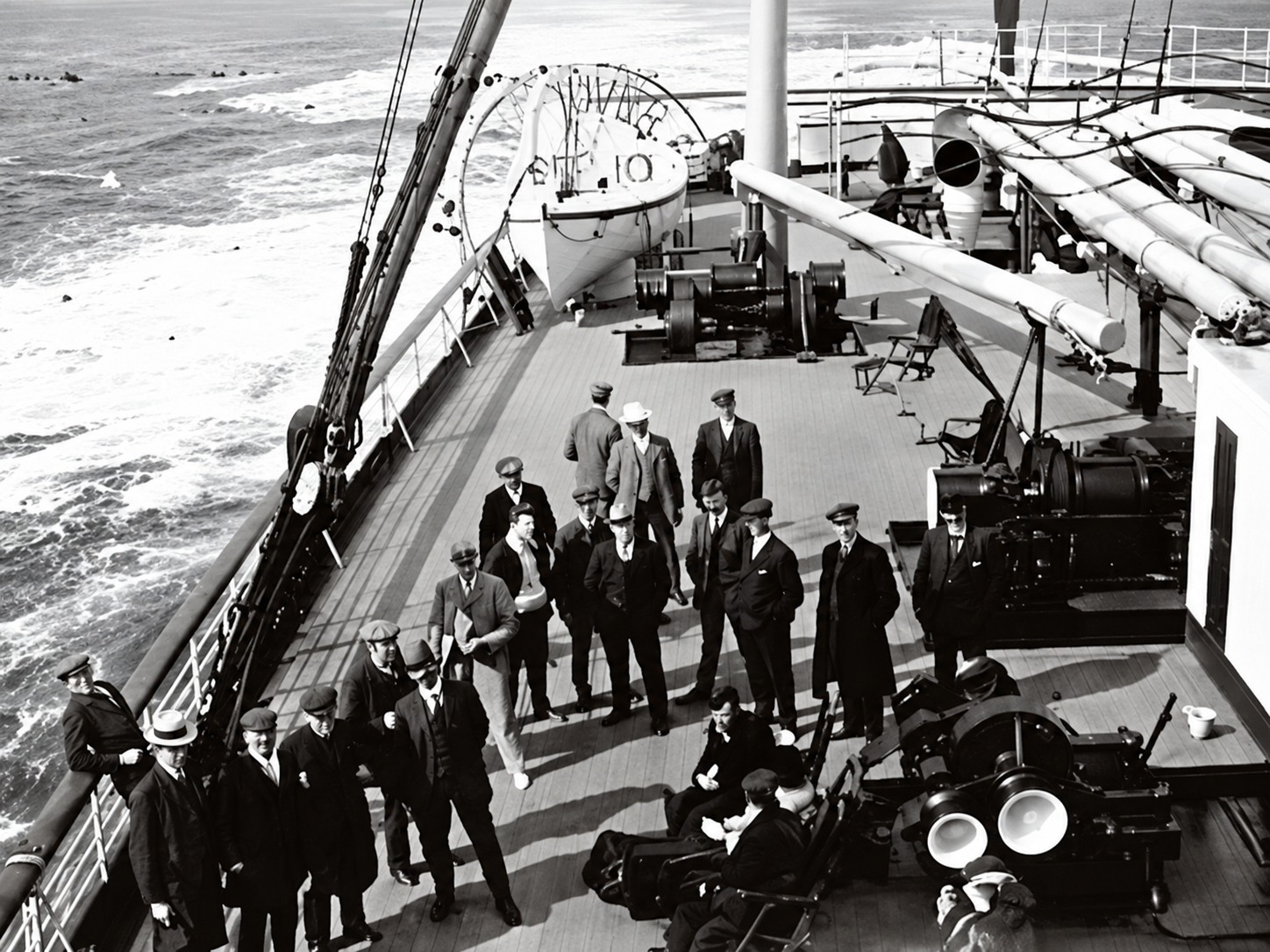
The sea is furious and the boat is rolling. Jean travels with Father Brézel; wireless telegraphy continually communicates with the coast and ships at sea.
Photo: Wikipedia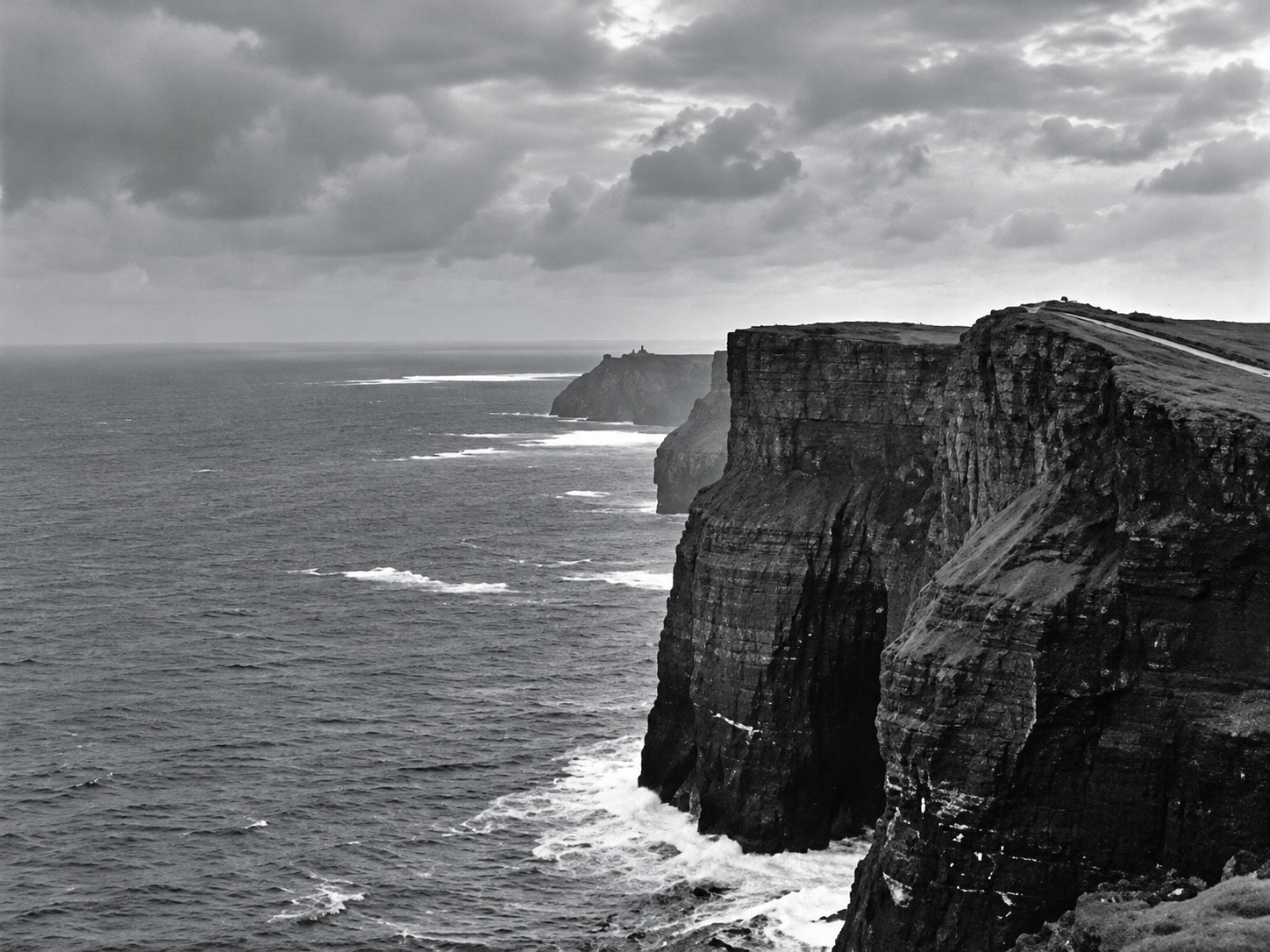
The liner heads north to avoid opposing currents. The storm rocks the ship and Father Brézel remains very distressed.
Photo: Unsplash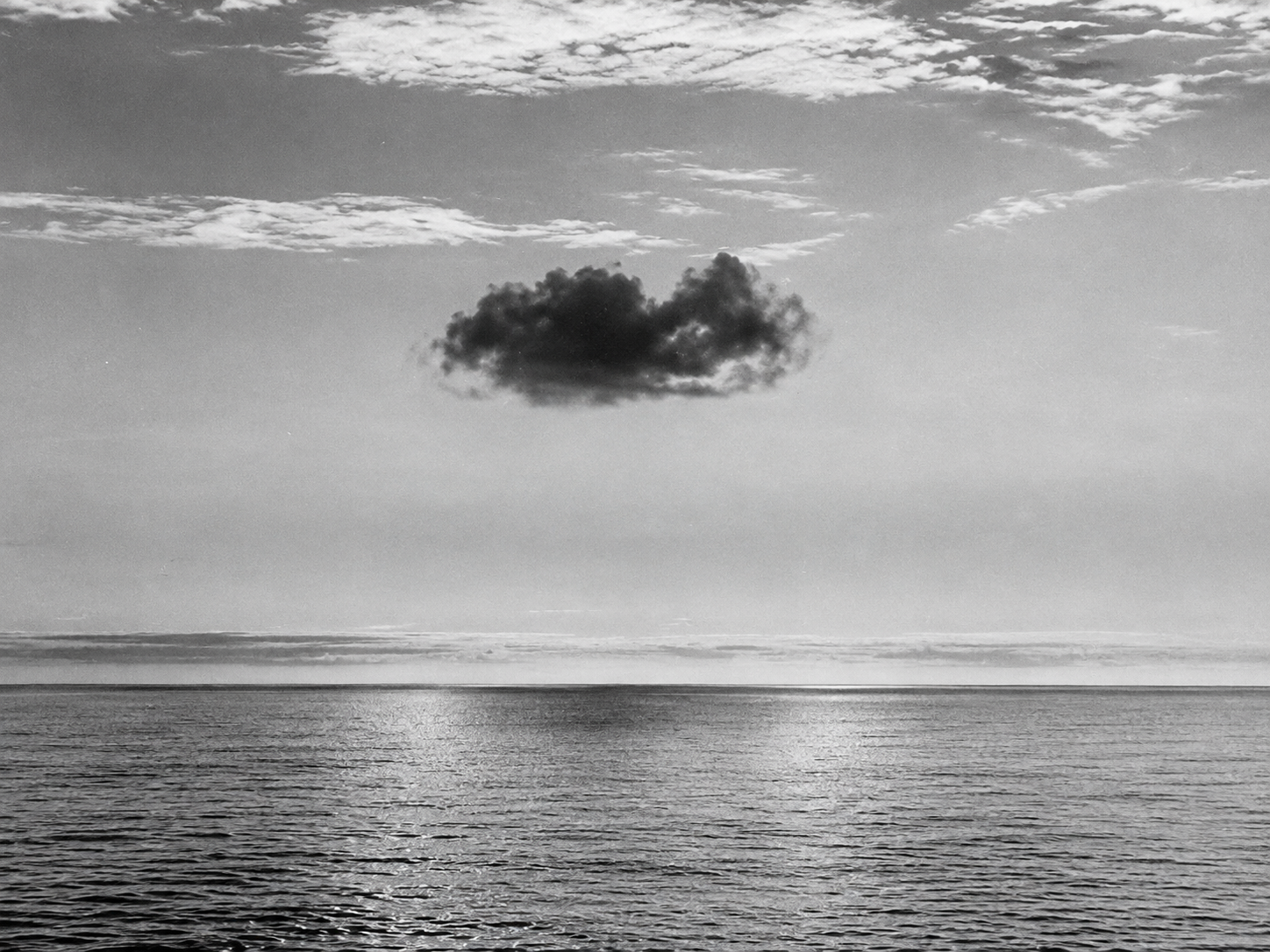
The proximity of the land is felt. Jean hopes to be on land the next day, with the bishop of Rimouski.
Photo: Unsplash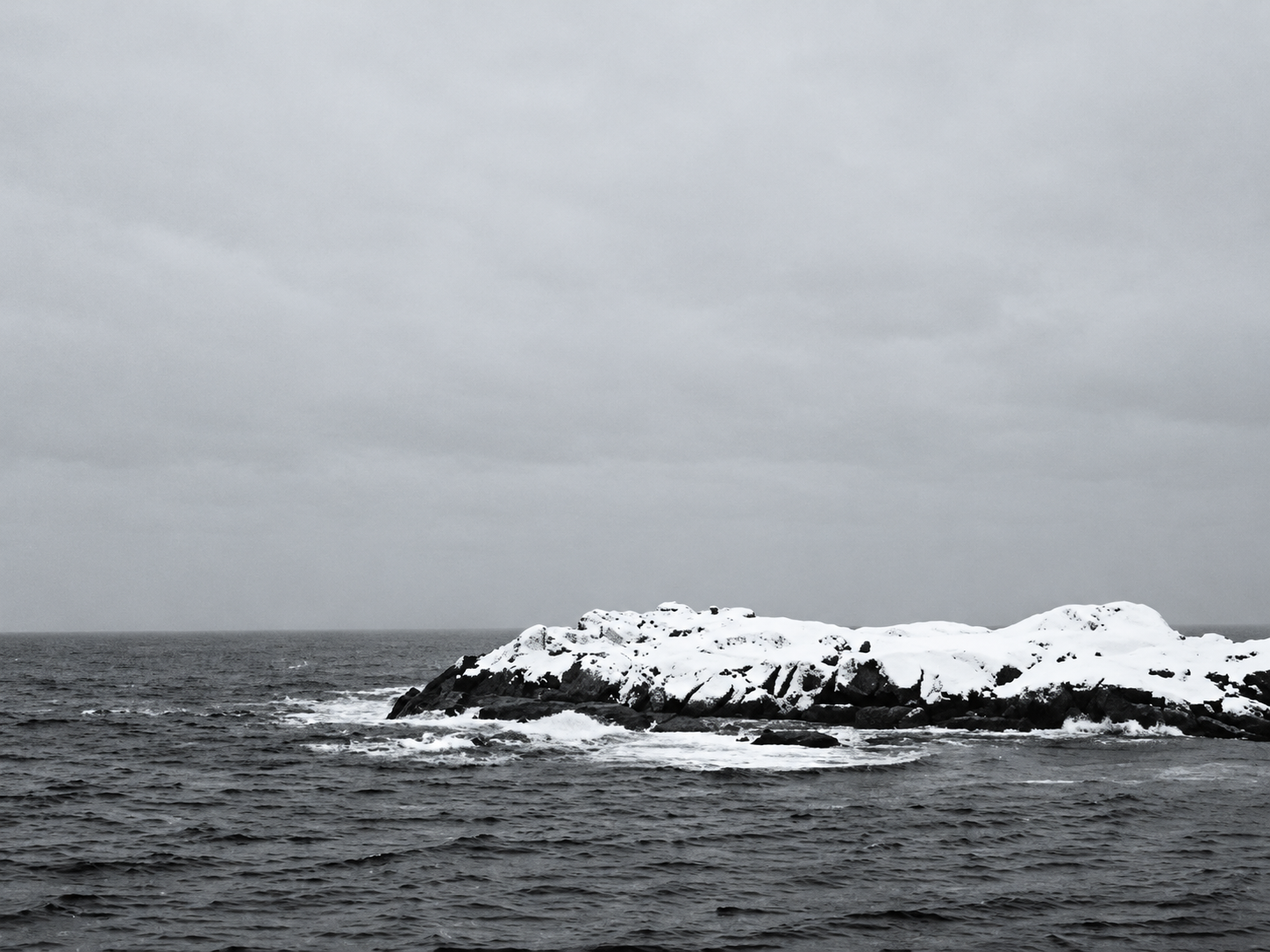
The coast stretches as far as the eye can see, white in places under the snow. Jean writes that they will be on land in a few hours.
Photo: Unsplash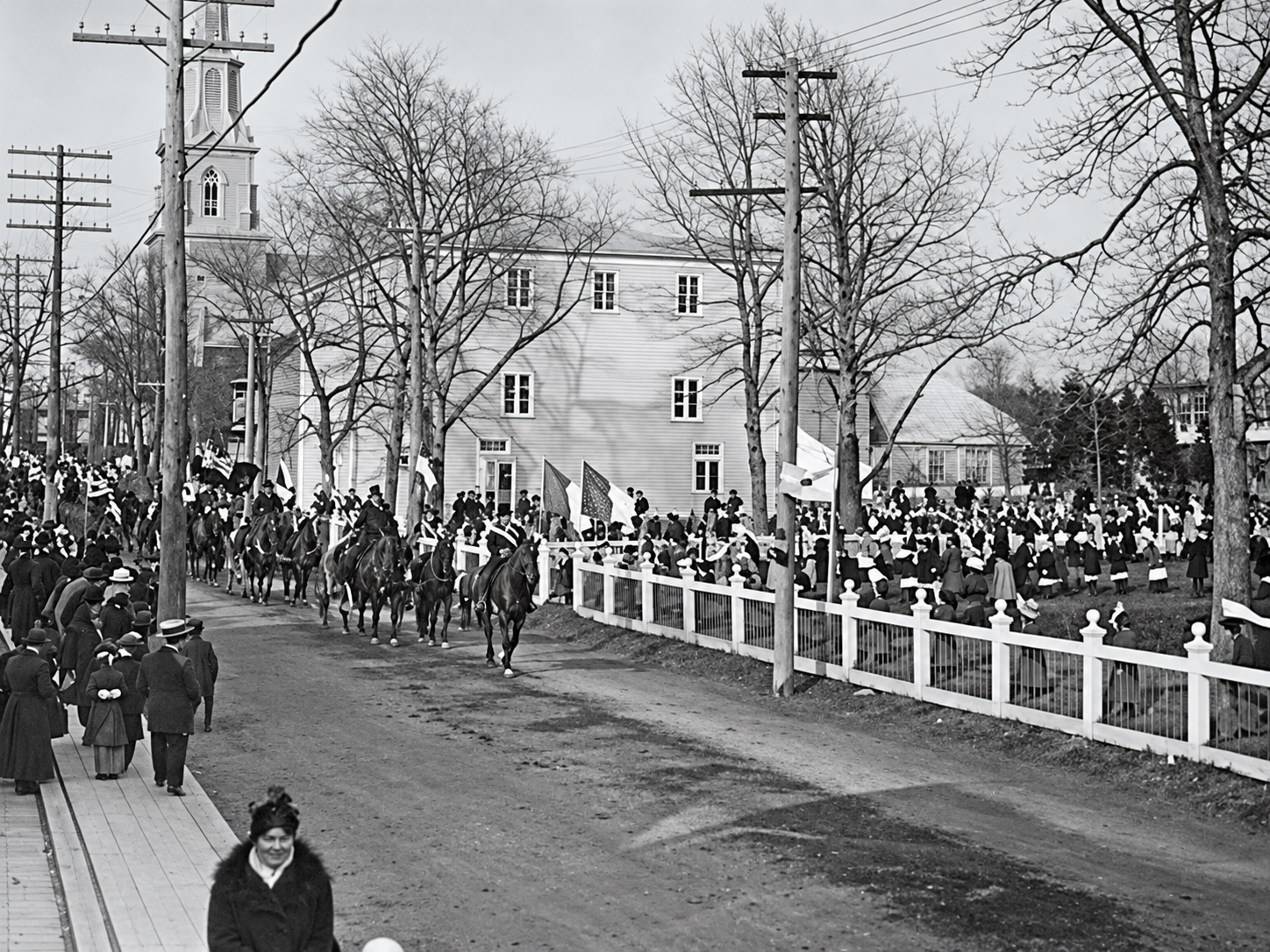
The ship cannot dock in Rimouski due to lack of depth. Jean goes down in a canoe; after a few days, he sets sail again towards Bersimis.
Photo: BANQ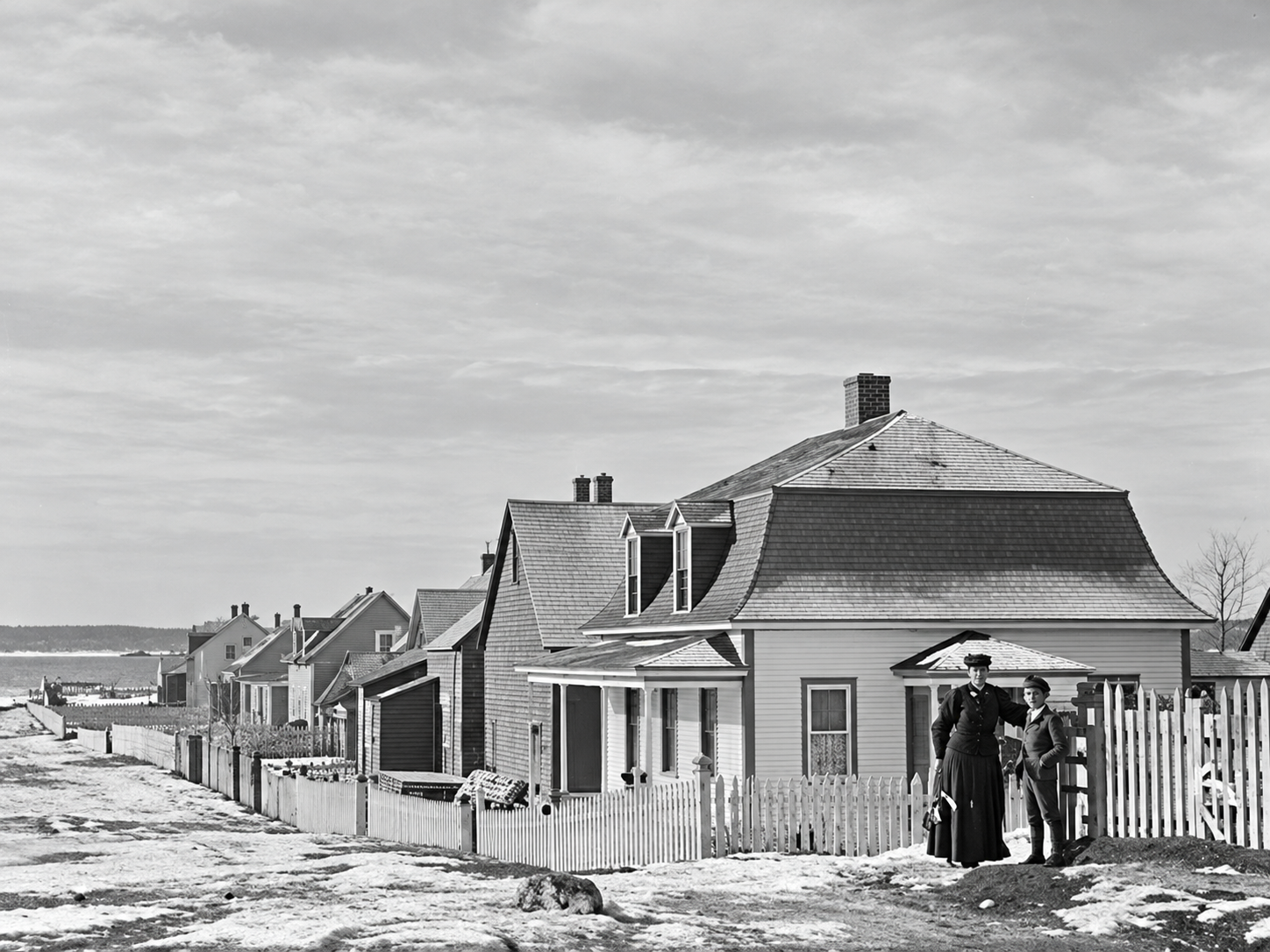
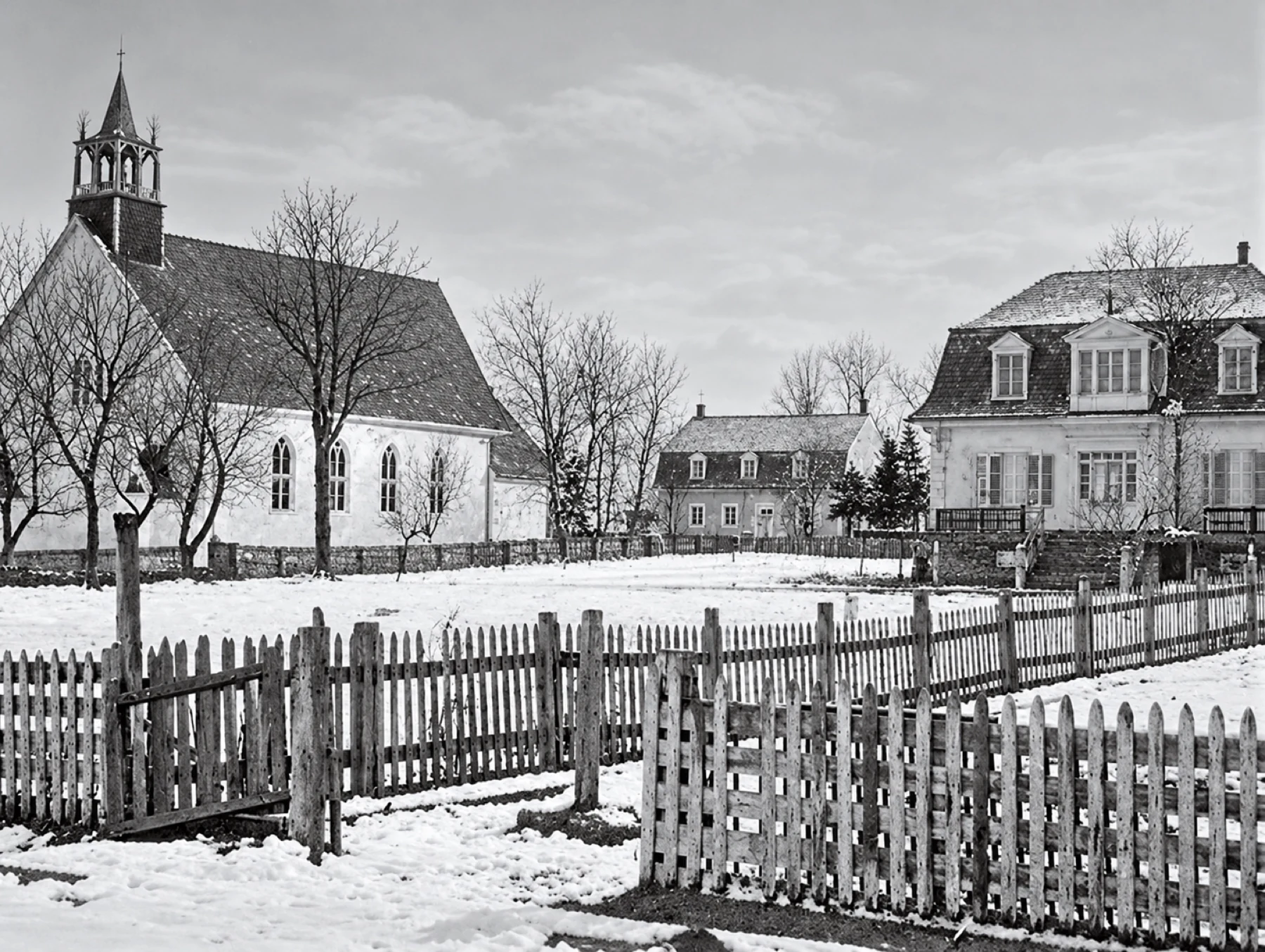
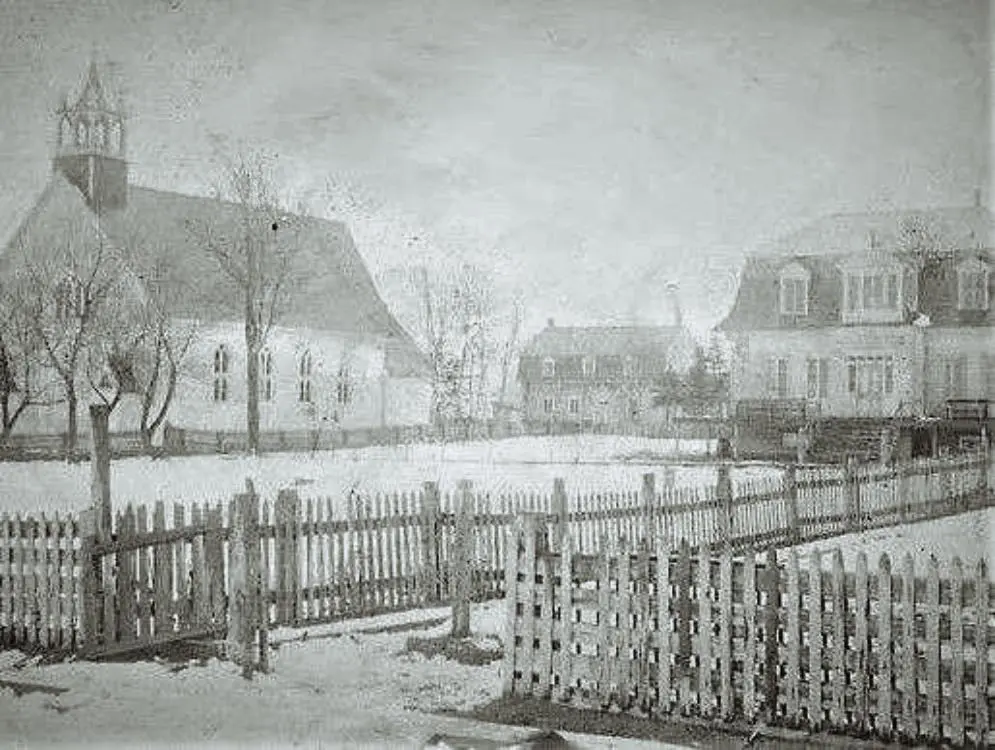
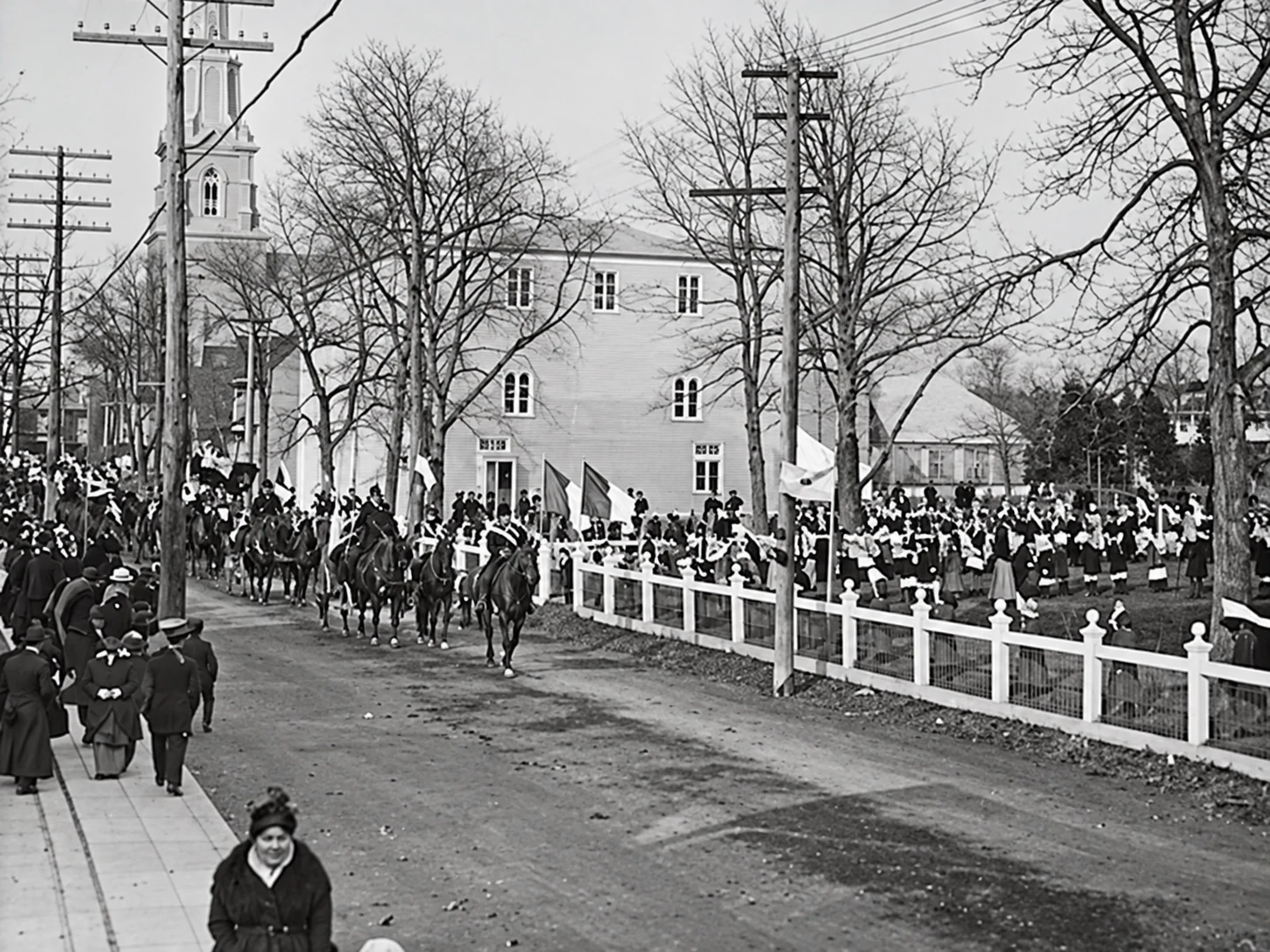
Jean discovers the village and its wooden houses. He begins to describe the mission and living conditions of the community.
Photo: Father Le JollecThe mission · 1910–1913
In his letters, Jean recounts snowshoe trips, meetings, hunting and small episodes of everyday life. These historical texts also reflect the vocabulary and views of their time.
The four letters presented below are transcribed from the texts transmitted. The complete passages remain accessible in each notice, with their salutation and their signature.
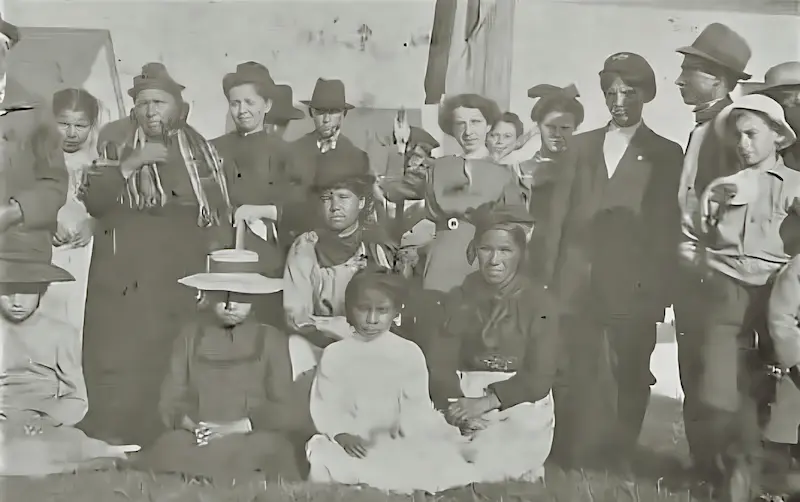
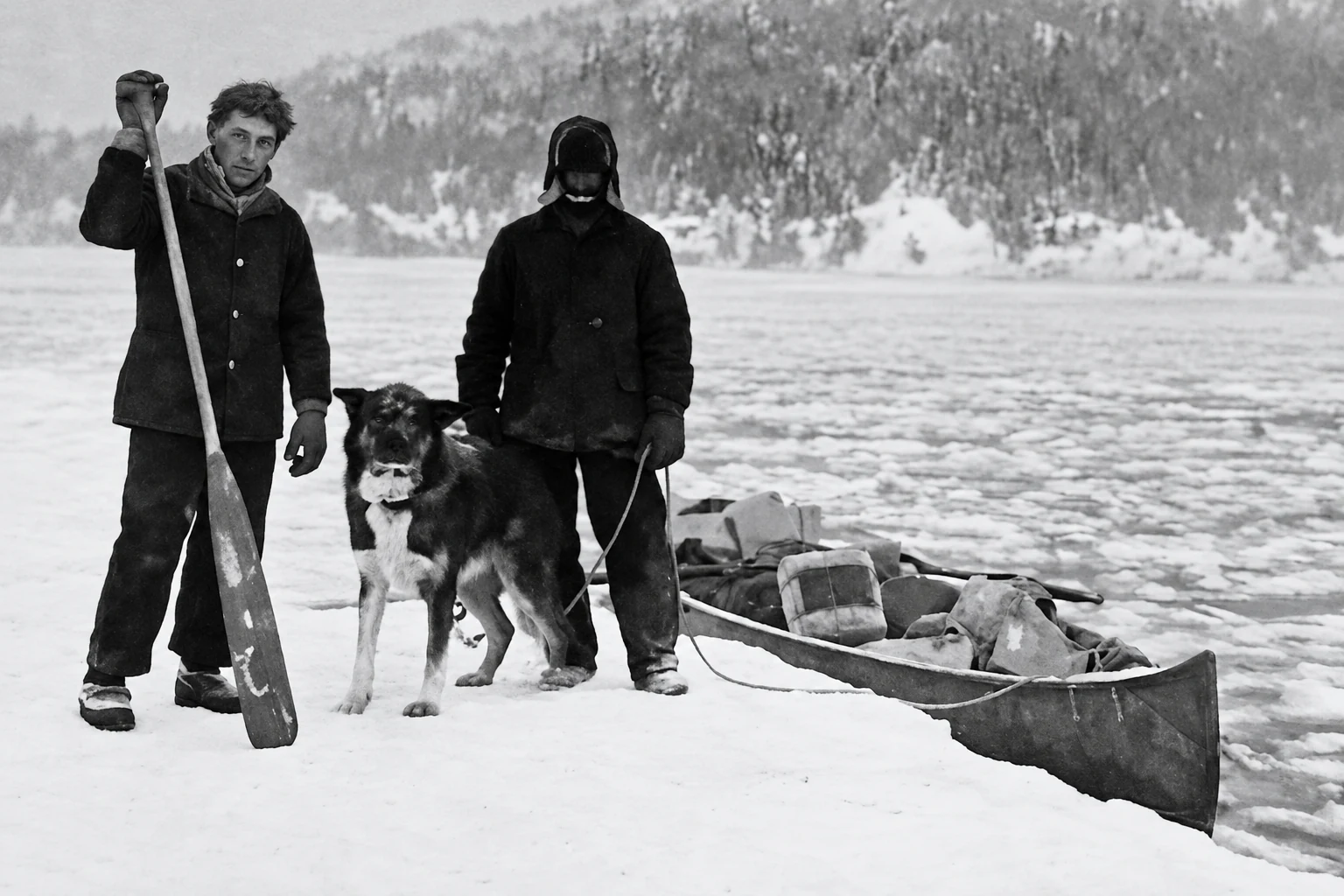
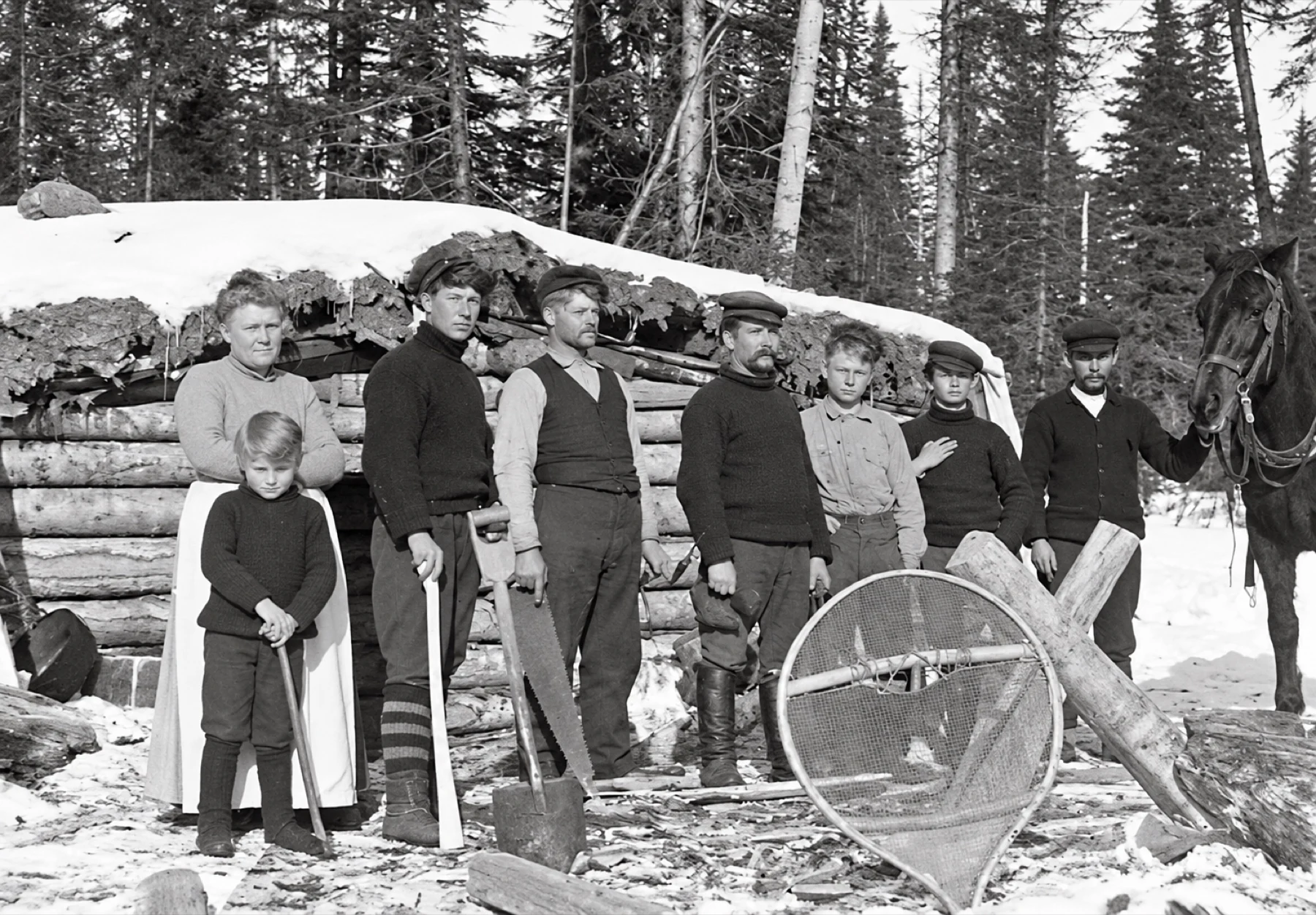
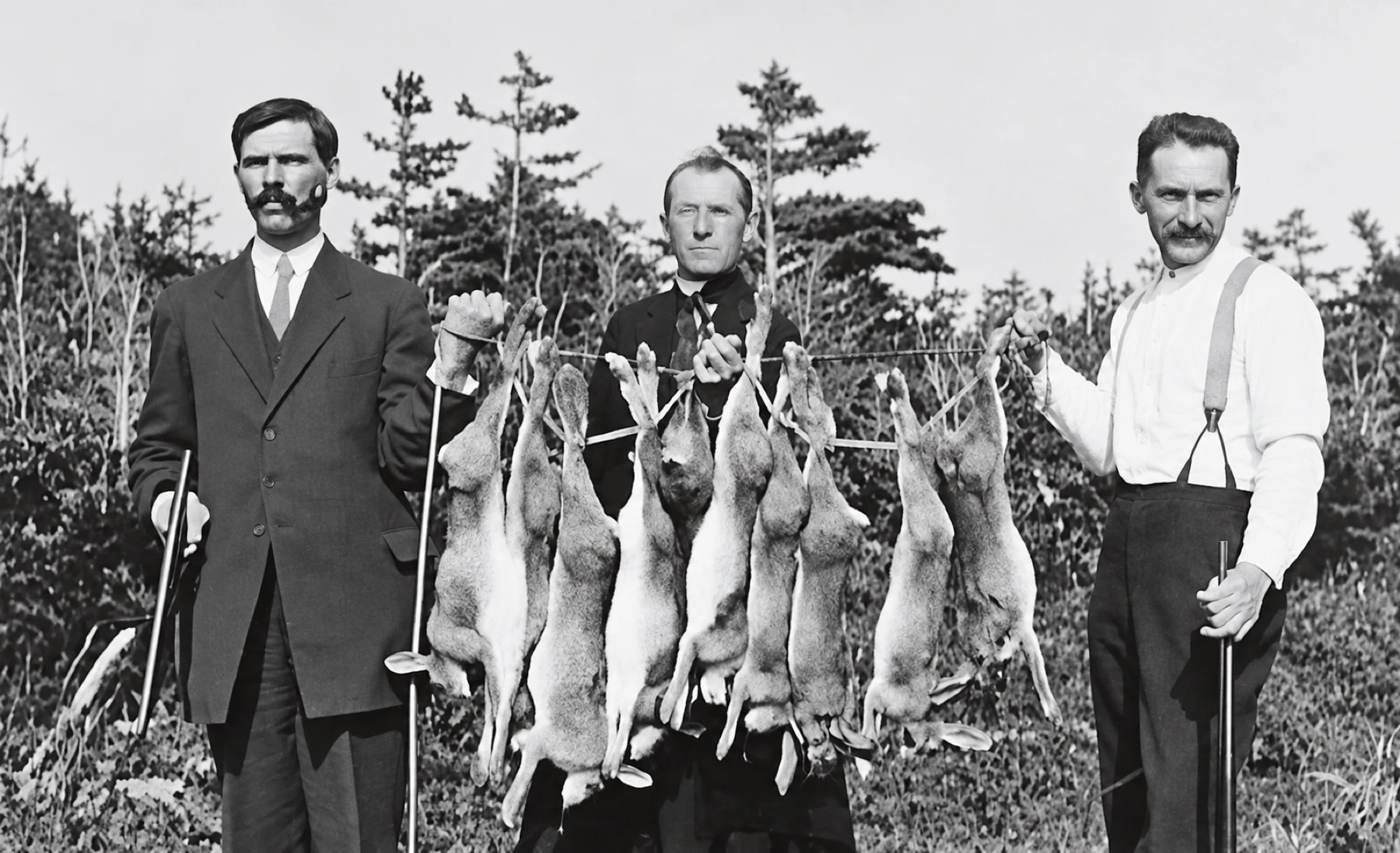
Archival photographs accompany the story. When the identity of the people depicted is not established, the caption simply describes what the image shows.
Read Jean's letters ↓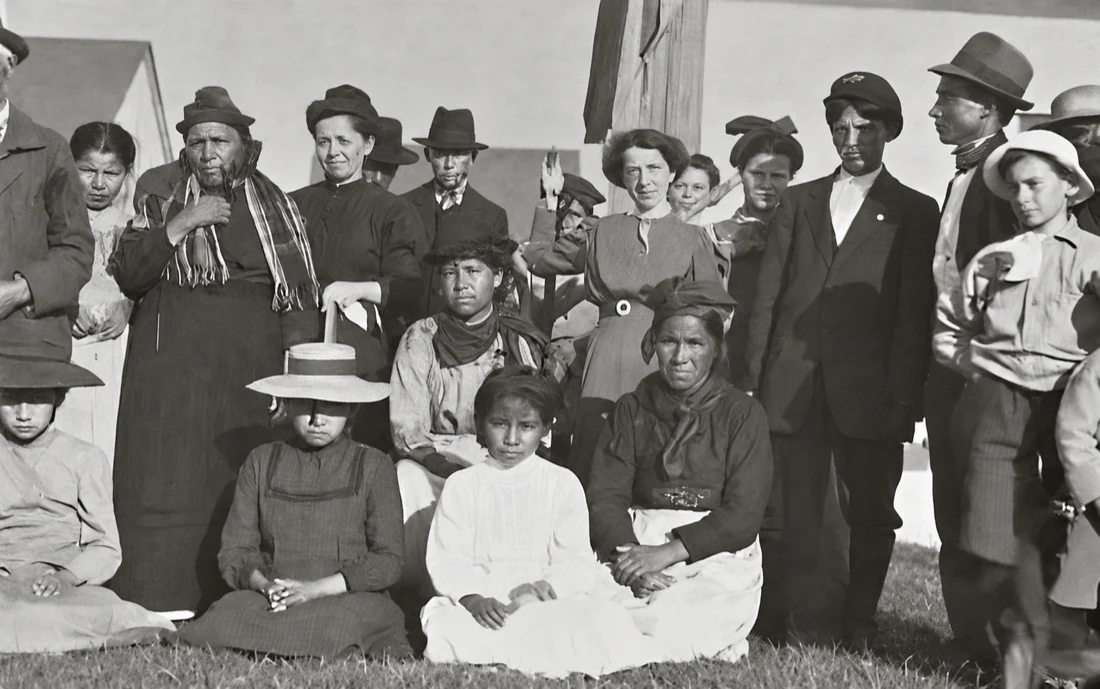
Correspondence · 1910–1913
Open a letter to read the full transcript. Spelling and wording are retained according to the text provided.
My dear Marie, my dear Joseph,
A word about hunting, if you like. I have only fired 5 shots from my gun yet... The white partridges only arrived 5 days ago. You have to keep your eyes peeled to see them in the snow. Once seen, we hold them, especially at meal times. The best time is in the morning before sunrise. I must first tell you that these partridges do not look like their cousins from France. They are white from head to toe, with two or three black feathers only under the tail, visible only in flight. Hairy legs, adapted to snow. They feed on willow buds. In certain regions they cause these shrubs to perish, so they do not return to the same place every year so as not to risk dying of starvation. So here they are busy at lunch, you approach without a dog of course, you arm, aim, shoot the closest one. Don't imagine that the neighbors left screaming, they are indeed continuing their lunch without worrying about the grief that has just struck their family. You keep shooting as long as there are partridges. If you arrive early, not one will escape you. At the end of the operation, you pick up the victims and go home if you don't want to continue. The [Innu] get so much and more.
It was yesterday that I killed my first two. They had lunch in the meadow that we have in the woods. It was 7 a.m., the sun was about to rise. Two [Innu] were already shooting at the band when I saw the first. But with guns from 100 years ago, they fill through the nozzle and then vomit, I had time to shoot to wait for them to fill. The first remains on the ground, her nose in the snow. I move forward and get in line to shoot two at once. Alas! I have the wrong cartridge. It is a cartridge for larks and white partridges are very hard to kill. My two fled into the woods and I followed after them, swearing to no longer load myself with ash cartridges good for shooting at point blank range. I search not so much with my nose as with my eyes and end up seeing one flying. I look again and see her in the snow craning her neck. I shoot between the fir trees, she fights against death, she is dead and I take her away. That's enough for this time, I'm going home. Marguerite, [the Innu] who fulfills the role of mistress of the house so well, asks me if I should ring the bell to announce my exploit to all the winds. I thank her for her delicate attention and ask her to be patient. At midday, we were served roast partridges.
In terms of white game, I also ate hare. You would think you were eating fir branches. It smells strong and it's thin. In terms of cabbage, clover, carrots, the hares of this country only know the so-called spruce fir from which paper pulp is made (this is the pulpwood). As black game, we had “cacaoui” at Father Brézel’s house, pardon the word, kind of duck. Hundreds pass by our beards every day. But it’s not delicious, it feeds on fish and smells like oil. Later, we will try to catch [Innu] geese and bustards. It's big and tastes good. This summer if I'm not going on a mission, I plan to fish for salmon and trout. While crossing to go to Father Brézel's house, I saw a sea wolf, in other words a seal, which is still standing opposite. Did I tell you the price of furs? A black fox sells for up to 1000 piastres, i.e. 5000 F, a yellow one for 9 or 10 piastres (45 or 50 F). A little mink as big as a little rat, that much. The postmaster's father has already taken 35 foxes this winter, including 2 black ones I think. These are the rarest. A woman caught up to 1400 white partridges in a single season. The postmaster killed on the same tree, in the space of 20 minutes, the time to fill his rifle, the 17 white partridges that the tree carried.
Jeans
My dear parents,
Time passes and soon the time will come for us to take possession of the Bersimis buildings. I say “buildings” because the rest disappears as if by magic, contrary to convention. But, having received the order not to say anything, we let it happen, while protesting in our heart against this contempt for the treaties. Soon then, the sooner the better, the time will come when we will have to cover our maintenance costs, to provide our cook with vegetables and meat for our frugal meal. I will most likely be in charge of the vegetable garden. Seeds are lacking and that is why I would ask you to give me charity, if you have too many, of all kinds of seeds: cabbage, carrots, onions, leeks, lettuce, chicory, watercress, fine herbs, turnips, radishes, etc...
The weather is still beautiful and cold. However, only a few days ago we had a terrible storm. We have no idea of this violence in our country. The wind blew with incredible force; many [Innu] spent the night outside their homes believing the end of the world had come. Father Brézel froze, guess what? I'd rather tell you right away, you wouldn't find it. It's the language. He was running after his sled on his way back from a mission along the coast and tired of running in the snow, he had to imitate the dogs by sticking out his tongue. It was bad for him; When he brought it back, it was burned.
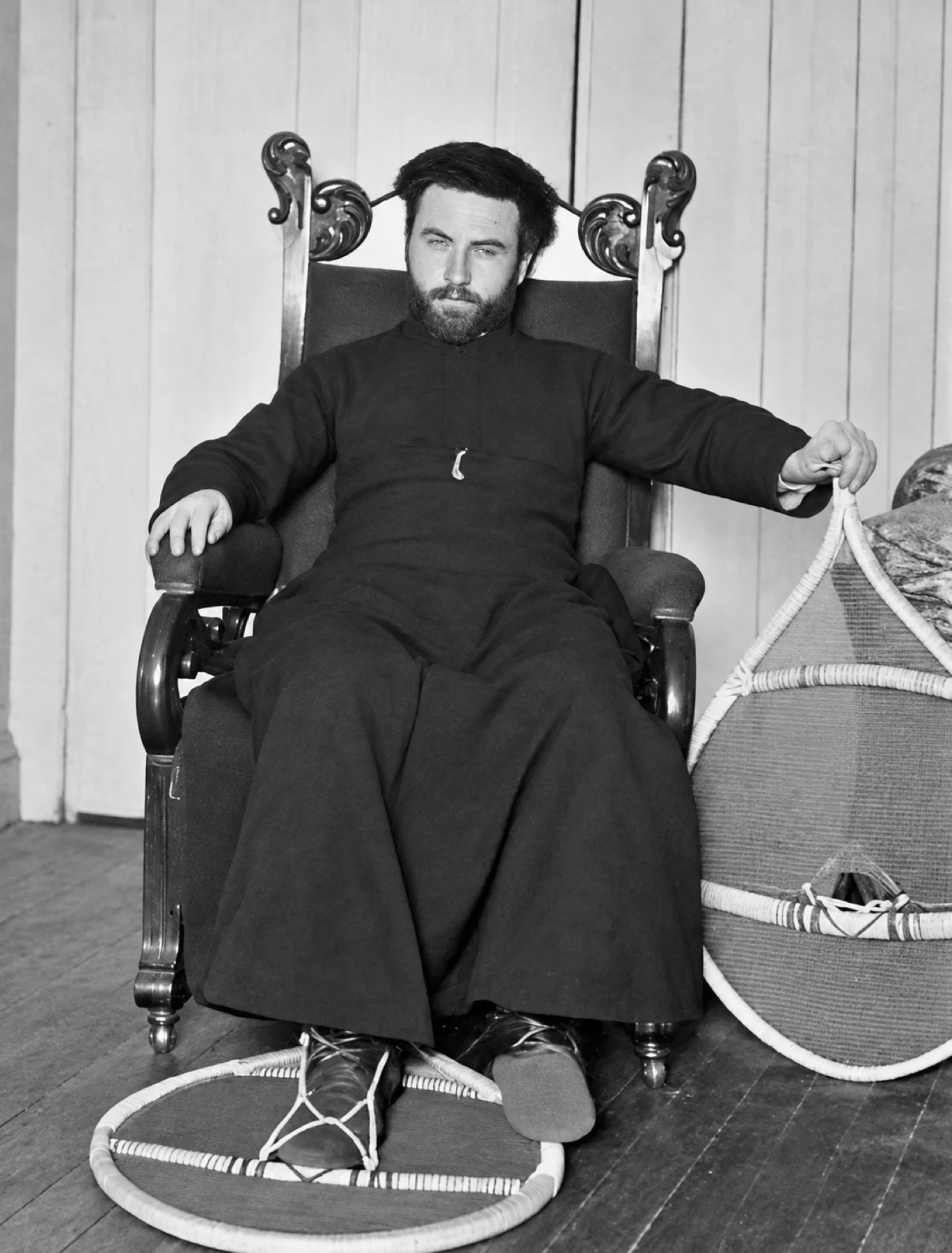
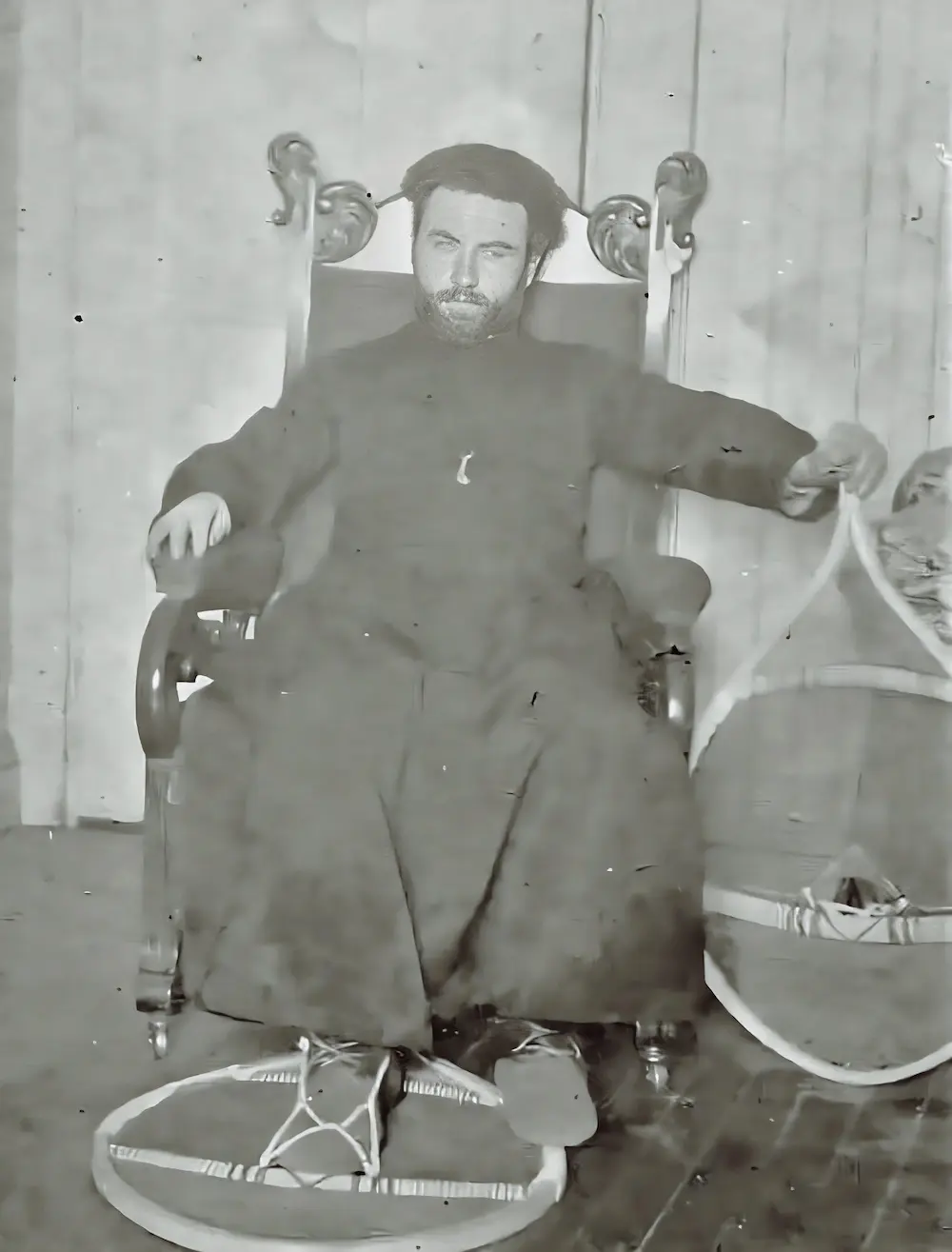
Last Sunday, we went early, across the bay, to celebrate our patronal feast of the Holy Heart of Mary at Father Brézel's house. Father Petel sang mass and your servant preached. Our task accomplished, we were well treated by Father Brézel whose tongue is almost cured. You might not mind knowing the menu. On that day, our constitutions say, the community will be served an extraordinary dish. Father Eudes was of the opinion of St. Francis de Sales in establishing at religious festivals a little rejoicing also for the body. Le Brézel, faithful observer of the constitutions, served us a tomato soup. As a starter, a white hare stew. Like a roast, a chicken that had spent no less than 5 hours on the fire, the dear hen was so young! For dessert, a chocolate cream but without eggs, a Savoie bread. This tells you that it was not top quality pastry. But finally, we had the illusion of being in celebration and the illusion is the happiness of the poor. We stayed until the greeting which took place at 4 o'clock after the rosary and evening prayer (the parishioners meet on ordinary days at the presbytery to pray together). We were kept for dinner and served as a kick-starter with a rum grog which did us a lot of good when 5 minutes later we passed through the bay on snowshoes in the moonlight. You can see what snowshoes are by looking closely at the attached photograph. It is absolutely impossible to walk off the beaten path without having one on your feet. Yesterday we tried to go 5 minutes from here to visit a tent on the edge of the woods, the path was not beaten. I had to walk on all fours to avoid sinking up to my elbows. To free himself, Father Petel had to lie on his back. There was at least 1.50m of snow there.
Jeans
Bersimis, the
Very dear brother and sister.
It was Thursday noon that he left us, promising to return perhaps the next evening, at least the following week. But alas! He had not passed through our door half an hour before someone came to tell us: Father Brezel had fallen into the water. The river was flooded, but not seriously, and then it was the high tide which had broken the ice in more than one place. At the end of a 10 meter run, I saw Father's sleigh on the ice, a dog in front, a dog behind, but no Father. The dogs were lying down. But it was still far from us, at least 600 meters. Those who had not seen the Father pass said that he was hanging on to the back of the sled, but for me there was only a dog behind the sled. Two intrepid men managed, after half an hour, to reach the sled by dragging their canoe on the ice, because they should not think of running on it as on dry land. Father Brezel had passed there. Others could go there like him. [Read more]
Jeans
What was their amazement to see in front of the sleigh a hole in the ice, so to speak, into which the Father had fallen. On the edge there were a pair of snowshoes and a mitten and in the hole another mitten. There was no trace of Father. The current had carried him away. We have looked for him since but in vain. He was 43 years old and serving a mission more than 30 leagues long. His death leaves the mission unattended until next spring. He was originally from Fougères where he still has his father and mother. He planned to return in 4 or 5 years for their golden wedding anniversary and his silver wedding anniversary. The good Lord has arranged it otherwise. He was a holy priest, of limitless charity and devotion to his faithful.
My dear Jenny,
I celebrated the anniversary of Dad's death the day before in order to say mass. The doctor offered to take me out in a motorboat for a hunting trip. When the time came, we couldn't leave. Tired of waiting and eager to offer myself an excellent distraction, one day when the harvest was too wet to be brought in, I left for the woods. It was 8 o'clock. I walked like this with my two dogs who smelled of partridges, I caught 4 of them. On the hunting day, the soft grass and some devil also pushing me, I set sail towards the open woods. My dogs get lost or rather linger in pursuit of game. I walk alone and tired of running and jumping, I decide to sleep there. I had matches, partridges and an appetite; in 5 minutes the partridge is plucked, gutted, passed through a spit on a string.
There she is, basking, snoring, she's cooked. I hang it on the tree while I prepare the bedroom. That's it, let's have lunch. It's 5 p.m., it's dark. My dogs came back hungry, they devoured the tripe, I tasted the rest. Then my prayer done, a good fire in the room, I go to bed. But now the bells ring, the siren of a large ship screams to shake everything. I feel it, it’s all this fuss for me. You can whistle, old man, for me I'm not moving anymore. The night passes and my desire to run begins again. It’s 5:15 in the morning. I go back through the woods. At 9:15 a.m. I was in Bersimis to calm the nerves and silence the rumors. Nevertheless, this newspaper, Progrès du Golfe de Rimouski, finds a way to take care of me. Mgr Blanche heard the news and immediately telegraphed.
The Fathers of Chicoutimi are doing the same and it’s not over. I'm going to become famous because of my rifle. Today I hunted caribou or rather horned animals. I pulled them in the paws to teach them to eat the priest’s oats. Another thing, a father about to return from vacation in Morbihan brings his nephew who he offers us as a servant. We accepted. The cooker is shut down for spring. And what's worse, Mr. Goudreault will find himself caught when he thought he was caught. Good harvest of oats which have matured properly. The barley has been in for 15 days. The potatoes that we are starting to harvest are good and standard. It’s abundance this year. But I have work on my mind, the Irishman is ill.
My best memory to Louis, Mom and Marie.
Jeans
October 17, 1913 · Regional press
The news of his disappearance worried his loved ones and neighboring communities. THE Gulf Progress reports the episode in its edition of October 17, 1913; Jean himself recounts his return in a letter to Jenny.