1 · The story
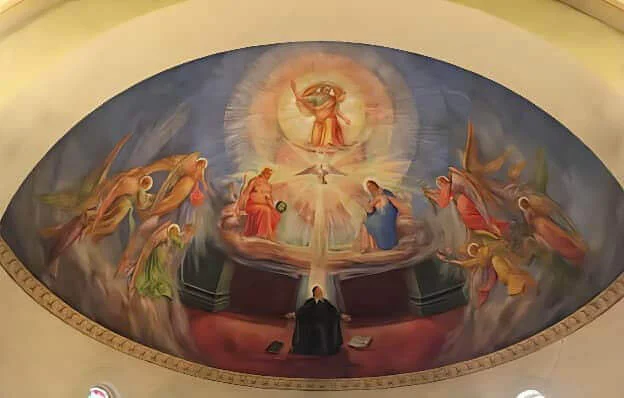
The Frescoes of Sainte-Amélie
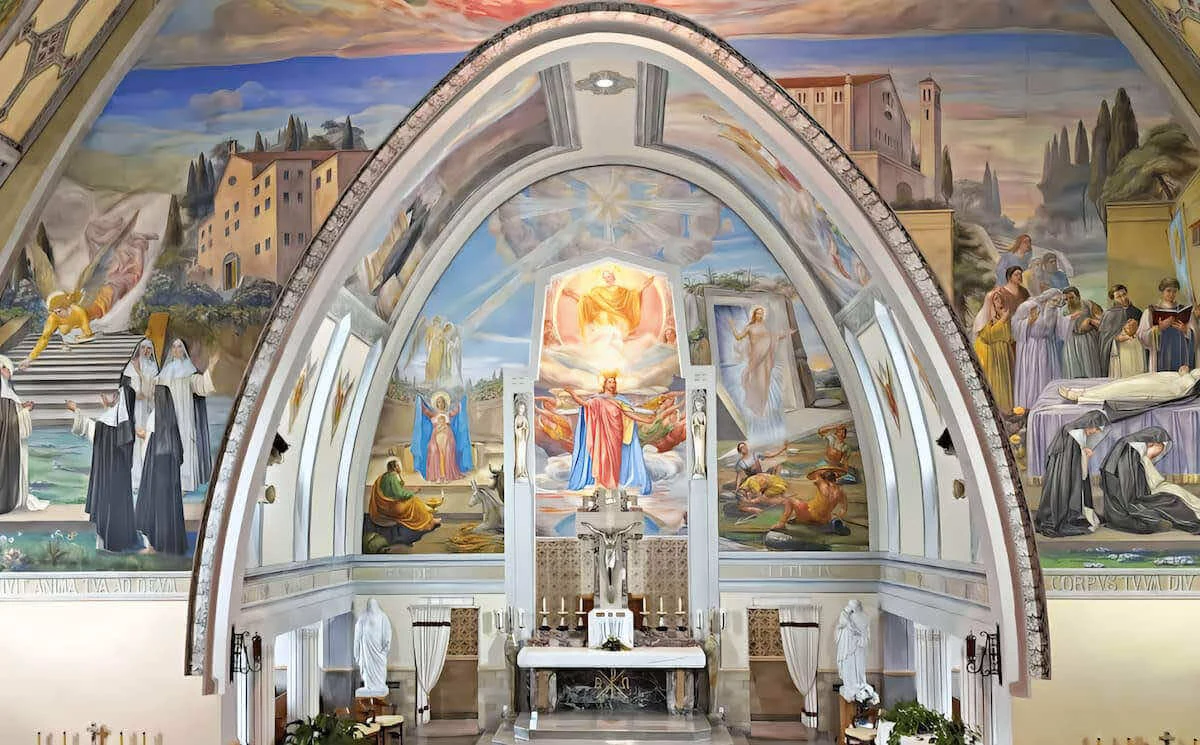
John Eudes, episodes from the life of Saint Amélie, Mater Christi, the Nativity, and the Resurrection.
Read the fresco story →Baie-Comeau · Architecture and heritage
A North Shore church where architecture, light, and frescoes tell a shared story.
Explore ↓Baie-Comeau · Since 1938
Set on a promontory above Baie des Anglais, Sainte-Amélie brings together architecture by Gaston Gagnier and a decorative programme by Guido Nincheri.
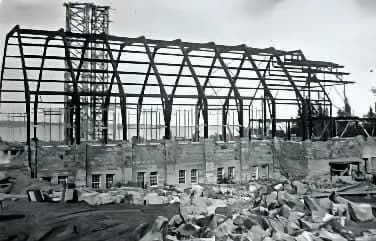
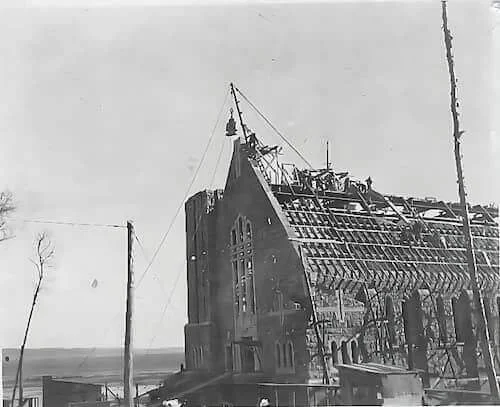
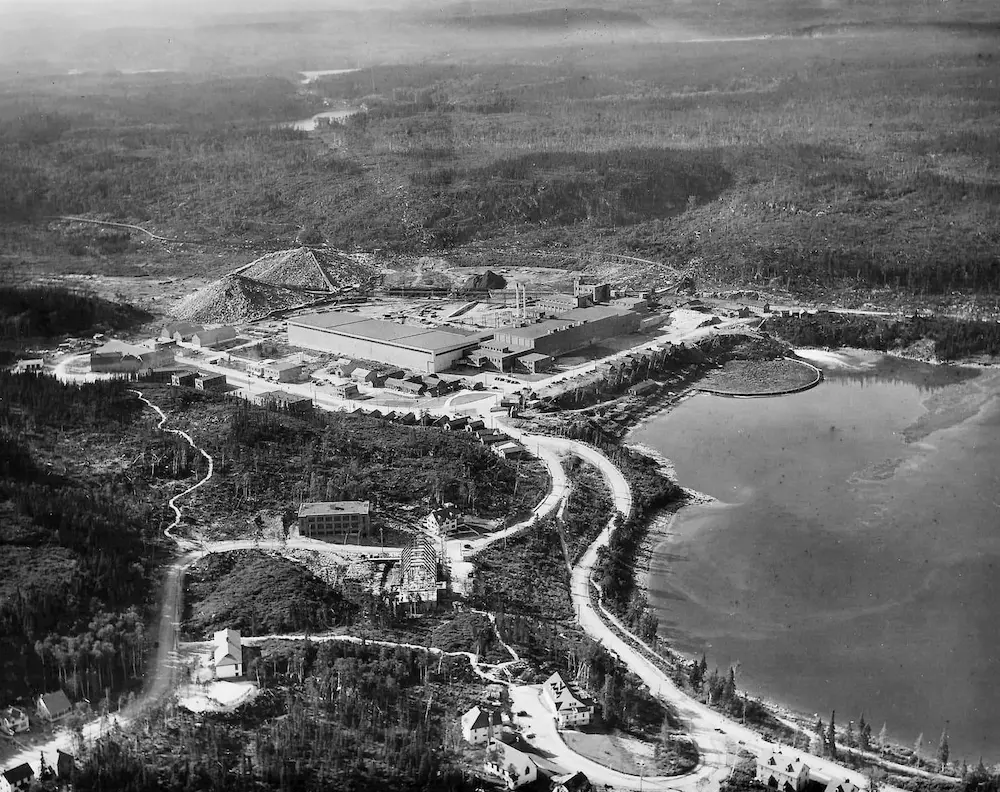
Work began in the winter of 1938 with the foundations and steel frame. The Québec North Shore Paper Company donated the land and contributed to the funding. The church was named for Amélie McCormick, the colonel’s first wife.
Gaston Gagnier designed the building in the spirit of Dom Bellot. Nincheri and his collaborators began the interior decoration in 1941; the work was completed for the 1947 consecration.
1938–1939 · The early stages
The frame and roof take shape as Baie-Comeau grows around the mill.
Architecture · Light · Materials
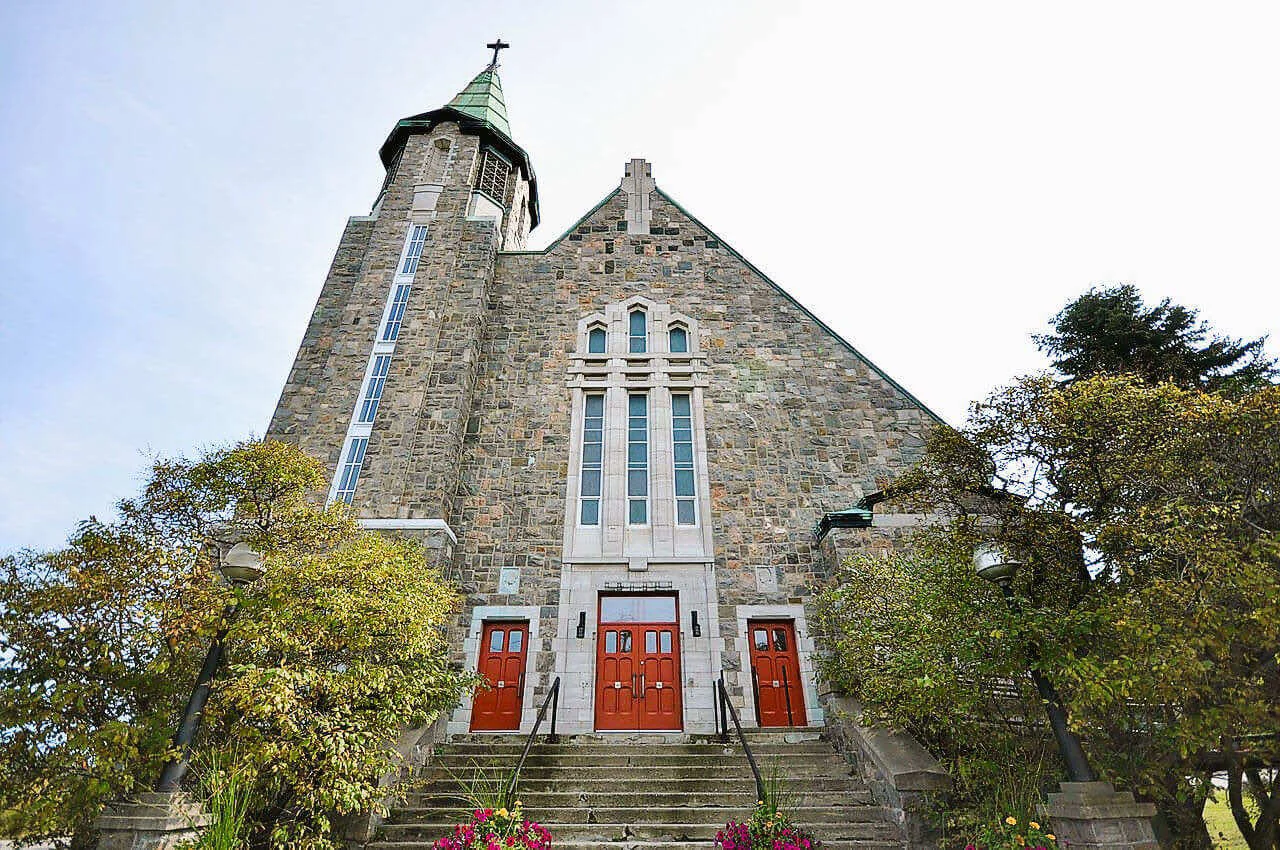
Gaston Gagnier drew inspiration from Dom Bellot: proportions, local materials, and light give the church its character.
The church follows a Latin-cross plan. A pointed-arch steel frame supports the vault; the walls combine terracotta brick and local pink granite. Over time, the copper steeple and roof develop a green patina.
The plastered interior vault gives Nincheri a broad surface for his painted decoration. Natural light complements the frescoes and stained glass.
Two features to explore further
The fresco narrative and iconographic references are presented separately to make the tour clearer.
1 · The story
John Eudes, episodes from the life of Saint Amélie, Mater Christi, the Nativity, and the Resurrection.
Read the fresco story →2 · Symbols
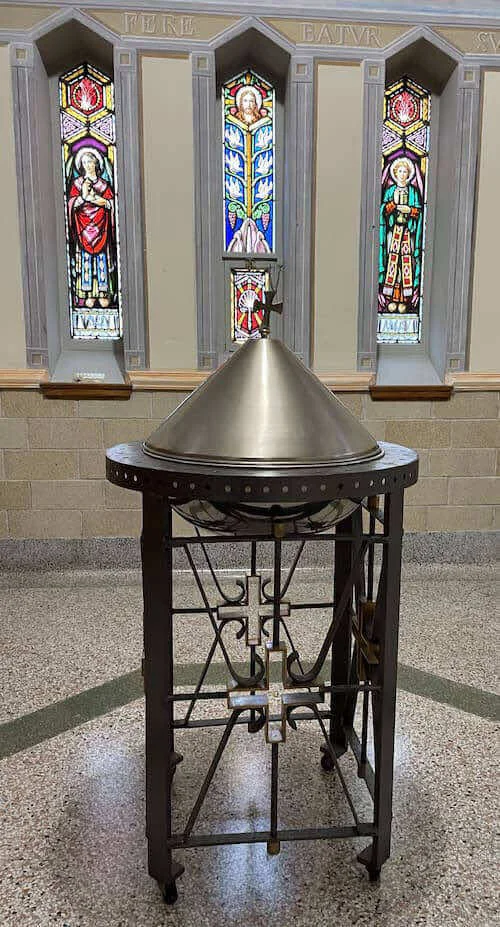
The baptismal font, images on the portal, and two video resources.
Explore the symbols →3 · The vault
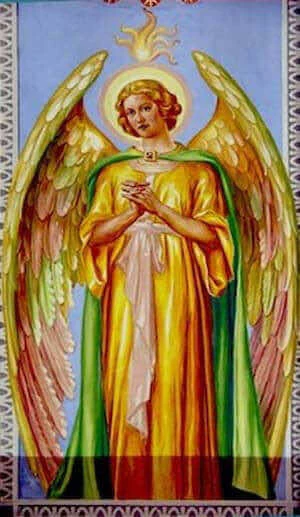
A gallery of figures, instruments, and symbols from the nave vault.
View the gallery →4 · Studies
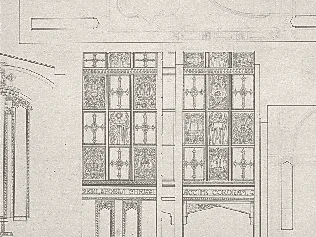
Preparatory drawings and works by Nincheri in other churches.
Browse the studies →The artist
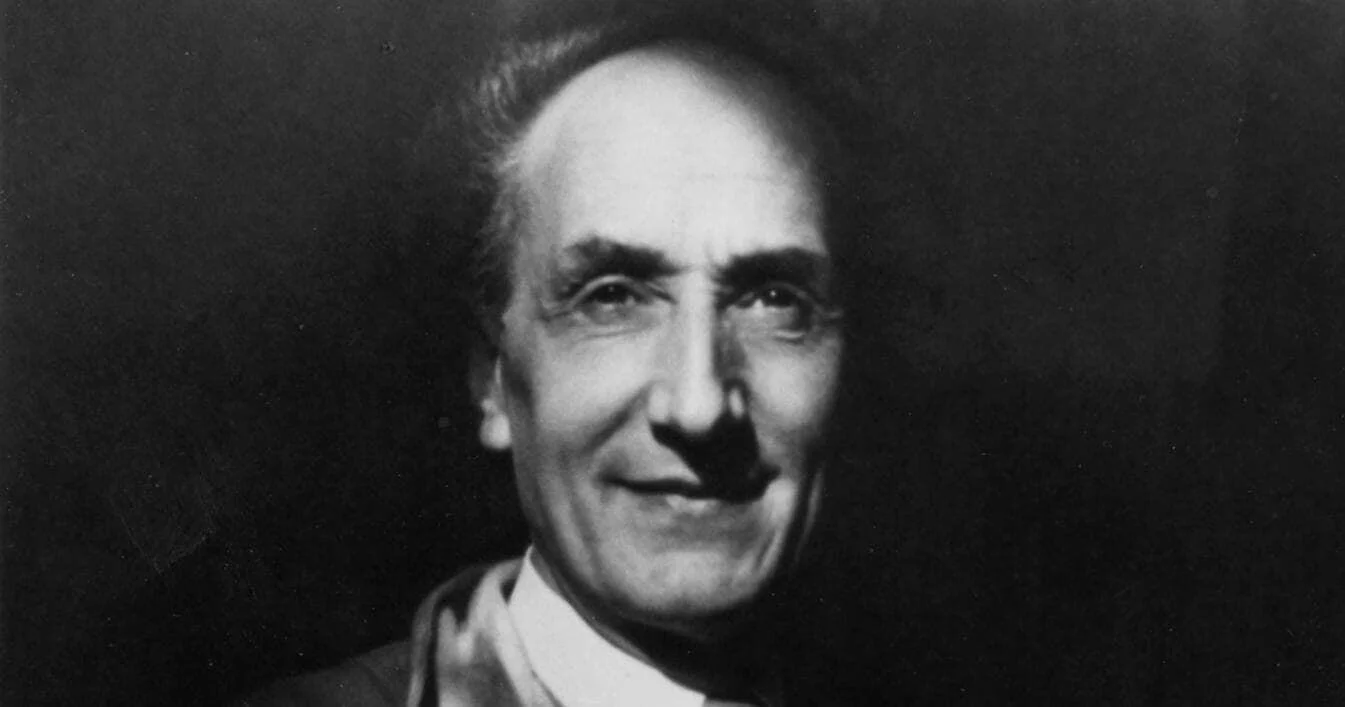
Discover the life and studio of the fresco painter and master glassmaker.
See the Guido Nincheri page →At the heart of the church
The overview brings together the scenes painted around the high altar.