Original issue
L’Écho du Labrador Canadien — facsimile of the archival document.
Read the document in a modalArchives · North Shore · 1903–1905
Accounts by the first Eudists on Québec’s North Shore: voyages, missions, and community life in the early 20th century.
“No religious congregation may be formed without authorization granted by a law that sets out the conditions under which it may operate. It may establish no new institution except by decree issued by the Council of State. The congregation may be dissolved or any of its institutions closed by decree of the Council of Ministers.” (Article 13)
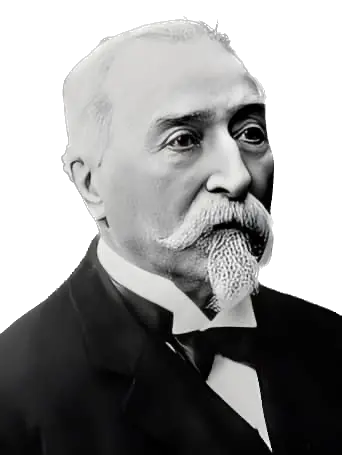
The Eudist Congregation is denied authorization by order of Émile Combes(photo · Eudist Archives)President of the Council of Ministers.
The man
“Father Combes,”so called because he had studied at a seminary,was in fact a doctor. As minister responsible for religious affairs, he displayed strong anti-clericalism through the 1901 and 1904 laws on associations and the ban on teaching by religious congregations. Some 2,500 private schools were closed, though certain congregations—the Sisters of the Poor, nursing sisters, Cistercians, Trappists, contemplative sisters, and missionaries—remained authorized.Members of congregations that were now banned had to leave France. The government ordered the expulsion of communities that resisted. Some civil servants and officers protested and occasionally resigned. A serious political crisis was taking shape. The Combes government decided to purge the civil service and the army and to promote loyal republicans. Combes would insist that the struggle against the Church strengthened and glorified the Republic. He often took a deliberately provocative stance. For example, on September 13, 1903, during Mass, he unveiled a statue of Ernest Renan at the foot of Tréguier Cathedral, protected by 6,000 soldiers.
Source:Wikipedia,Émile Combes
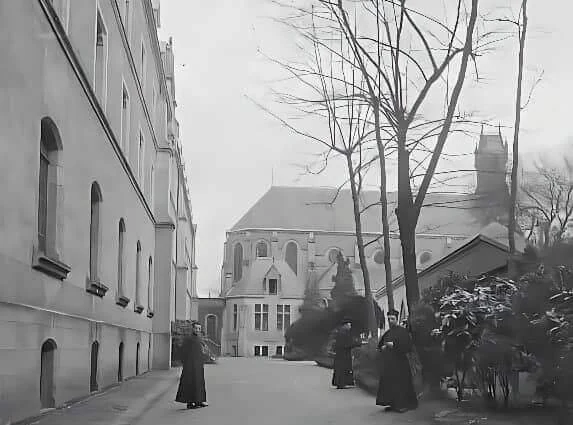
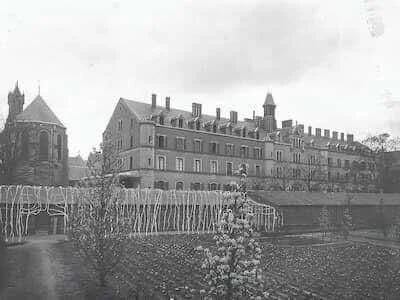
Before an assembly of 200 people in Abbeville on May 1, 1903,Father Létendarddeclares his resolve to resist the unjust tyranny, even if it means going to prison. Father Ange Le DoréFather Ange Le Doré(photo), superior general and one of the leading figures in the congregations’ struggle, expected authorization to be refused. He therefore made a decision: the colleges’ work had to be saved, including that ofSaint-Martin in Rennes, even if that meant handing the schools over to the state and, for the Eudists, leaving France for good.
Photograph |Saint-Martin in Rennes· Eudist Archives
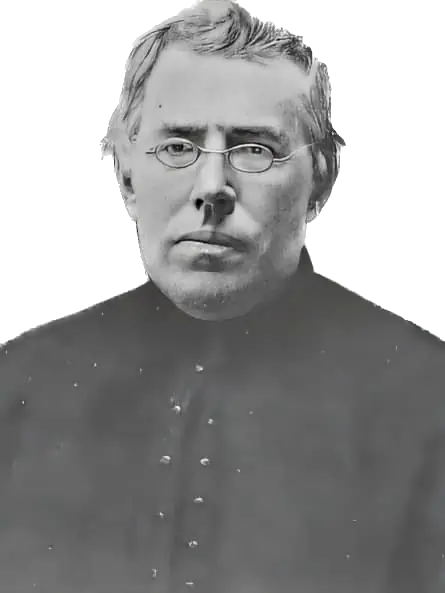
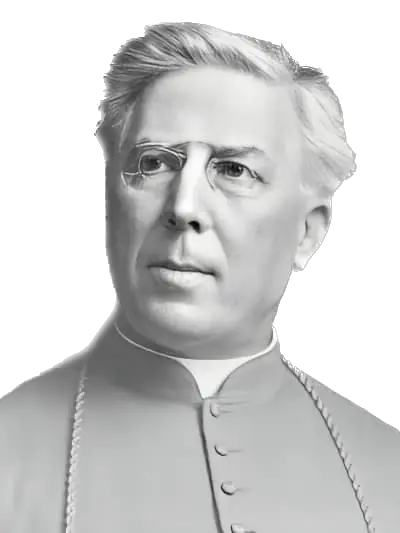
FatherGustave Blanche(photo), a former officer who helped establish the first Canadian foundations, made two trips to Texas and New Orleans, as well as to New York and Rimouski. The first Eudists arrived in Nova Scotia in 1890. In 1903, Father Blanche took charge of theApostolic Prefecture of the Gulf of St. Lawrence. Like Acadia, where the Eudists were already well established, the North Shore became new mission territory for the congregation.
Photograph |Bishop Blanche’s corvette ·Eudist Archives
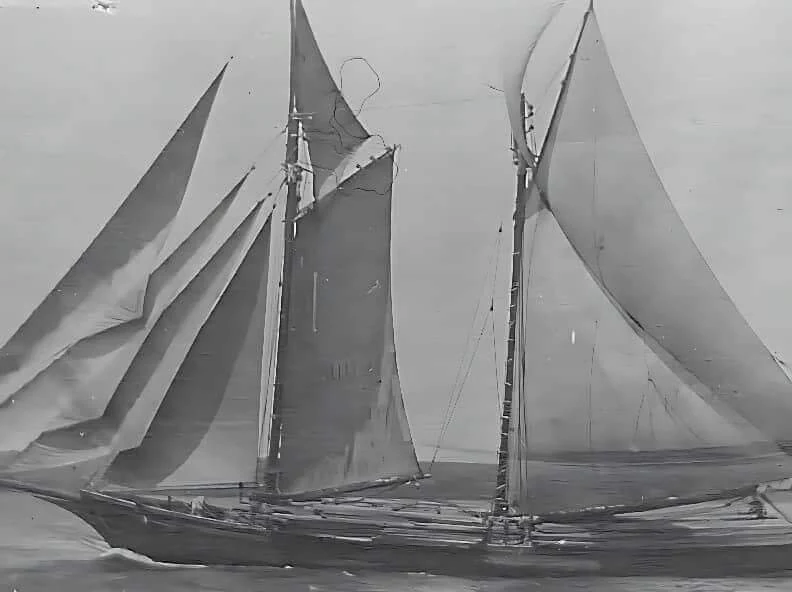
The missionary
Born on April 30, 1848, in Josselin (Diocese of Vannes), to Louis-Marie-Antoine Blanche and Marie-Caroline Hayard, he enlisted in the army at age 21 when war broke out in 1870. In 1873, he entered the Eudist Fathers’ novitiate and was ordained a priest on March 16, 1878. He went to Nova Scotia in 1890 to establish a mission and the college at Church Point. Recalled to France in 1899, he returned in 1902. In 1903, he was appointed Apostolic Prefect of the Gulf of St. Lawrence in Chicoutimi, then Apostolic Vicar in 1905. He had served as Eudist provincial before being appointed prefect.
He lived inPointe-aux-Esquimaux[Havre-Saint-Pierre], and moved to Sept-Îles in 1906. While in Paris on July 27, 1916, he died suddenly during a session of his congregation’s general assembly. Bishop Patrice Chiasson succeeded him as Apostolic Vicar the following year.
Source:City of Baie-Comeau,Place Names Directory, 2011
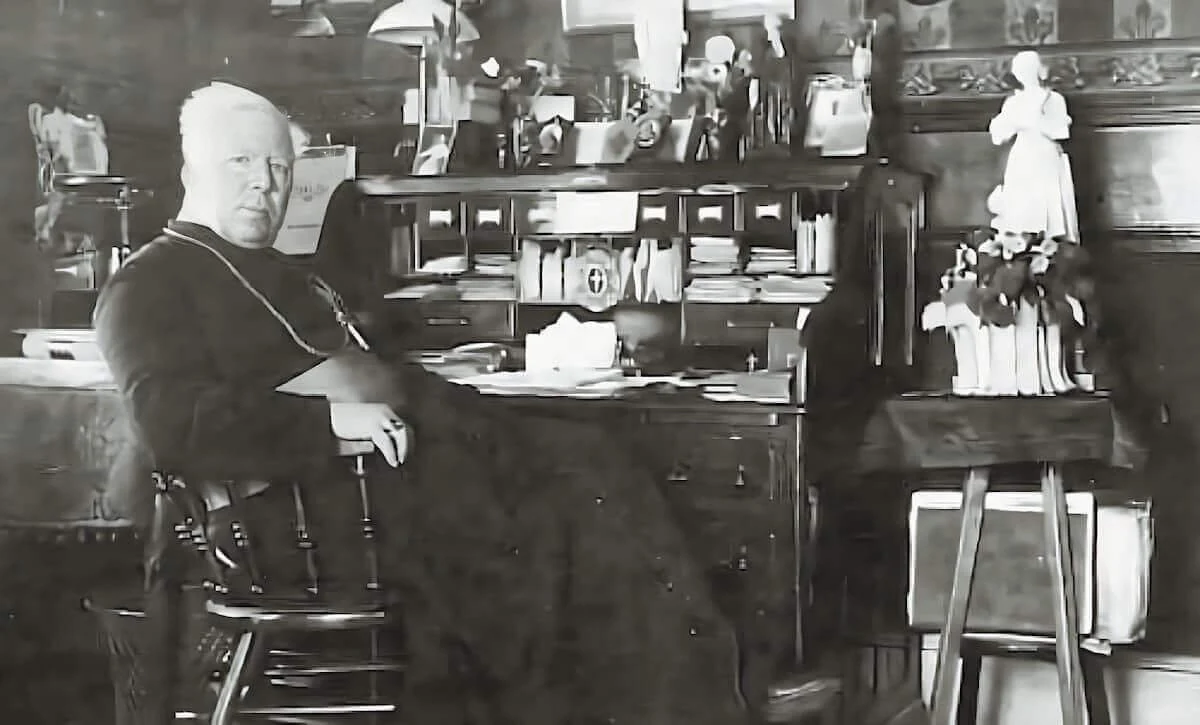
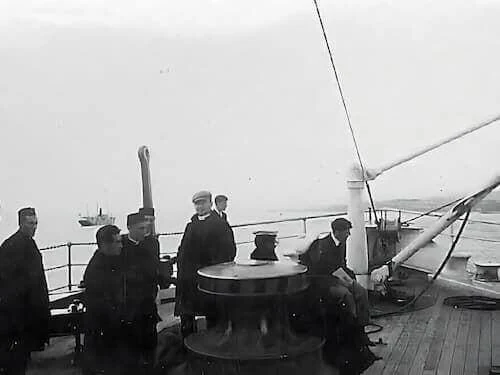
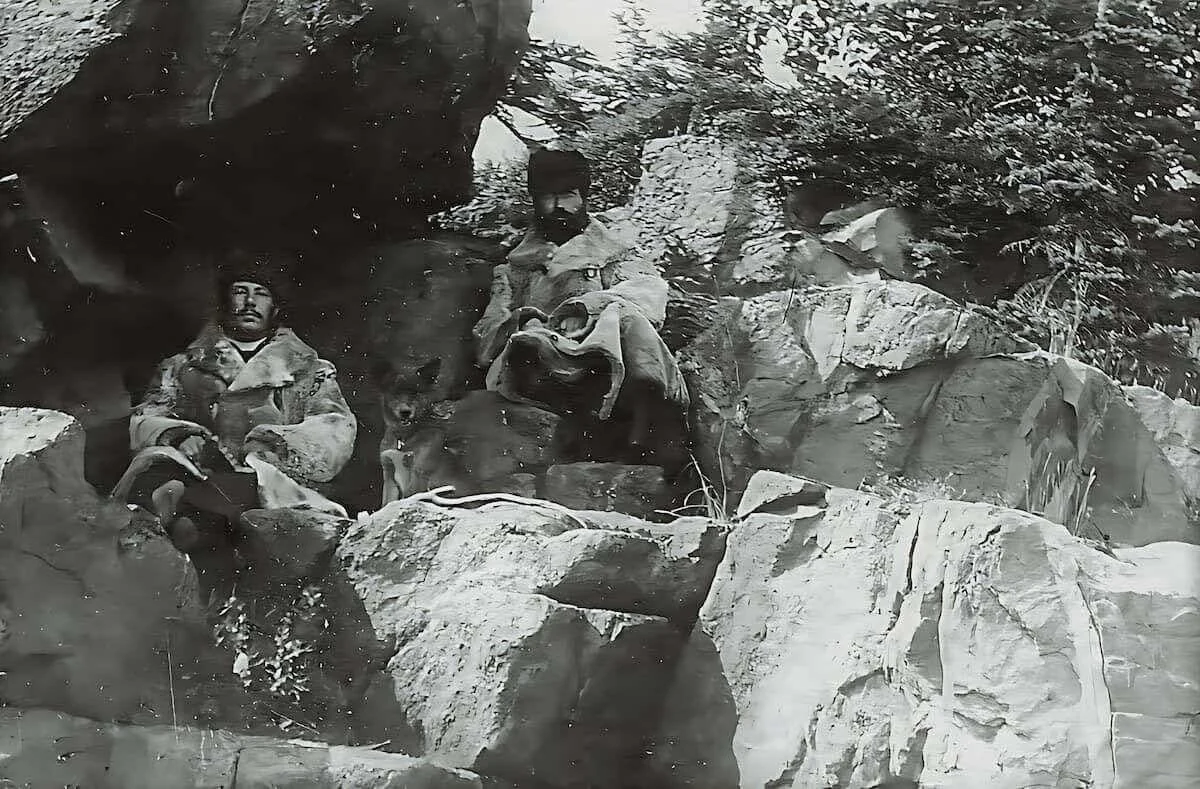
They were Manicouagan, Rivière-Pentecôte, Sept-Îles, Rivière-au-Tonnerre, Magpie, Pointe-aux-Esquimaux, and Natashquan. They were between 27 and 55 years old. Among them were:Joseph Robin, Arthur Rivest, Louis Héry, François Hersy, Joseph and Étienne Gallix, and Louis Garnier.Jean-Marie Conan and Auguste Brézel(photo), François Pétel, and Auguste Tortellierdrowned, whileJean Le Jollecdied in a hunting accident.
Photograph |The Fathers depart· Eudist Archives
Source:Laperrière, Guy,Les Congrégations religieuses: Au Plus fort de la tourmente 1901–1904, p. 342
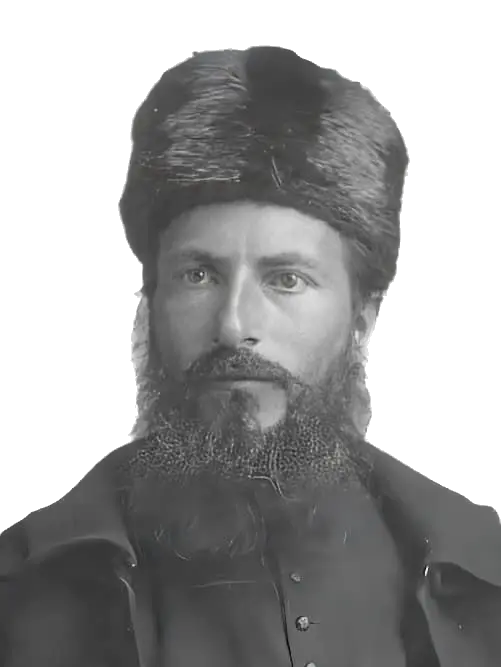
The missionary
He was born on November 3, 1868, in Fougères, Ille-et-Vilaine, in the Diocese of Rennes, France. At 13, he was admitted to the Saint-Louis junior seminary in Plancoët (Côtes-du-Nord) and completed his secondary studies at Saint-Sauveur-de-Redon, near Saint-Martin in Rennes. In 1888, he entered the novitiate at Kerlois, then the one at La-Roche-du-Thiel, and was ordained a priest on June 18, 1893. He chose Canada and joined the first group of Eudists to arrive at Saint-Eugène-de-Manicouagan (Old Post) in September 1903. He ministered there and at the surrounding posts. Gifted as a painter, he decorated the interior of the Saint-Eugène chapel. He completed the church and rectory at Saint-Eugène and restored the church and school in Bersimis.
A photograph shows him with Father LeStrat in 1907. By 1909 he was alone in Manicouagan, as the sawmill had nearly ceased operating.
He died in Bersimis on December 7, 1911, when he fell through the ice on the river of the same name. His body was found on May 9, 1912, at Cap-au-Renard, and he was buried in Pointe-au-Père.
Source:City of Baie-Comeau,Place Names Directory, 2011
Founded by Father Joseph Laizé, this “monthly newsletter of the Apostolic Prefecture of the Gulf of St. Lawrence” was published from 1903 through June 1905.
Below are the original issue and its transcription by the Société historique de la Côte-Nord.
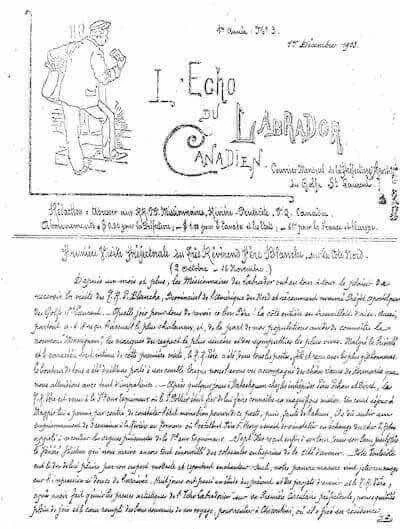
Digitized archives
The two resources, formerly hosted on SharePoint, are now stored in the website’s files and can be accessed without a Microsoft account.
L’Écho du Labrador Canadien — facsimile of the archival document.
Read the document in a modalTranscription by the Société historique de la Côte-Nord.
Read the transcription in a modalThis account byFather Joseph Laizé, taken from L’Écho du Labrador, describes his arrival withFather Louis Nonorgues(photo) on Québec’s North Shore.
It was eleven o’clock at night when the steamer King Edward, carrying all the new staff of the Apostolic Prefecture, stopped in the small bay where the modest Rivière-Pentecôte empties into the sea. It was pitch-dark, the wind was against us, and the tide was very low…
Photograph |Rivière-Pentecôte· Eudist Archives
Use the audio player to listen to the account read byAlain Jourdain. Click the button to read the excerpt.
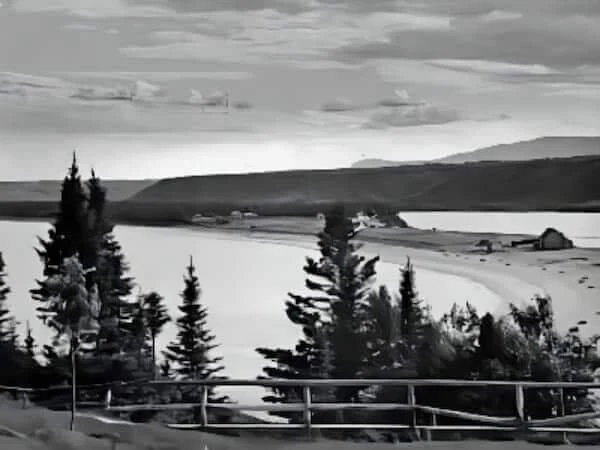
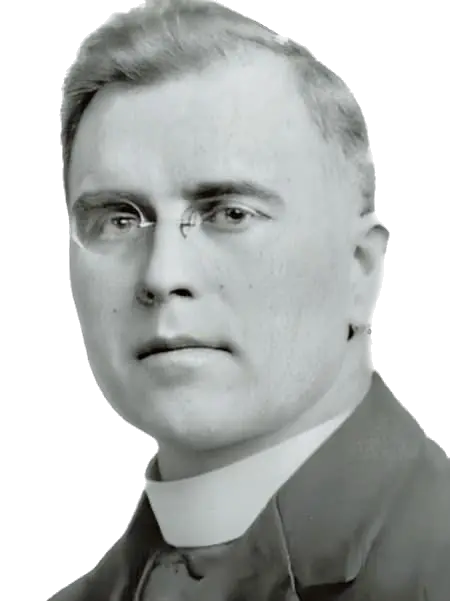
The missionary
He was born in Parigné, near Fougères, Ille-et-Vilaine, France, on August 17, 1875. He joined the Eudists and came to Canada with the first contingent, becoming pastor of Rivière-Pentecôte in 1903. He was accompanied by Father Nonorgues and remained there until 1905. On his arrival, he founded the first newspaper on the North Shore, L’Écho du Labrador: a six-page paper printed on ordinary writing paper. Its last issue appeared just as he was leaving. Father Laizé was sent to New Brunswick in 1905.
He was mobilized and returned to France. He died on March 21, 1940.
Source:City of Baie-Comeau,Place Names Directory, 2011
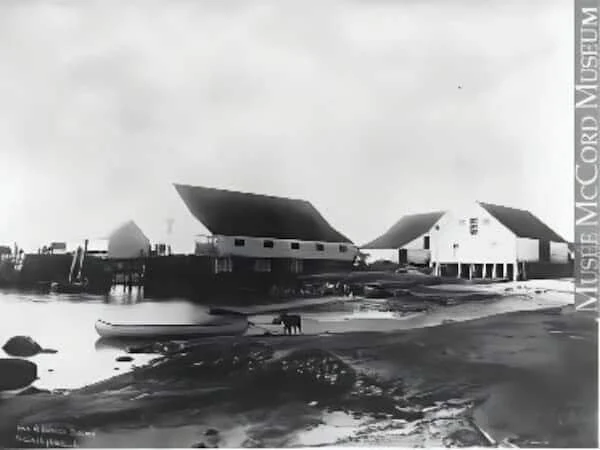
This account byFather Arthur Divet(photo), taken from L’Écho du Labrador, recounts his meeting with the families of Natashquan.
We arrived here on Monday morning, August 31, at about half past eight. I do not know whether Father Gallix sent a telegram as we had asked him to, but no one had been told. Fortunately, some people had come to the King to pick up supplies…
Photograph |Natashquan, Québec, circa 1870 · McCord Museum MP-0000.1828.67
Use the audio player to listen to the account read byAlain Jourdain. Click the button to read the excerpt.
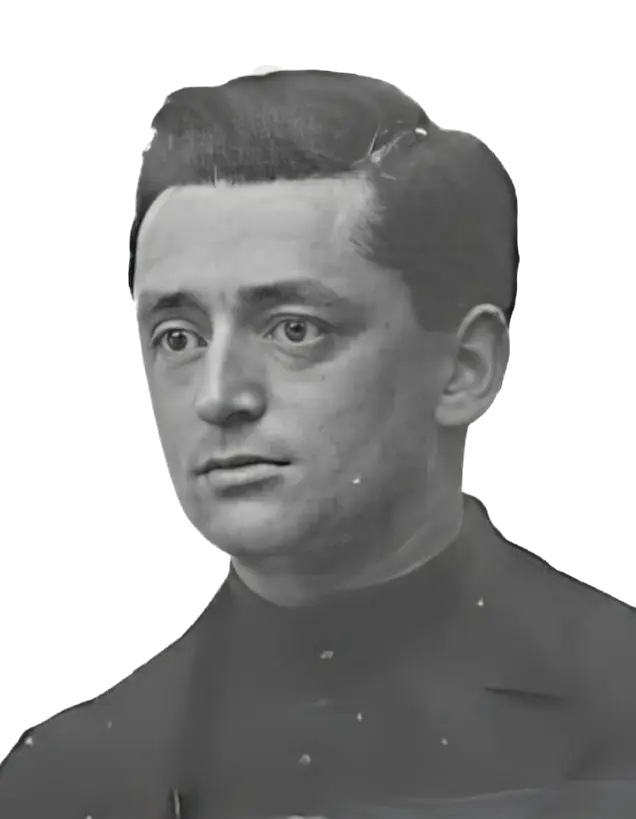
The missionary
He was born on November 14, 1876, in Janzé, Ille-et-Vilaine, France. He joined the Eudists and came to Canada at a young age with the first contingent, which landed on the North Shore in September 1903. He was sent immediately to Natashquan. From 1904 to 1912 he ministered in Sept-Îles, from 1912 to 1915 in Rivière-Pentecôte, and from 1915 to 1916 in Sept-Îles again. He returned there in 1917 to rebuild the church after a fire and remained until 1936. He died in Laval-des-Rapides in 1957.
He was said to have an unusual personality: an abrupt temperament and plain speech, but a heart of gold and a devoted spirit. His parishioners revered him and laughed at his outbursts.
Source:City of Baie-Comeau,Place Names Directory, 2011
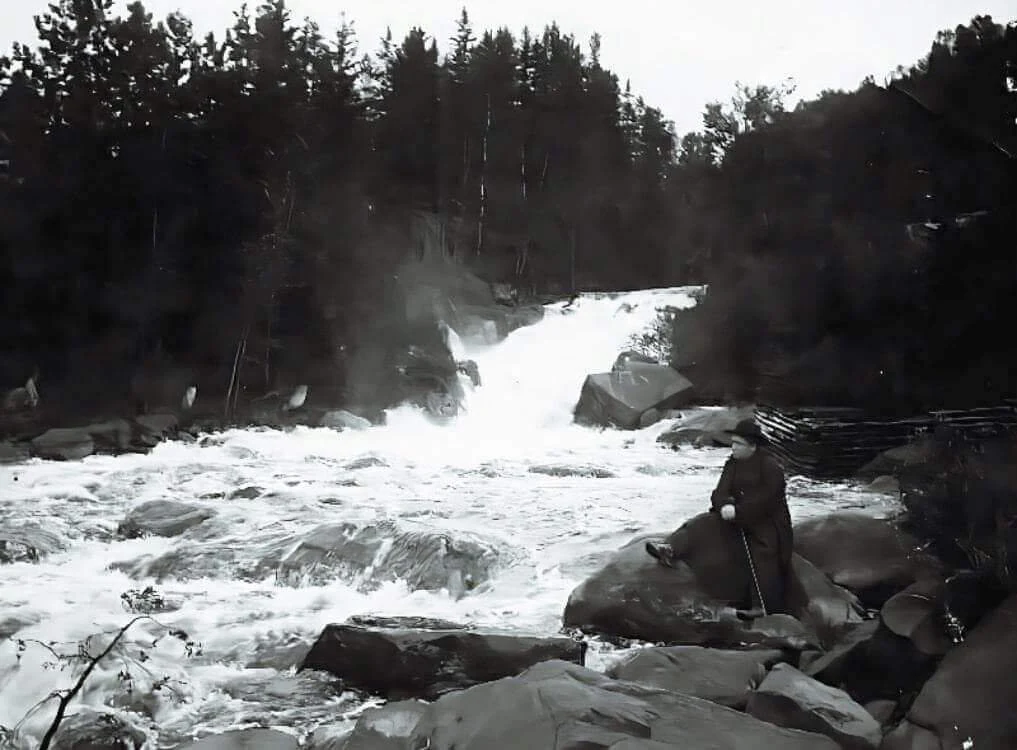
07
Mission account · Havre-Saint-Pierre
This account by FatherFerdinand Pottier, taken from L’Écho du Labrador, describes, among other things, Father Blanche’s visit to Pointe-aux-Esquimaux, now Havre-Saint-Pierre.
“Pointe-aux-Esquimaux is much like the post at Sept-Îles. About a mile or two across from us lies Île du Havre, three to four kilometres long, edged with limestone cliffs and covered in birch and spruce. It offers valuable shelter from southerly winds.”
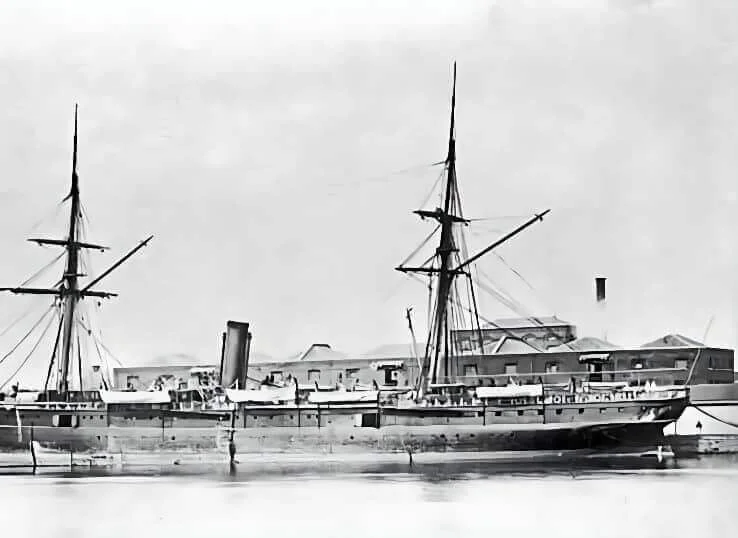
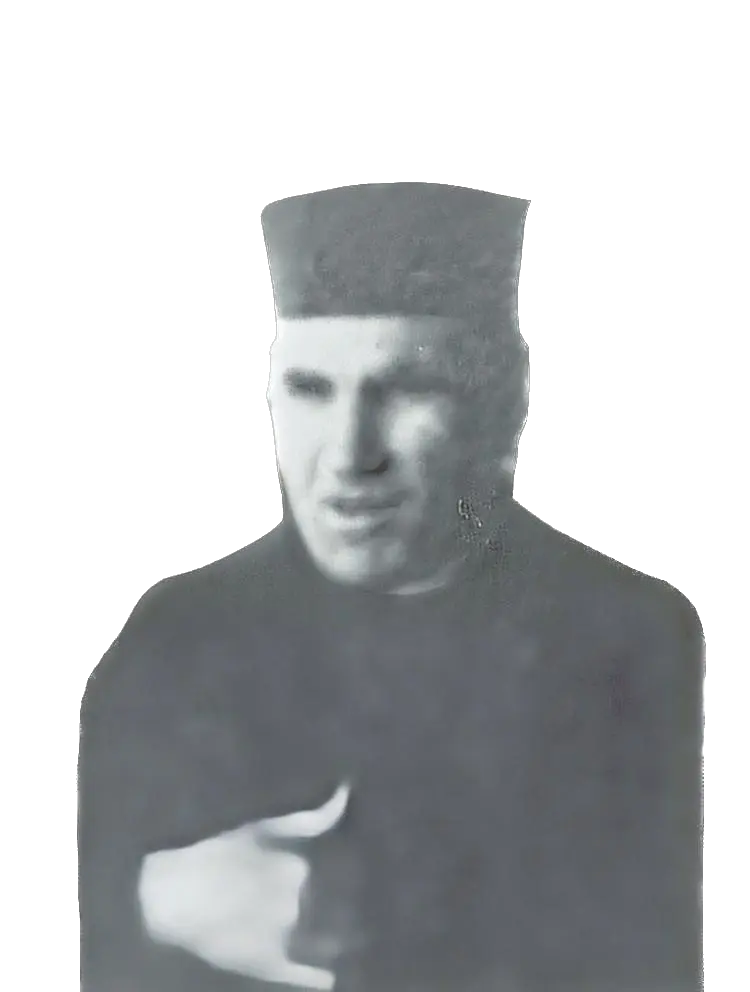
Father Ferdinand-Marie-Victor Pottier · The Douro, photograph: Scottish Built Ships
The missionary
Born on November 21, 1854, in Étrelles, near Rennes in Ille-et-Vilaine, he joined the Eudists and was part of the first contingent to arrive on the North Shore in September 1903. He was assigned as pastor to Havre-Saint-Pierre until 1905.
He returned to France in 1913 and died there on January 20, 1925.
Source: City of Baie-Comeau,Place Names Directory, 2011.
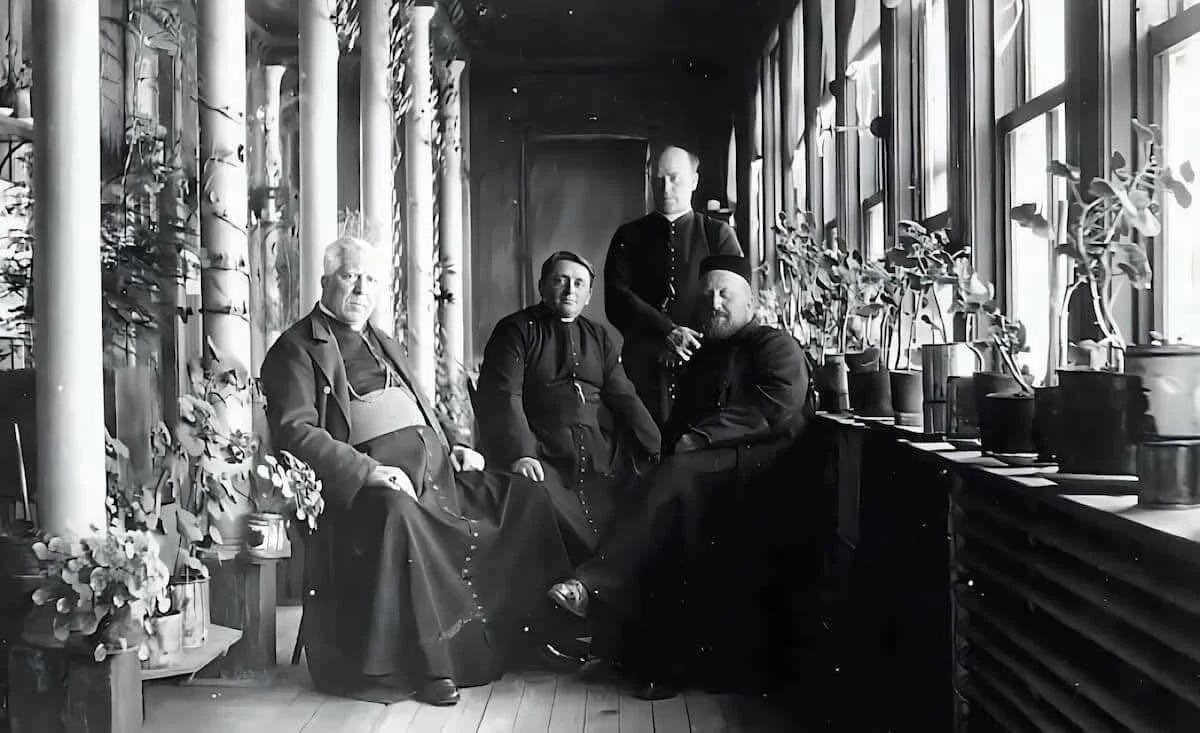
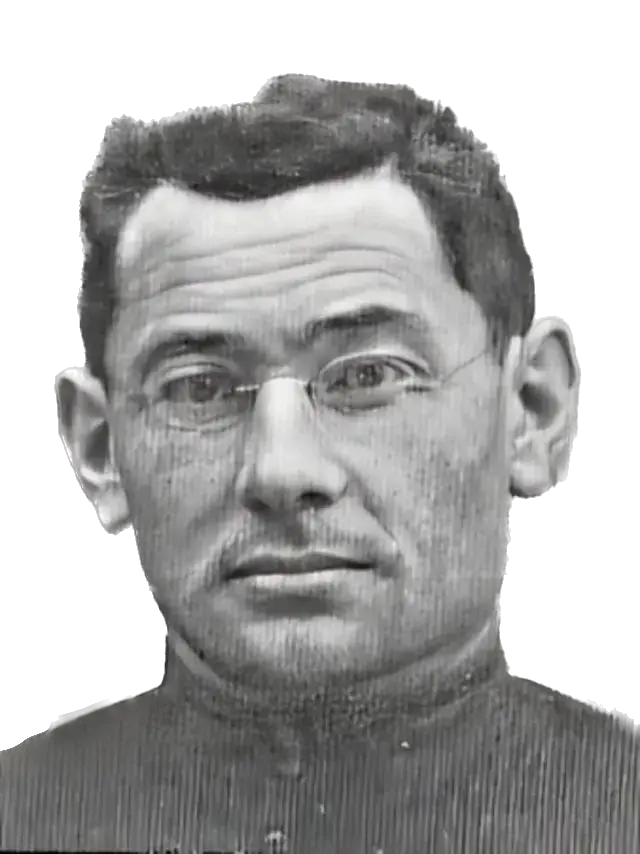
This account byFather Louis Héry(photo), taken from L’Écho du Labrador, recounts his visit to Rivière-au-Tonnerre.
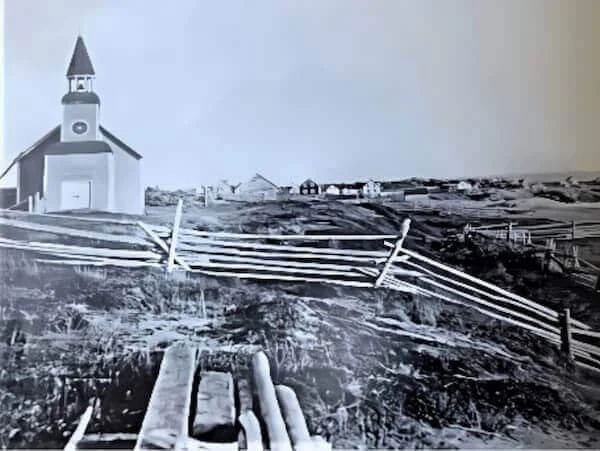
Good morning! We are well, thank you! In reply to your kind letter, and so that you may hear another echo of the missions in the Apostolic Prefecture of the Gulf of St. Lawrence, here is a short message that may not make much noise, though it comes from Rivière-au-Tonnerre…
Photograph |Rivière-au-Tonnerre· Municipality of Rivière-au-Tonnerre
Use the audio player to listen to the account read byAlain Jourdain. Click the button to read the excerpt.
The missionary
Louis-Marie Héry was one of the first Eudist missionaries sent to the North Shore in 1903. Historical accounts place him in Rivière-au-Tonnerre. In his account dated October 2, 1903, he describes the arrival of the steamerKing Edwardand the missionaries’ first days in the parish.
Sources: Musée de la Côte-Nord, “Eudist Fathers” collection; Basile Babin, “The Vicariates of the Coast,” Eudist Archives; L’Écho du Labrador, October 2, 1903.
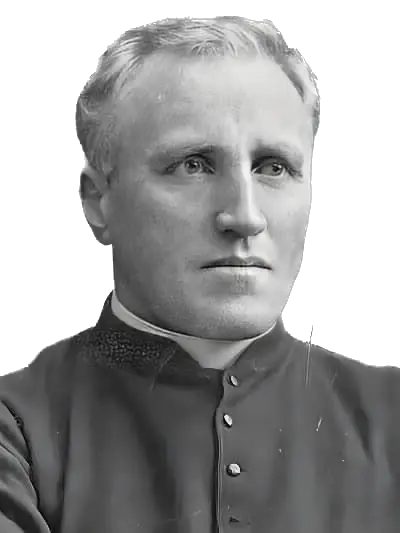
This account byFather Louis Garnier(photo), taken from L’Écho du Labrador, recounts a visit from Manicouagan to Pointe-aux-Outardes.
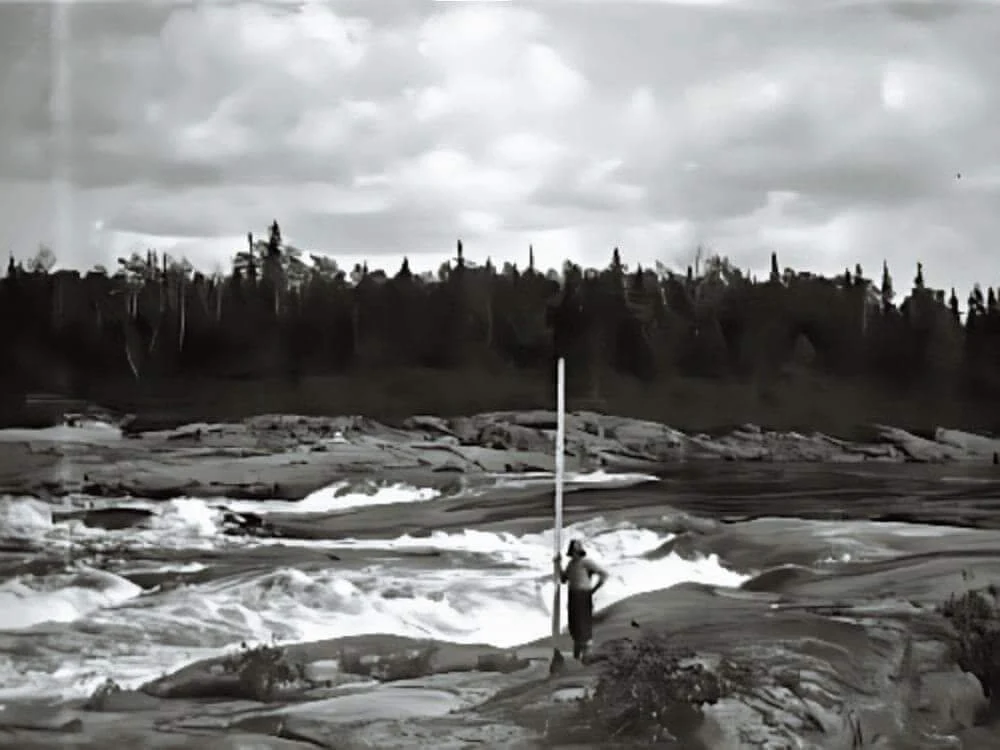
Manicouagan! If only you knew what a beautiful place it is! I do not think there are many sites like it in the world. It is a small bay formed by the Manicouagan, with the open water about a league away, just across from our rectory. I need not tell you about the streets or sidewalks; they are so like those in Pentecôte…
Photograph |Manicouagan River· Wikipedia
Use the audio player to listen to the account read byAlain Jourdain. Click the button to read the excerpt.
The missionary
An Eudist, he was born in Javen, near Fougères, on August 21, 1871. He was ordained a priest in Paris on September 22, 1894. After teaching in Rennes and Redon, he joined the group of Eudists who landed at Saint-Eugène-de-Manicouagan. He stayed there only two years, from 1903 to 1905. He was bursar at the Church Point college from 1905 to 1907, curate on Anticosti Island from 1907 to 1908, pastor of Natashquan from 1908 to 1918, and pastor of Rivière-au-Tonnerre from 1918 to 1945. He later served as an assistant in Baie-Comeau, where he wroteFrom komatik to airplane.
He died at Saint-François-d’Assise Hospital in Québec City on May 6, 1950, aged 79. The writer Robert Parisé called him “the Curé Labelle of the North Shore.”
Source:City of Baie-Comeau,Place Names Directory, 2011
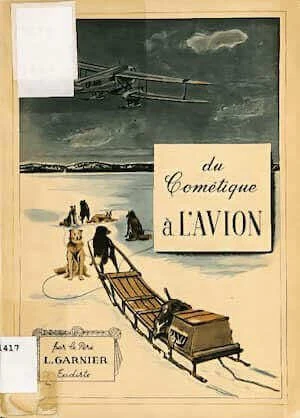
The remarkable volume by Reverend Father Louis Garnier, [From Komatik to Airplane], opens our eyes to the admirable, almost unknown history of the first Eudist missionaries […] Our fellow citizens will be able to see the origins and apostolic development of the North Shore. —N.-A. Labrie
Click the cover to open the book
Next · North Shore
Missionary portraits and accounts published inL’Écho du Labradorand memories of their first years on the North Shore.
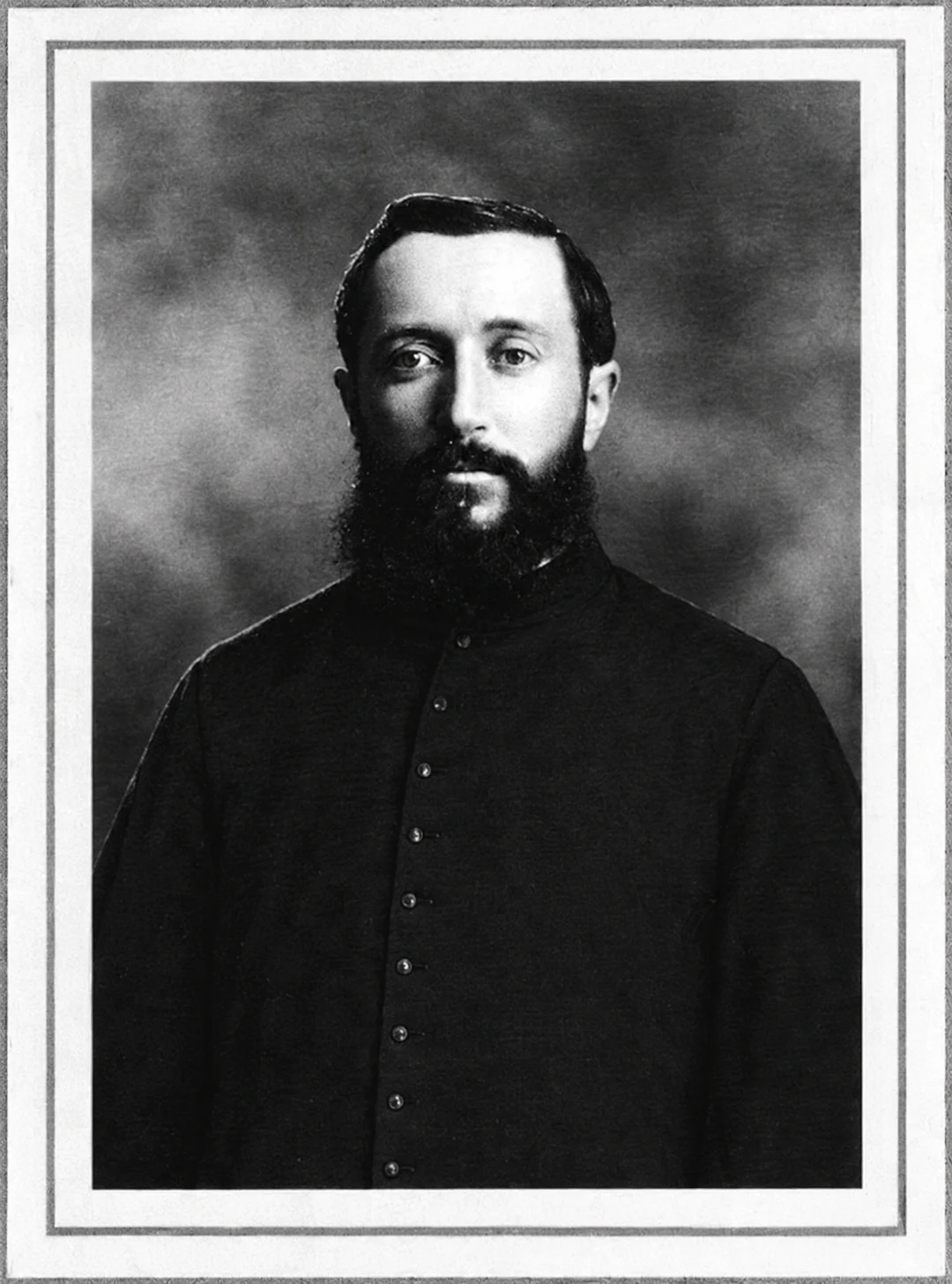
Born near Coutances on December 30, 1878, he arrived on the North Shore in 1910. He served Bersimis, Saint-Eugène-de-Manicouagan, and Pointe-aux-Outardes, then Anticosti Island and Sept-Îles. He returned to France in 1929 and died in 1955.
Biographical source: City of Baie-Comeau,Place Names Directory, 2011.
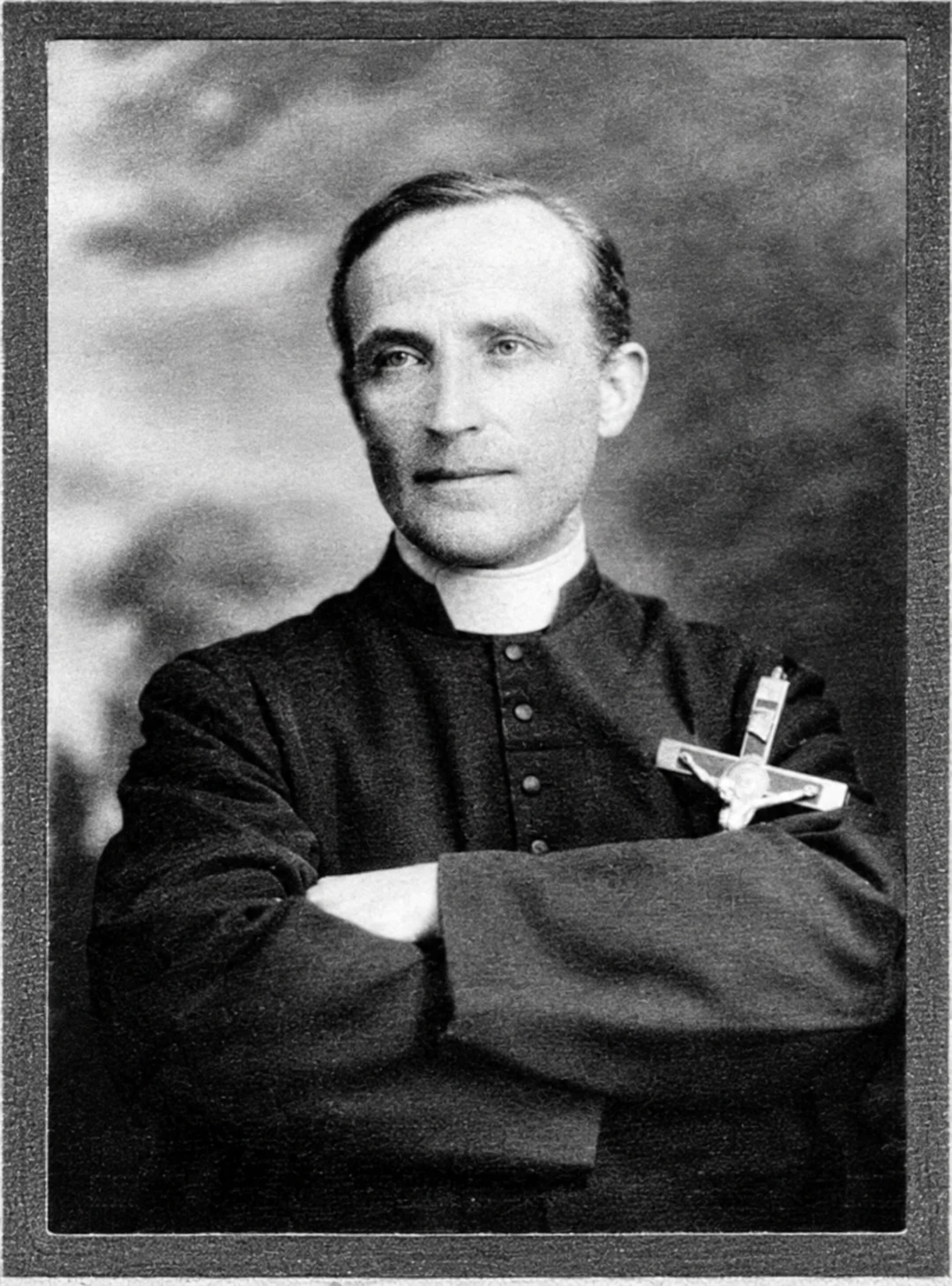
A missionary on the North Shore from 1912 to 1922, he quickly learned Montagnais and assisted Father Étienne Régneault on the missions at Pentecôte and Port-Cartier-Ouest. He and ten men perished on Lake Pasteur in November 1922.
Biographical source: City of Baie-Comeau,Place Names Directory, 2011.
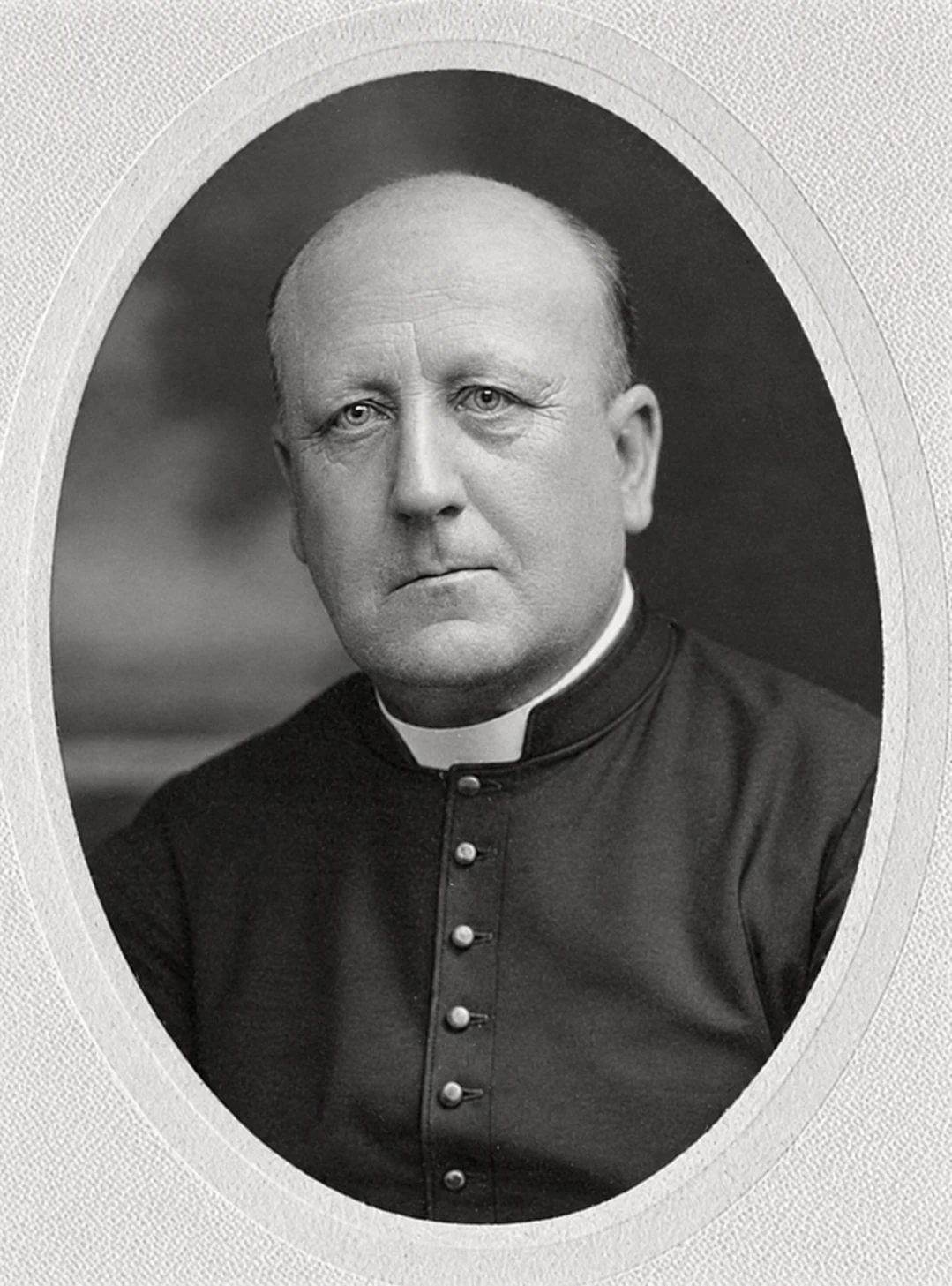
Born in Brittany in 1870, he was part of the first Eudist contingent to arrive in September 1903. He served at Havre-Saint-Pierre, on Anticosti Island, in Sept-Îles, and in Rivière-au-Tonnerre, before returning to Havre-Saint-Pierre, where he died in 1924.
Biographical source: City of Baie-Comeau,Place Names Directory, 2011.
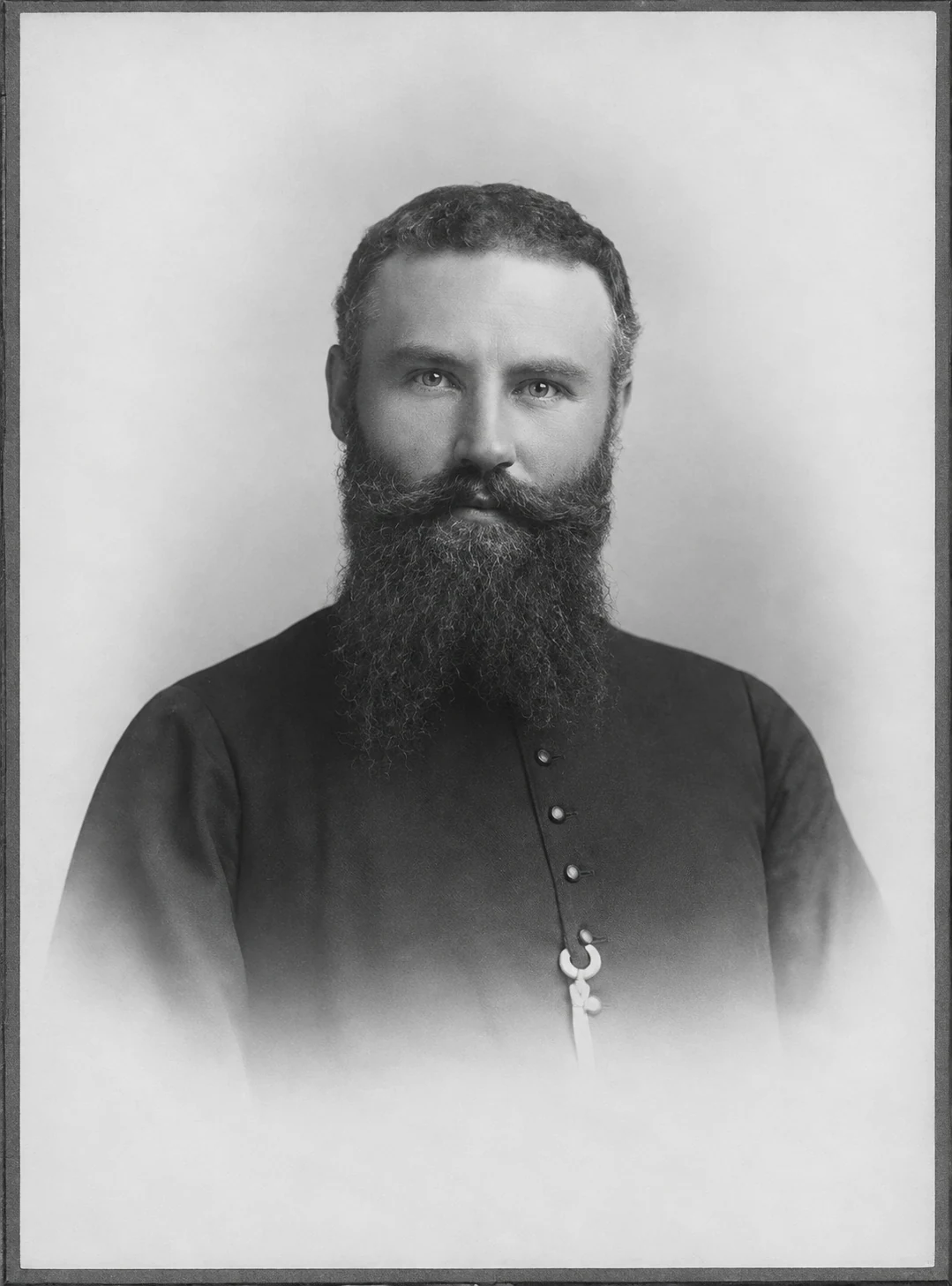
Born in Finistère in 1883, he became a missionary in Betsiamites in 1910. In 1913, he went hunting after hearing that a flock of partridges had been spotted. An accidental gunshot killed him.
Biographical source: Louis Garnier,From Komatik to Airplane.
10
This account by Father Pierre-Marie Brochard tells the story of Florida and Rosanna Hébert, aged twelve and thirteen, and seven-year-old Joséphine Petitpas and her older sister Elvine.
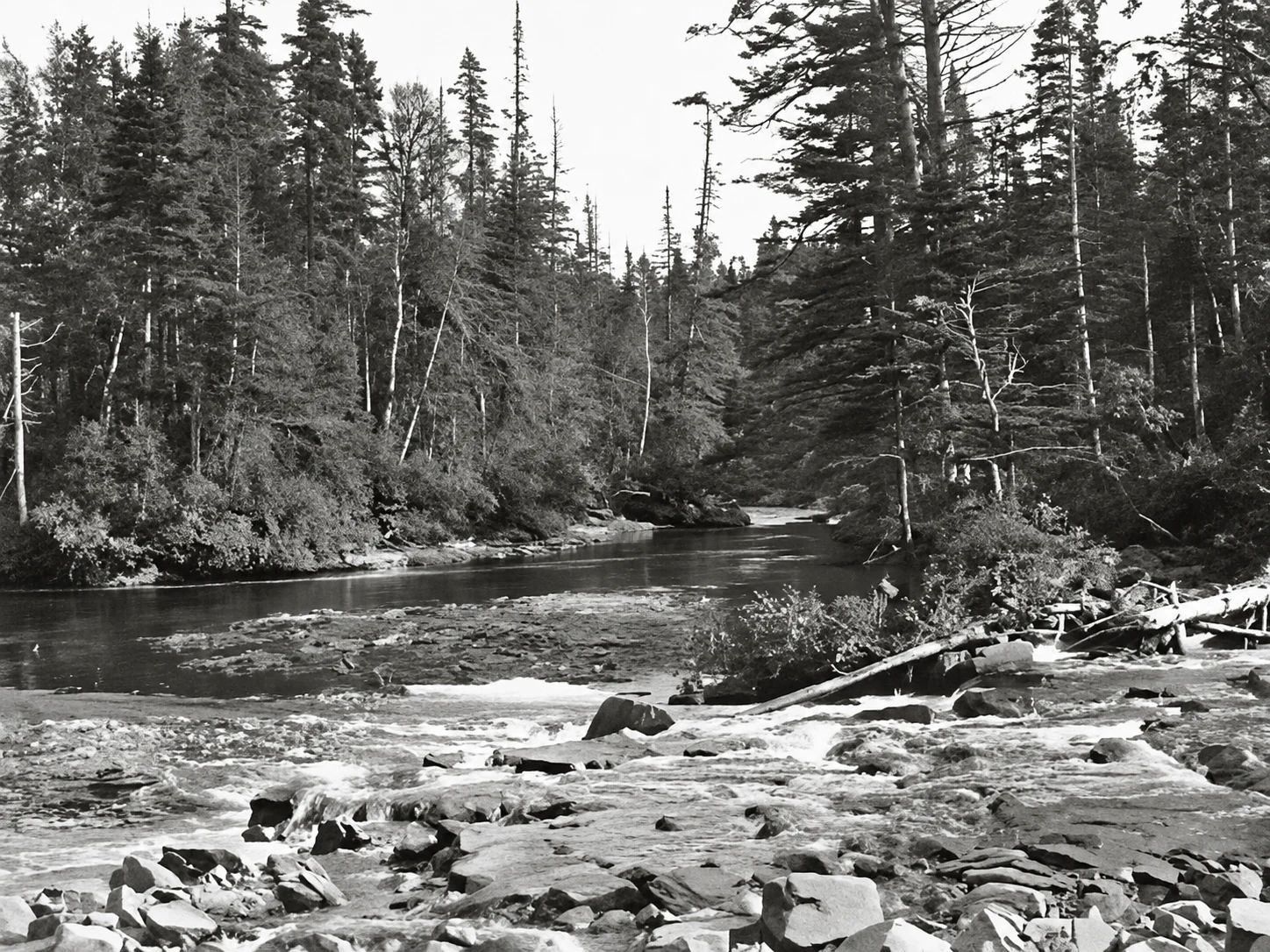
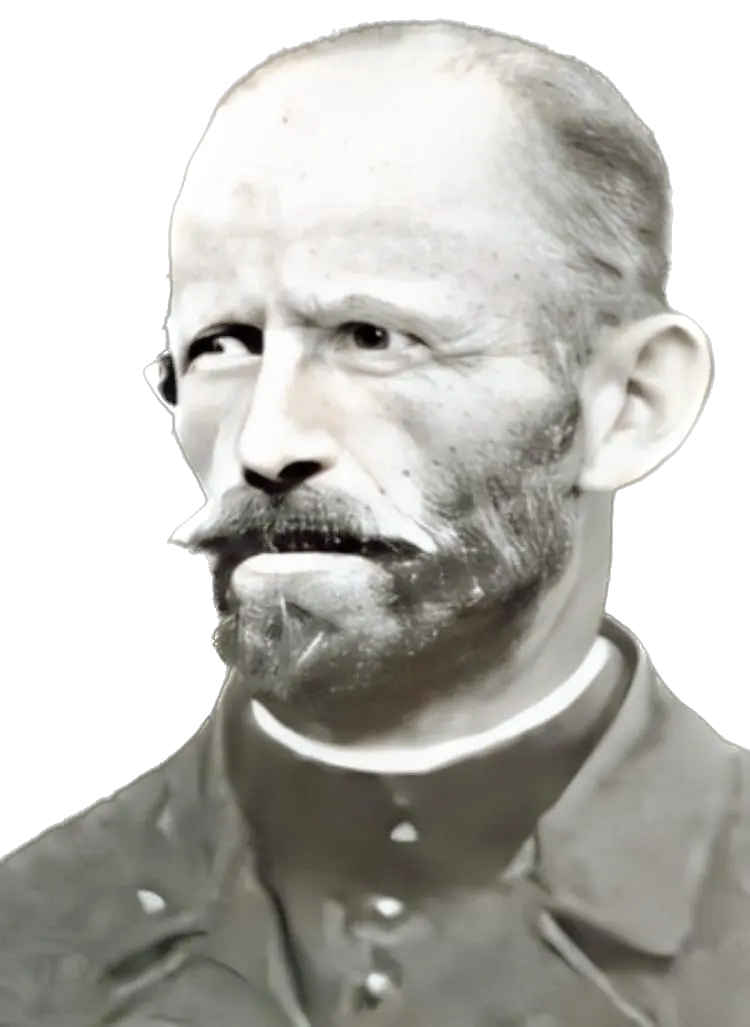
And so they went on, now walking along the shore where the tide gently lapped at their feet, glittering in the sun, now running and fluttering about in search of rare bluebells as the breeze played in their hair…
Photograph |Sept-Îles, summer woodland· Eudist Archives
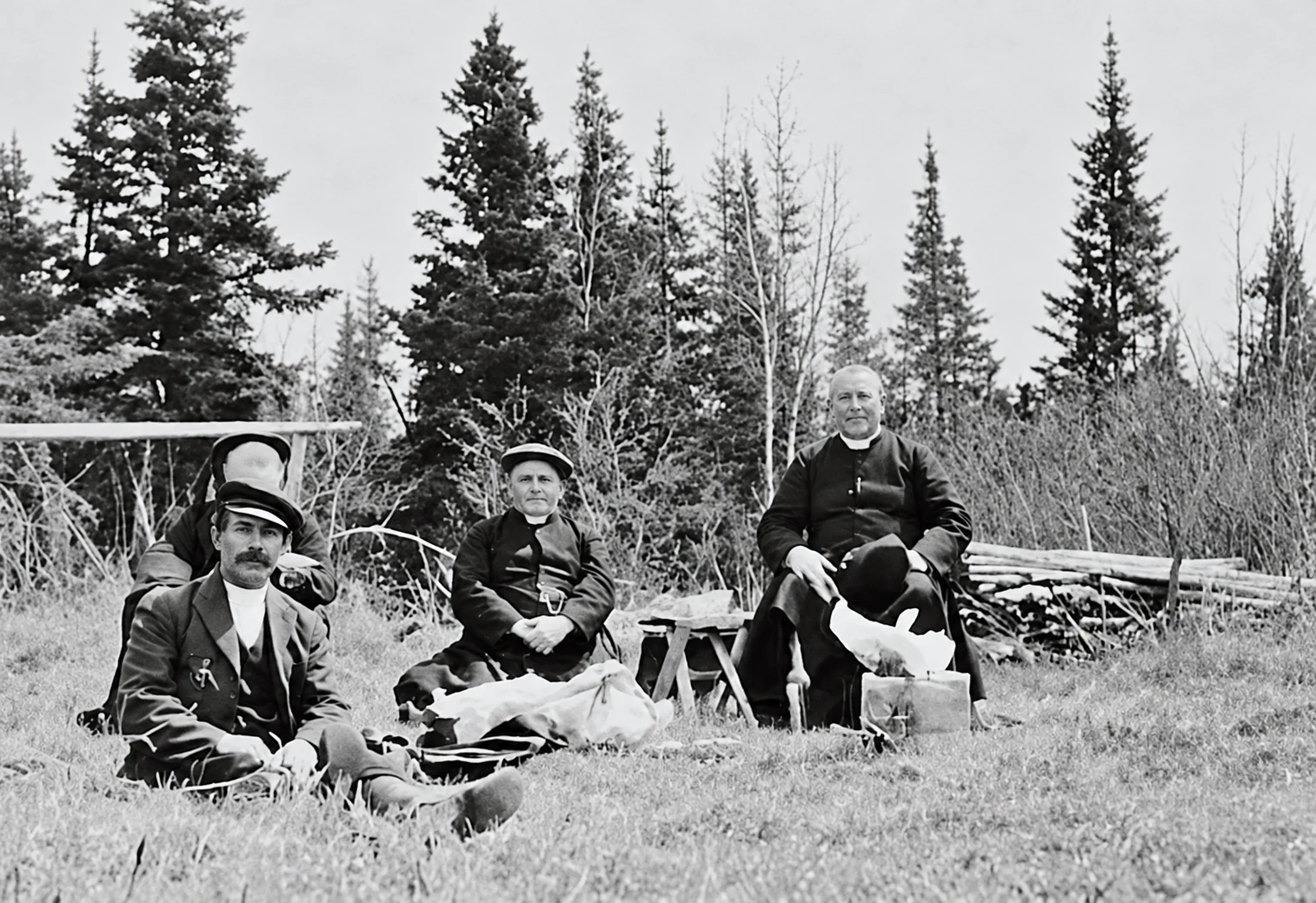
They had set out along the “King’s Road,” which follows the coast, to gather berries. The outing promised to be splendid, and the three little girls were delighted: the cousins Florida and Rosanna Hébert, twelve and thirteen, and seven-year-old Joséphine Petitpas, with her older sister, Miss Elvine Petitpas, in charge of the group.
They wore straw hats and white dresses. Each carried a small red pail and a basket of provisions for lunch on the dwarf-juniper grass. “Above all,” their mothers had said, “be good and come back soon.” “Yes, Mama. You’ll see at three o’clock how hard we’ve worked.”
They went on, at times following the shore, where the tide gently broke at their feet in the sunlight, at times running and fluttering about in search of rare bluebells as the breeze played in their hair. “I want to make a bouquet for the Blessed Virgin,” Rosanna said. “And I’ll make one for St. Anthony,” Joséphine added. “Come on, ‘Phine, hurry. You know Mama doesn’t want you going into the woods. What if you got lost?”
“Oh, big sister, look how many I’ve found!” She ran with both hands full of flowers and two slices of buttered bread. “And so I don’t lose my way, I’ll count the telegraph poles from our house. Six, seven, eight, nine… I’ve lost count. I don’t know my times tables anymore!”
They had already passed Pointe-aux-Basques. “The Ball,” its great grey mass bare at the summit but covered at the foot with fir and birch, looked closer now. The four girls climbed the slope. It was time to pick berries! They gathered cranberries, carpeting the sand in green, larger and redder than the “whortleberries” back home. Thoughts of the delicious cakes they would have for supper that evening, and of the rest being turned into excellent jam in a basin—the sharp scent softened with sugar—made them work even faster in silence. Their little hands darted beneath the stems, and their pails quickly filled.
“The horses! The horses, children!” Elvine suddenly cried. At the sound, the girls jumped up and ran, grabbing their food. A herd of loose horses had suddenly appeared from behind a thicket of alders. They came forward slowly, packed closely together, ignoring the timid gestures meant to scare them away, and walked straight toward the girls. Fear took hold of them. The portage trail lay ahead, so they fled to it. The horses seemed to follow. “My little ones, come into the woods,” Elvine cried, frightened. They rushed beneath the dense fir trees, where they stayed for a while, trembling and silent, listening carefully. They thought the horses were close by. To avoid meeting them, they walked along the edge of the woods. “Sept-Îles is ahead of us. Let’s go home quickly.” Walking over soft moss and magnificent silver lichens that barely gave way beneath their feet, they moved in single file between the trees, careful not to let branches knock over their berries or catch on their clothes. The sun guided them with its rays.
The houses lay beyond another clearing. They would soon arrive, and they kept walking, placing their feet in one another’s tracks so they would not get separated. Suddenly, beyond a thicker thicket, Elvine stopped and looked around. The sun seemed to have changed direction; its slanting rays had turned red and were slipping away from the trees. Breathless, she looked at her little group. “Tell me, sister, where are we? Can you see Papa’s house?” Joséphine asked. She read the worry in their questioning eyes. Looking bewilderedly at the trees around them, she had no answer and fell silent. “Look over there, a telegraph pole!” Florida said. They all headed toward it, but soon their hopes were dashed: it was a dead birch tree. They no longer knew which way to go. It was over; they were lost in the vast forest. The fading sunlight disappeared. Dusk fell, then night! Still the lost girls went on, huddled together, trembling at the squirrels’ cries and the rustling of falling leaves.
At last a little lake blocked their way. They followed it to its source, trying to walk on the plentiful grass. To stave off hunger, they ate the last piece of bread in the basket with some of the berries they had gathered.
Elvine understood the full responsibility resting on her. “My children, let us pray, and then we’ll sleep peacefully. Tomorrow the Good Lord will bring us home.” “I have a little St. Anne in my pocket,” Florida said. “And I have my St. Anthony,” Joséphine added. “He’d better bring us back to Mama, or I’ll put him in time-out!” Their prayer went straight up to heaven. Then they huddled around their big sister, while the two little dogs they had brought lay at their feet to keep them warm.
Sleep was already closing their eyes… “I’m scared!” the little Hébert girl suddenly cried through her sobs. “All right, I’ll sing a hymn, and you can join in after me…” Elvine’s voice rose into the air, pure but trembling in the great silence of the woods. The little ones quietly repeated the refrain… more and more softly, until their eyes closed and their fear drifted away in a gentle dream…
Meanwhile, in Sept-Îles, the bell rang piercingly from the open belfry. In a mournful voice it had announced the sad news to the whole village, and now it called to the lost girls: “Children, come back quickly and comfort your mothers, who are calling for you. Please, do not stay away. Can you not hear my urgent repeated calls?” The priest kept ringing the bell while armed men searched the thickets, shouting into the woods. But all was in vain. Late that night the bell fell silent, the men returned home, and the night was long and sad in the homes of the poor parents.
The next morning the whole village was in turmoil. No boats went out; all the men headed back into the woods. Three gunshots were the signal that the girls had been found.
We visited the two families, whose mothers were pitiful to see, then set out to search, risking that we might get lost ourselves. It was past noon, and only the two little dogs had been found. The trails had been searched over and over; still nothing. How sad we were in the face of such uncertainty! Could some catastrophe plunge the village into grief? We saw the fear on every face: women leaning outside, watching along the fences, questioning each man as he returned. We were urgently asked to visit one of the poor mothers again. My confrère went to see her. What could one say during such a visit?…
“My children, my children. The little one is dead. I know it,” she kept repeating through nervous sobs. “I saw men carrying her back… They won’t give her to me!” The hours passed, and no one had heard the agreed signal. So, putting all our trust in heaven, we brought all the children in the village together at the church. There, they prayed the rosary, invoking St. Anne, St. Joseph, and St. Anthony, and pleading with their purest prayers to have their lost companions returned to them.
It was a good idea; our prayers were answered! Soon a gunshot rang out in the distance, from the north… then two… then three. It was the signal: the girls had been found! The three liberating shots echoed again in the distance, carrying the joyful news to the exhausted searchers. A carriage was quickly hitched, and people ran to meet the children. The bell rang at full peal to announce everyone’s joy.
At last, at four o’clock, they arrived, smiling, safe and sound, amid an enthusiastic crowd, and were reunited with their mothers. Then they told us about their extraordinary walk in the woods: how the deceptive echo of the bell had led them farther north; how they had crossed bogs, sinking in up to their waists; and how their faith in St. Anthony, whom they had prayed to so often before his little statue, never failed. Hearing their story and learning that their rescuer had suddenly been inspired to take an unusual route that no one in the village had ever considered—leading straight to the place where they stood silently in a thicket—we compared the time of our prayer with the time they were found. We could only conclude that heaven had miraculously intervened on their behalf. That evening, with the whole village gathered, we sang a Te Deum of thanksgiving amid the brilliant lights that gave St. Anthony a smiling face, matching the emotion and joy in our hearts.
11
This account by Father Louis Garnier, taken fromL’Écho du Labrador, recounts a triumphant arrival in Manicouagan.
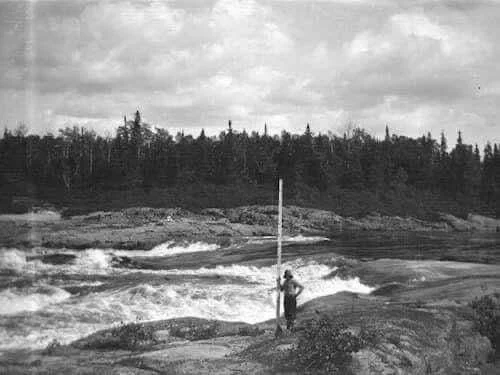
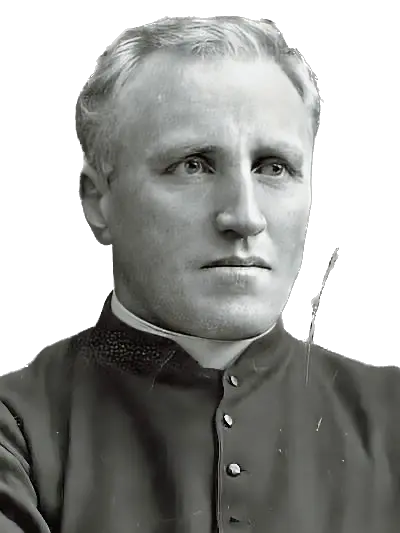
Imagine this: last Thursday, my confrère and I felt like taking a walk in the forest. The Father had just returned from a mission full of adventure and sleepless nights, during which he had once again spent a night at sea…
Photograph |Manicouagan River· Wikipedia
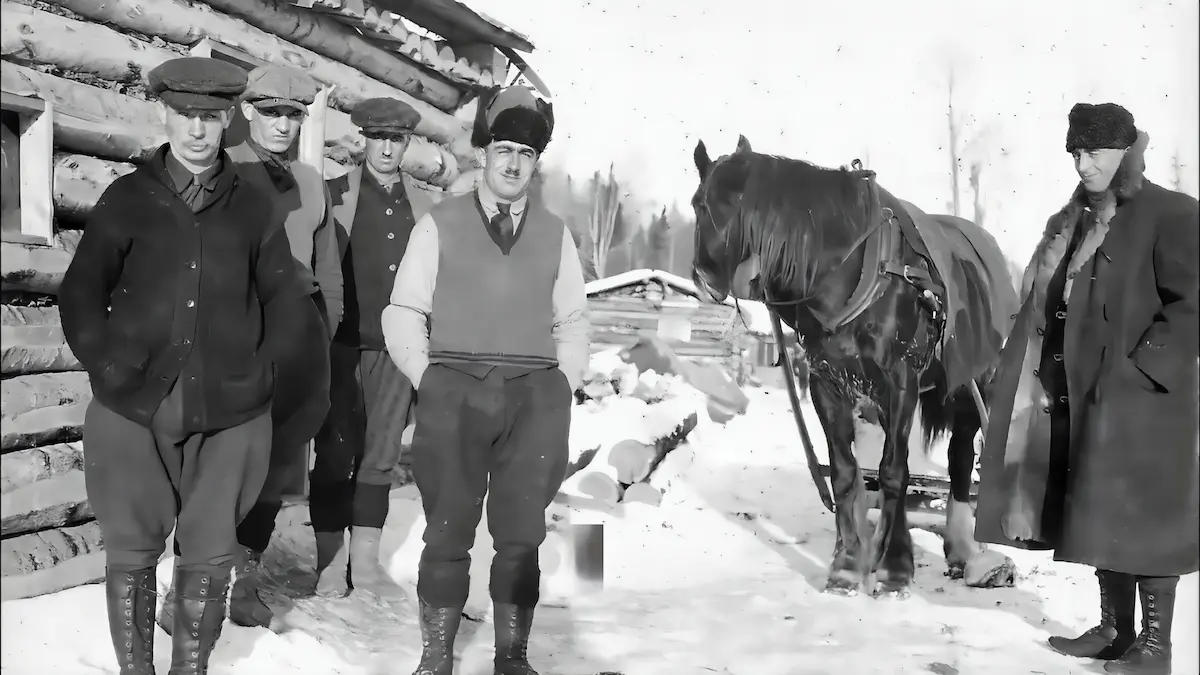
Imagine this: last Thursday, my confrère and I felt like taking a walk in the forest. The Father had just returned from a mission full of adventure and sleepless nights, during which he had once again spent a night at sea. For my part, I had been confined to my room for more than eight days, nursing a cold. In short, we both wanted to enjoy the fresh air… and our freedom. And so we set off without telling anyone about our plans, which were, in any case, quite vague.
The weather was splendid; there were no mosquitoes in the woods. They say the bears have fled. By every measure, it was a perfect day for an outing. The forest, you should know, has its charms.
To begin with, a real path opened before us. It was what people here call the “portage trail,” leading to the winter camps. It had recently been widened and was quite passable for two men willing to give up the pleasure of walking side by side. But what variety, to the left, to the right, straight ahead! Everywhere stood trees of different sizes, if not different kinds. Along the path we saw only raspberry bushes, still green despite the hard frosts of recent days, and strawberry plants, yellowing, it is true, but full of promise for the coming spring. And the many little streams, the waterfalls—and those gentle murmurs!
What beautiful country! And so, from one delight to another, we reached the first camp, then the second, and then a river where many pearl oysters lay. What a stroke of luck if only we found a pearl! We searched for a few minutes, but I think a few minutes would not suffice; whole days would not have been enough to make us rich.
We continued on. Five times I suggested to my companion that we turn back. The Sisters would worry if we failed to arrive for prayer at five o’clock, followed by supper.
But the forest was still there, magnificent on a day made especially for us. Just then a partridge took flight before our eyes!…
At last, around half past four, we decided to turn back. Even happier than on the way out, we chatted about this and that and walked briskly. The three or four leagues we had to cover seemed a trifling distance, and we were already a mile from our “town” when—what a surprise!—three men appeared around a bend, saying, “There they are!” Without another word, they began firing into the air, for they were carrying rifles!
Neither my confrère nor I understood at first—or rather, I understood all too well. I understood even better when I saw at least twenty men running toward us. I need hardly describe the impression our triumphant return made on me: I apologized profusely, then laughed and made those good people laugh… though inwardly I was cursing! Gunshots rang out on every side; the little chapel bell was trying to make itself heard in the farthest corners of the forest, where everyone thought we were lost. The mill whistle sounded as it did on great occasions. All Manicouagan was in turmoil. The men had abandoned their steaming suppers, and I later learned that the women had been making vows, offering novenas, promising prayers, and so on, for their Fathers’ safe return. Wasn’t it unfortunate! A beloved priest had just left them, and now his two replacements had lost their way in the forest, exposing themselves to the merciless teeth of bears and other beasts!… I still dream about it.
When we entered the presbytery, it was half past six—or rather, a quarter past six, according to my confrère’s watch, which, to our misfortune that evening, was still set to Pointe-aux-Outardes time. Let us hope we behave more wisely next time… Though I would not stake my head on it.
— L. Garnier · Source:L’Écho du Labrador, transcribed by the Société historique de la Côte-Nord.
12
This account by Father Arthur Divet, taken fromL’Écho du Labrador, tells of a visit to Piaster Bay (Baie-Johan-Beetz) for a wedding and the surprise of meeting Apostolic Prefect Bishop Blanche.
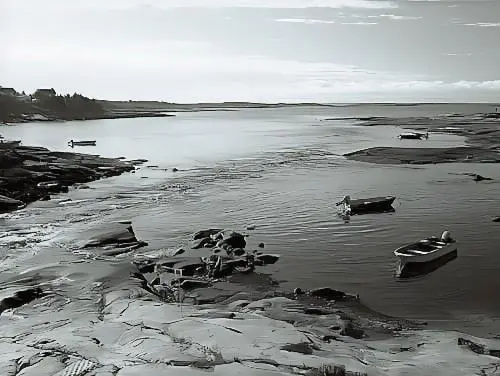
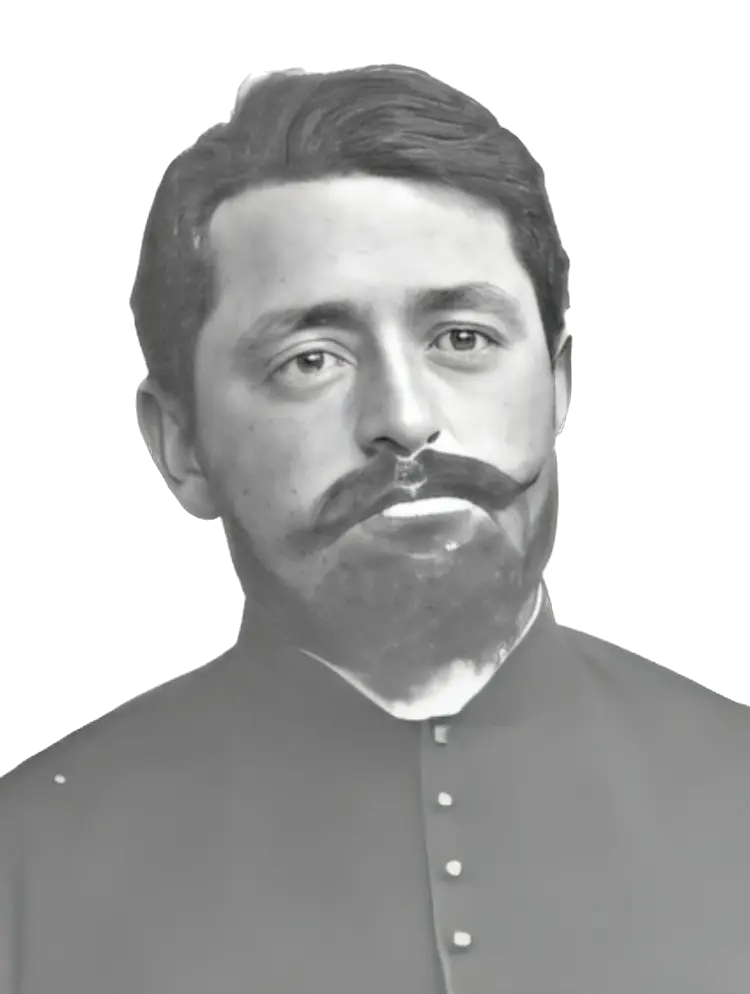
At Piaster Bay there are only eight families, all related to one another. A young Belgian, Mr. Beetz, an agent for a large Paris fur company, came to settle there and devote himself entirely to the varied pleasures of fishing and hunting…
Photograph |Baie-Johan-Beetz· Wikipedia
So I left Natashquan on October 2 at eleven in the morning. Aguanis, the nearest post entrusted to our care, is twelve miles away. I landed there at three in the afternoon. Fifteen days earlier, Father Pihan had set out at three in the afternoon and had not arrived until half past five the next morning. The winds make all the difference! I shall leave this dear colleague to tell you about that mission.
I myself stayed too briefly to become acquainted with the place, even superficially. Indeed, I had to re-embark at nine on Sunday morning for our second mission post, Piaster Bay, more than thirty miles from Aguanis.
The weather was fine and the sea calm (just as it is in “Faus”), but alas, the wind was not strong enough to carry us that far before nightfall. So at six in the evening my two men dropped anchor near “Mascadin” Island, and we slept in the barge’s cabin. Oh, that cabin! One can hardly sleep there, with a stove heated white-hot after smoking for nearly two hours!
Still, one does not travel by barge every day, and a missionary’s life must help us earn a few small merits.
At three in the morning we left the harbour and headed back out to sea. This time there was wind—perhaps a little too much! I was tossed in my bunk like a basket of laundry. Before long I felt the terrible grip of seasickness. I suffered all the more because, throughout the journey, my exhausted stomach had had to make do with five or six sardines in oil.
At half past eight I set foot on the rocks of Piaster Bay, and it was all over! I rested until ten in the room prepared for me, and by half past ten I was able to perform the wedding that had occasioned my visit and celebrate Mass.
There are only eight families at Piaster Bay, all related to one another. A young Belgian, Mr. Beetz, an agent for a large Paris fur company, came to settle there and devote himself entirely to the varied pleasures of fishing and hunting. This intrepid Nimrod built himself a charming little villa near the coast, where he and his gracious wife, Mrs. Beetz, kindly offered the missionary warm hospitality.
I was their guest during my stay at Piaster Bay. When I arrived on Monday morning, Mr. and Mrs. Beetz had not yet returned from their customary trip to Europe, which they made every two years.
They did not return until Wednesday morning, aboard the “King Edward.” I had gone out to meet them on a barge, knowing that the Very Reverend Father Blanche was also aboard the steamer.
How surprised the Apostolic Prefect was to see me climbing aboard, dressed like a fisherman in my boots, my face covered with a black beard as bristly as a Labrador bear’s fur! He and Father Pottier, who had accompanied him from Pointe-aux-Esquimaux, were doubled over with laughter. I stayed and talked with them while the luggage was unloaded, then returned to my mission post.
I stayed there until Saturday morning and took the opportunity to lead the mission exercises, which were very well attended. I was greatly edified. In between, I went trout fishing at the foot of a fifty-metre waterfall and hunted yellowlegs. As for ducks, I shot a bittern in flight, but it fell into the reeds, where the men who had taken me out in their canoe (!!) could not retrieve it… Darn bittern!
I nearly forgot to tell you that during my stay at Piaster Bay I had the chance to see black foxes. As you know, a single pelt sells for $700 to $800 (3,500 to 4,000 francs). Mr. Beetz raises seven magnificent ones in enormous cages. He also owns a black bear that was caught in a trap. I once saw Mr. Beetz return from a three-hour hunt carrying forty-one birds: ducks, “moniacs,” black game, Canada geese, and so on. If only I could shoot a tenth as many…
I finally ended my odyssey with a five-day visit to Pointe-aux-Esquimaux, where I stayed with Father Pottier. One is truly well received there, and I am still touched by the thoughtful kindness the two residents showed me.
When I returned to Natashquan, Father Pihan was preparing to resume the “express service” to Aguanis for a wedding. One may assume that this second voyage went more smoothly than the first. So far, public rumour has said nothing…
— A. Divet · Source:L’Écho du Labrador, transcribed by the Société historique de la Côte-Nord.
Portrait · Baie-Johan-Beetz
Johan Beetz (1874–1949), a Belgian naturalist, settled at Piashti Bay in 1897. He studied its wildlife and plant life, developed fox farming, and helped protect the village during the 1918 Spanish flu epidemic.
Johan Beetz was born at Oudenhouven Castle in Boortmeerbeek, Belgium, on August 19, 1874. He was the son of Johannes Beetz and Céline Verzyl, a lawyer by profession. Johannes Beetz died when his son was two years old. Céline Verzyl remarried, to an English major named Walter Turner.
In his youth he travelled to Morocco, Algeria and the Congo to hunt. He also took part in archaeological excavations. He studied medicine and biology.
He learned to hunt from his tutor, Dr. Strauss, and to raise animals from his stepfather through a commercial fish-farming business.
His fiancée and cousin, Marthe Verzÿl, died of pneumonia.
After his fiancée’s death, he bought the house of Mr. Werner, a Belgian who had lived in Canada, in 1897. The house was in Pashti Bay, a small village on Quebec’s North Shore.
At Pashti Bay he hunted and fished while studying his surroundings, particularly with the Innu. In 1898 he married a local young woman, Adéla Tanguay. Their son Jean was born on August 13, 1899. That same year, a house was built there; it is now designated a heritage building by the Government of Quebec.
Concerned about the trappers’ precarious situation, he decided to bypass the all-pervasive Hudson’s Bay Company. During a trip to Paris he met with the Revillon brothers’ fur company to arrange more direct trade in pelts. He became head buyer for a territory stretching from Mingan to Saint-Augustin.
In the following years, Johan Beetz devoted himself to fox farming. From 1903 to 1913, he was the village postmaster. He studied wildlife and plant life. He even published an article on the eider in the journalThe Aukin 1916. His medical knowledge helped spare Pashti Bay during the 1918 Spanish flu pandemic, which was ravaging the world. He placed the village under quarantine, which probably helped save lives.
In 1922, Johan and his family settled in Saint-Laurent, Montreal. Beetz continued raising foxes for their fur. Two years later, he was made a Knight of the Order of Leopold II.
The 1929 crash left Johan Beetz in financial difficulty. In 1930, he became director of Quebec’s fur-bearing animal husbandry service in Quebec City. In 1932, he also helped found the Charlesbourg Zoological Garden (later the Quebec Zoological Garden). The Université de Montréal awarded him a Doctor of Science degree in 1936.
He died in Quebec City on March 26, 1949. He was buried at Notre-Dame-de-Belmont Cemetery in Quebec City.
He was the grandfather of Jean Beetz (1927–1991), a justice of the Supreme Court of Canada from 1974 to 1988.
Source: biographical entry “Johan Beetz (1874–1949),” Wikipedia.
13
This account by Father Julien Hoëllard, taken fromL’Écho du Labrador, bears witness to Innu life and that of the first settlers on the North Shore.
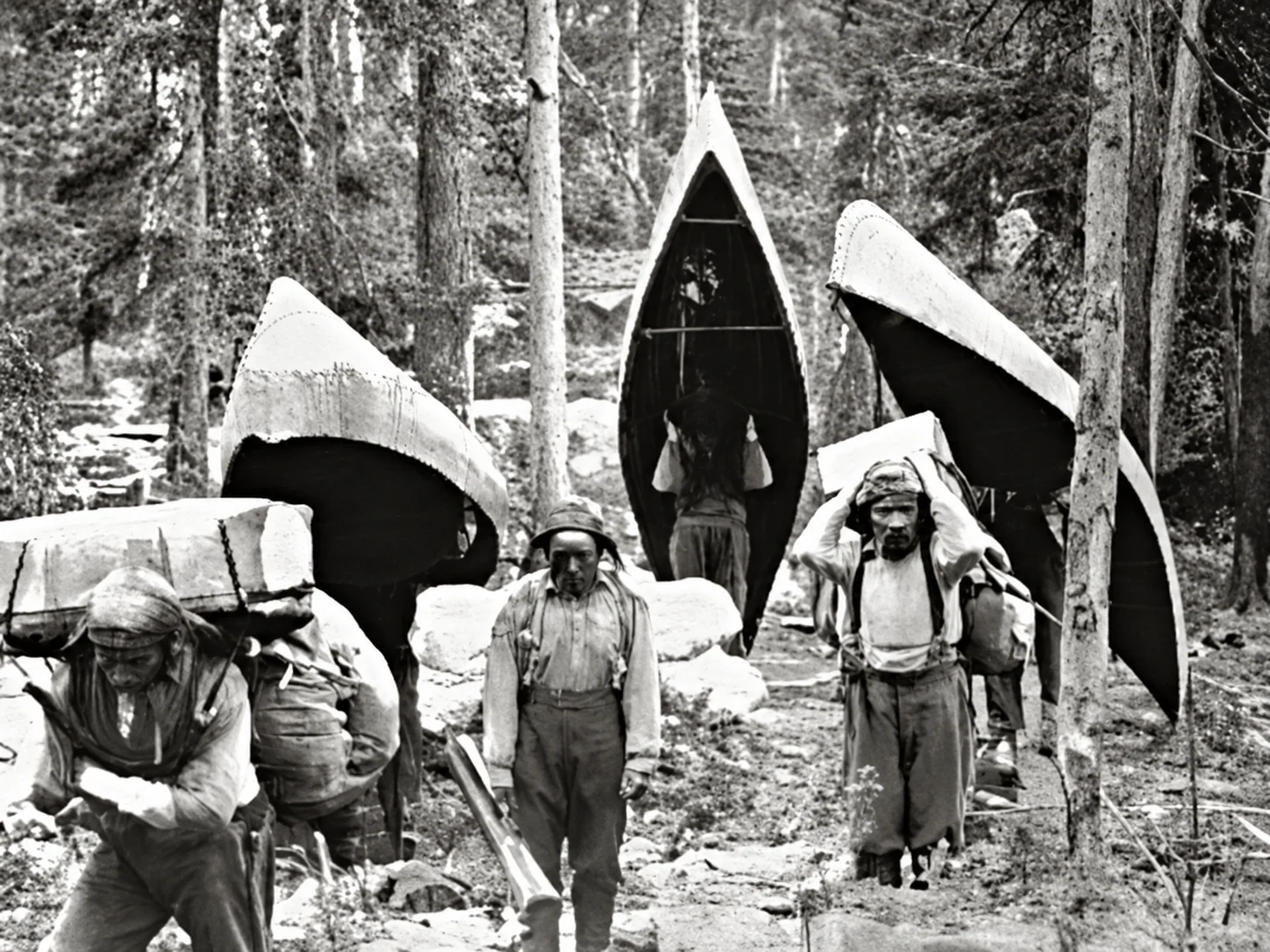
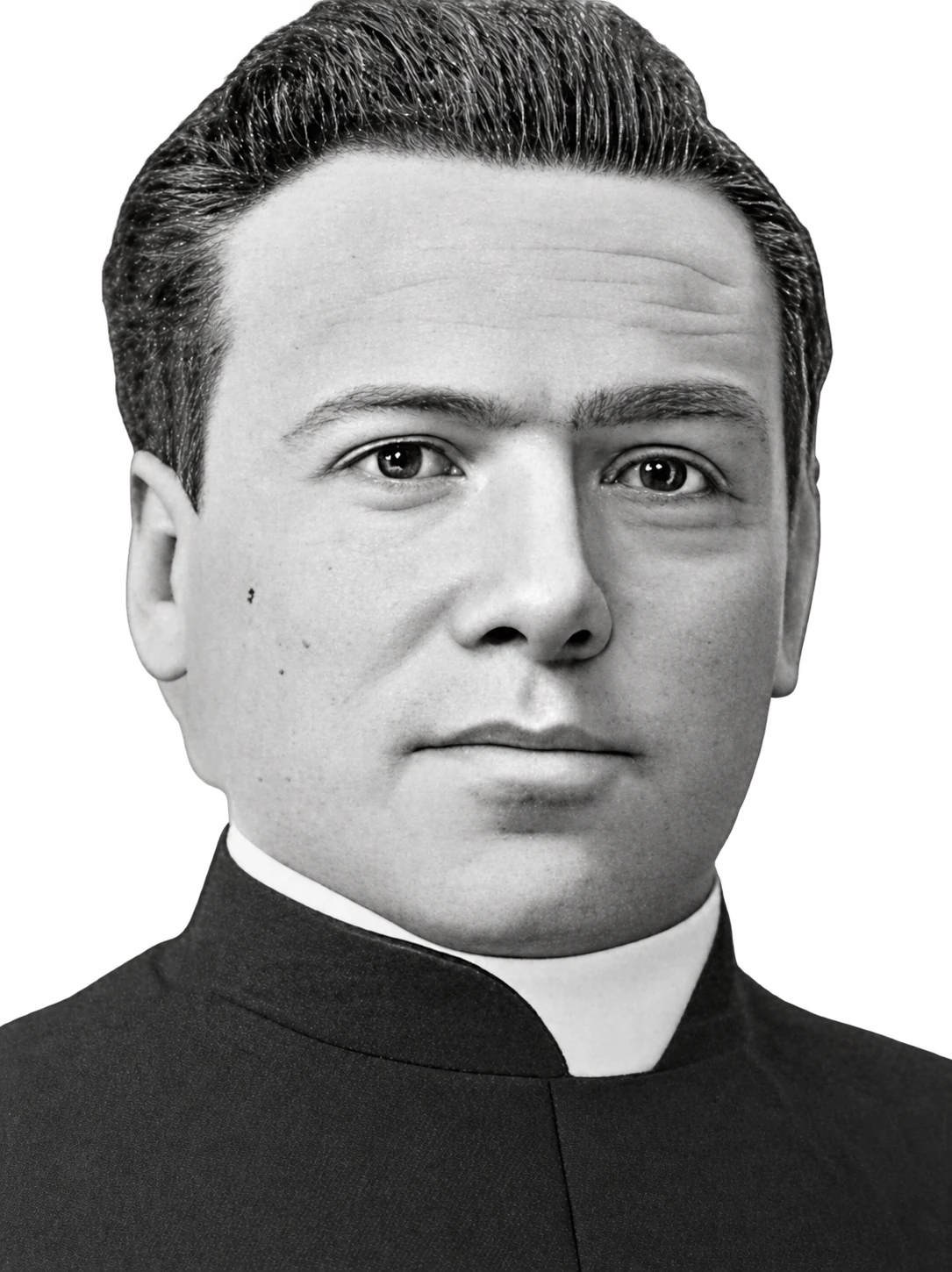
Long ago, a people lived freely in this vast land: the “Redskins” so many little white boys, myself included, dreamed of after reading the novels I told you about. This people is disappearing as the forests fall and civilization advances…
Photograph |Seigneurie du Triton
Hoëllard’s account describes the forests, rivers and lakes of northeastern Canada, then contrasts the way of life of Indigenous peoples with that of French-speaking settlers. It also reflects the assimilationist outlook of its time. A biographical note traces his life: born in Brittany in 1877, he joined the Eudists in 1901 and was ordained in 1903. He taught in Canada before returning to France, then was mobilized during the First World War. He died in 1921.
Sources: Eudist Archives; transcription by the Société historique de la Côte-Nord.
It is a curious and heartening fact for French hearts to see how admirably faithful to their customs, traditions and language the former colony of Canada has remained attached to the Mother Country, despite nearly a century and a half of separation.
Whatever was done, and whatever is still being done, this is always another France, the France “overseas” that we find here. To show what the descendants of peasants from the old provinces of Brittany and Normandy have become in this vast country that Voltaire disdainfully called “a few acres of snow” would provide a striking example of the energy, vitality and capacity for growth of the French people.
Could our old settlers of long ago have done anything but love this place? The country is truly beautiful, though not as wild as one might imagine from the novels one read as a child. Abundant rivers, widening here and there into broad sheets of water, flow like a network of veins through the dense forests, creating an infinite sense of solitude where water and trees meet. The trees are magnificent and astonishingly abundant: linden, maple, sturdy ash, reddish wild cherry, all mixed among the profuse pines and spruces. They have stood here for centuries, so accustomed to growing together that no one can be separated without perishing. Their enormous roots probe the soil and hold it fast, like a miser’s hands gripping a treasure.
Squirrels dart through the branches; sometimes a startled caribou flees through the undergrowth, or a Canadian nightingale flutters along the forest’s edge. Here and there, fire has passed, leaving trees dead in the flames; they are now only skeletons, the colour of charred bones, their sight a blight on the landscape. In places they stretch for mile upon mile, bringing to mind some immense cemetery, endless pale roadway or necropolis whose streets have no end.
Among the dead and living trees, the waters flow or lie still. At times they carry felled trunks; at others, they follow stretches of forest, motionless yet changing, the colour of sky, space and light, rippling with reflections and welcoming ducks and brilliantly plumaged kingfishers. How can one describe the mystery of these lakes, lost in the stillness of solitude? Each has its own colour and shape, from which it takes its name: Blue Lake, Black Lake, Green Lake, Round Lake—each with its own character and individuality. Nowhere else can one better understand the ancient myths and the legends of nymphs and dryads (?), for the more untouched nature is, the more individual it becomes, seeming almost to possess a soul, a body… At times, an isolated farm disappears into the landscape; one scarcely notices it. Here, where people are still few, the land belongs to the animals, the trees, the rocks and the waters. Carefree nature reigns peacefully, and its serenity seeps into you; you listen, fall silent and merge into the space where you are alone.
Long ago, a people lived freely in this vast land: the “Redskins” so many little white boys, myself included, dreamed of after reading the novels I told you about. This people is disappearing as the forests fall and civilization advances. They were nomads and hunters, and they wish to remain so; they do not want to be farmers and settle down. Their game is taken from them, they are confined to reserves and laws are imposed on them. They die from it… Each year the Canadian government, which strives to treat them humanely, distributes blankets to them; they wrap themselves in them to die, and their numbers continue to dwindle.
It is said that a few remain in a village near Montreal, on land once granted to them by a decree of Louis XIV. But they are so mixed by ancestry that one can scarcely distinguish them by the colour of their skin.
They are Christians, Catholics, and cultivate their fields; little remains of their former customs. But the “real” ones—the people of wigwams, tomahawks, scalping and moccasins—are disappearing. A few more generations and they will be gone. Yet they were a noble, courageous and proud people, who had developed freely on this land, where the French found them when they entered the mouth of the St. Lawrence under Samuel de Champlain in 1608!
These last representatives of the original people live in tents made of animal hides or coarse cloth. To their hunters’ weapons they have added old-model rifles abandoned by their conquerors. Fast horses, bark canoes and snowshoes are their only means of travel across the plains and woods where they are confined.
The true inhabitants today are the settlers, descendants of the French peasants who remained in the province of Quebec after the British conquest. There were 70,000 then; today there are nearly two million, not counting the million emigrants who went to the United States in search of an easier life.
What a glorious story of resistance and loyalty theirs is! Poor, while the rich had returned to the mother country, surrounded by far more numerous English people who held the administration, and long treated with hostile suspicion, they nevertheless preserved their faith, language and customs. An admirable clergy sustained them through the ordeal. They gathered around the Church as around a flag.
I do not believe there is a more striking example anywhere in the world of the persistence of national feeling. In these circumstances, that feeling was bound up with faith. They say that in parts of the former Poland peasants remain Catholic chiefly to remain Polish; if they abandon the practices of their ancestral religion, their friends say, “Then you are no longer one of us!” I imagine it was much the same for French Canadians. The Church must have been for them the sacred place where the faith, traditions, customs and language of their ancestors were preserved—the noble inheritance they had kept intact across the seas, despite time and distance—so that today they are as Norman, Breton and French as in the days of Champlain and Montcalm.
— J. Hoëllard
Source:L’Écho du Labrador, transcribed by the Société historique de la Côte-Nord.
Julien Hoëllard was born in Elven, Morbihan, on April 10, 1877. He studied at the Juvénat de Plancoët and at Saint-Martin in 1896–1897, then completed his theology studies at La Roche-du-Theil in 1898. He joined the Eudists in 1901 and was ordained in Rennes on June 6, 1903.
He went to Canada and taught rhetoric in Valleyfield in 1903. The biographical note then records his return to France in 1904 as secretary to the Superior General, followed by teaching positions in Chicoutimi from 1906 and at Pointe-à-l’Église, Nova Scotia, in 1910.
Mobilized in France in 1914, he returned to Plancoët in 1919 and died there on June 22, 1921, at the age of 44.
Source: Eudist Archives.
I went out the other evening, weary after my class
To gaze upon the vast plain before night fell.
In its white fur, it slept without a sound.
The sky was a vivid steel blue, bitterly cold.
I watched along the endless path
That God’s hand had strewn with countless flowers,
The Moon, a gentle lamp in the gentle twilight,
Slowly carried by an unseen hand.
All around, a cold silence… A wild goose,
High above, neck outstretched, flew alone in the open sky.
Only a swirl of pale snowflakes disturbed
The great, silent calm of the snowy landscape.
Then, dreamily, I looked north. Suddenly,
With the wind rising, I thought I heard
The simple echo of a tender song,
Sung in “Labrador” on a distant mountain.
In its thin voice
The Echo said, I understood:
“It snows, it freezes,
And ice has seized the River,
But with my wing I can
Join our fraternal friendship
Across the grey lands…”
In its gentle voice
The Echo said again, I think:
“Despite the winter that makes us cough,
I shall sing through the cold winds
Of how, in their narrow dwellings,
Eudist missionaries
Always know, without growing sad,
How to carry their cross with God.”
In its clear voice
The Echo said, I remember:
“Across the lonely vastness,
Along the shores of the Gulf from which I come,
Where, in his poor presbytery,
Even surrounded by good Christians,
An Eudist missionary would be sad
If he were forgotten by his own…”
In its thin voice
The Echo said, I understood:
“It snows, it freezes,
And ice has seized the River,
But with my wing I can
Join our fraternal friendship
Across the grey lands…”
I said softly: “Echo reaching us
So cheerfully from distant shores,
Delicate Echo, since you wish
To join our fraternal friendship,
Take upon your wing
My wishes.”
The Moon, a gentle lamp in the gentle twilight,
Slowly carried by an unseen hand,
Went calmly on along the endless path
That God’s hand had strewn with countless flowers.
— J. Hoëllard
Source:L’Écho du Labrador, transcribed by the Société historique de la Côte-Nord.
Recollection of the Departure · 1903
Julien Hoëllard recounts the Eudists’ departure from Paris for the North Shore.
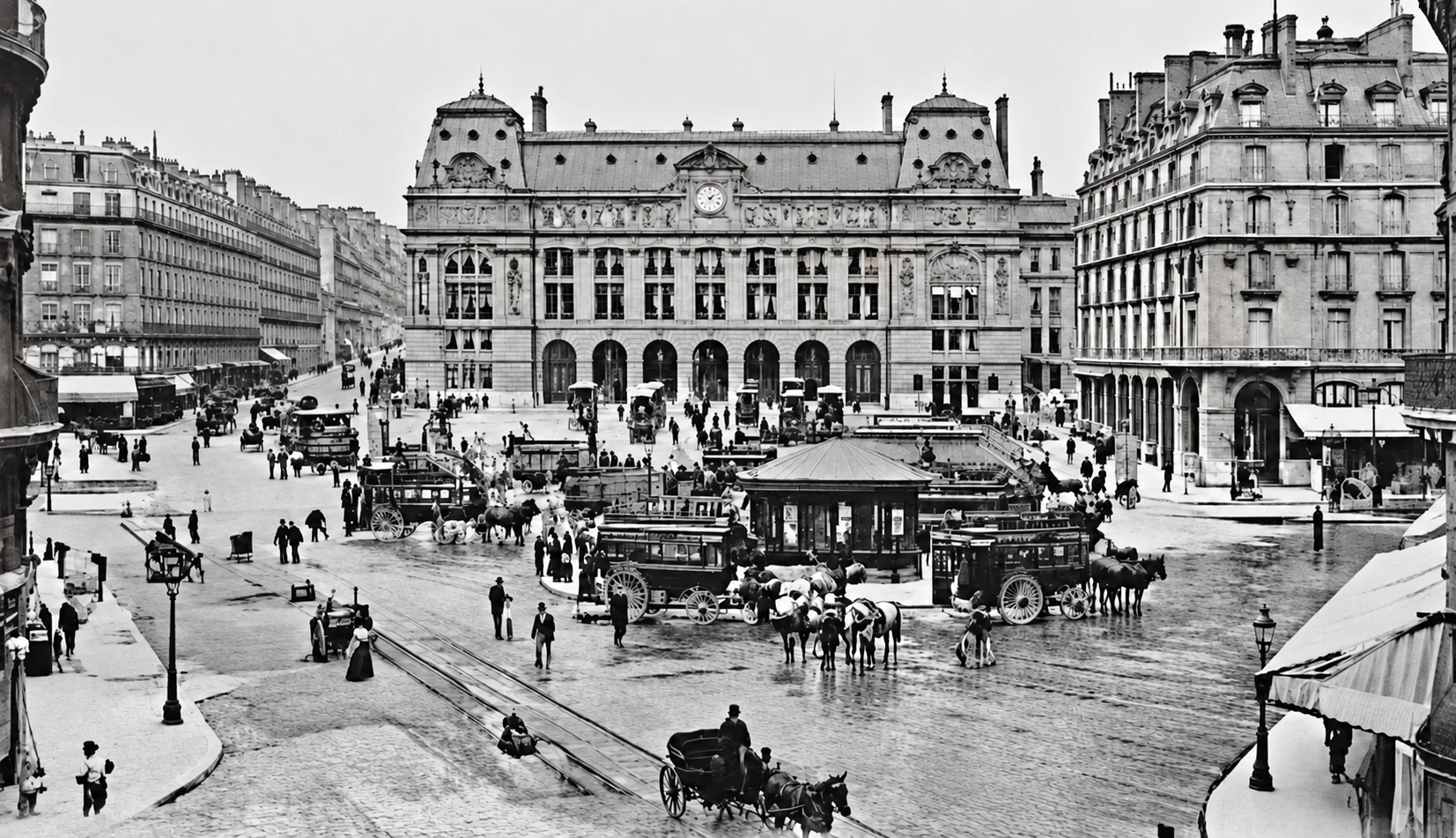
Paris was beginning to wake. With his sturdy horses trotting, the coachman guided us with practised confidence along Boulevard Saint-Michel, past the Louvre and down Avenue de l’Opéra, as far as the Gare Saint-Lazare.
A quarter past eight! The heavy omnibus rolled into the entrance courtyard. Trunks and suitcases were piled on the roof. Everything was ready for departure. We said goodbye to the confrères at the motherhouse, whose thoughtful kindness had given our last hours in France a warmth of family life. We smiled… perhaps to hide the emotion rising from our hearts to our eyes; for all the boasters may say what they will, one never leaves one’s deeply loved native land without real sorrow to set out for exile—even if, as in our case, that exile is softened by surrender to divine Providence, by the spirit of faith and by the very fraternal welcome awaiting us across the sea!
Fathers and brothers embraced us. Friends, ladies and religious sisters had come to show their affection. They gave us one last greeting, with tears or with an expression of sadness that moved us deeply; inwardly, you promised to keep a grateful memory of them.
Curious onlookers watched through the wide-open gateway: clergy in strange dress, slim or stout beneath secular frock coats. We climbed aboard. Off we went!
Paris was beginning to wake. With his sturdy horses trotting, the coachman guided us with practised confidence along Boulevard Saint-Michel, past the Louvre and down Avenue de l’Opéra, as far as the Gare Saint-Lazare.
Passers-by paused to stare, then went about their business, doubtless not understanding that they had just crossed paths with a group of exiles. As we passed, I read these hooligans’ slogans on the boulevard walls: “Long live Combes! Long live Jaurès! Long live Charbonnel!” I thought of the other misguided people who had sat beside me on the train the day before and spread their broadside with mocking laughter. Its open pages displayed a title in large black letters: “Down with the Cassock!” Behind me a couple sang frivolous songs. Once again, I understood why we are treated as pariahs in our own country: indifference amuses itself while Hatred strikes, kills and has its fill.
— J. Hoëllard
Source: Eudist Archives.
This continuation brings together the portraits and accounts from the page “Écho du Labrador Canadien — 2.” The original presentation and its transcription are not repeated here.